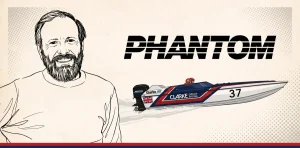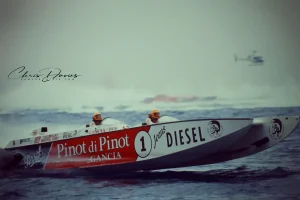
On 17 December 1978, Francesco Cosentino, president of the sport’s own governing body, the Union Internationale Motonautique, drove a 38-foot aluminium hull through six to ten-foot seas off Mar del Plata, Argentina, to become world offshore powerboat champion. The boat carried Picchiotti’s name. The man who designed it was Don Shead, already the most successful raceboat designer in Europe, and later the man who shaped three decades of Sunseeker’s production range.
From Automatic Doors to Hydroplanes
Born 22 May 1936 in Birmingham and raised nearby in Barnt Green, the son of mechanical engineer Herbert “Bert” Shead, Don Shead started his working life manufacturing automatic doors, a business he sold to go designing and racing hydroplanes on Coniston Water in the late 1950s. He entered the first-ever Cowes-Torquay race in 1961 in a borrowed boat that broke down, an unpromising start to a career that would come to define British offshore powerboat design.
The breakthrough came through Tommy Sopwith, son of aviation pioneer Sir Thomas Sopwith, who had won that same 1961 Cowes-Torquay race. The two met in 1962, and by 1967 Shead had his own design out racing, the Avenger 21, which finished fifth in that year’s Cowes-Torquay on its debut. The name stuck for the whole production line that followed, and when Shead needed a 19-footer for Pascoe Watson in 1967, he named it Emma Peel, after the Avengers television character, timed to ride the show’s 30-million-viewer popularity. Avenger production boats went on to win the National Class III Championship the same year, with 20 victories.
The Aluminium Years
In 1968, Greek shipping heir John Goulandris set up Enfield Marine on the Isle of Wight to build raceboats in aluminium, and recruited Shead as designer.
Miss Enfield became the first British-built powerboat to run twin MerCruiser 482s at 950hp.
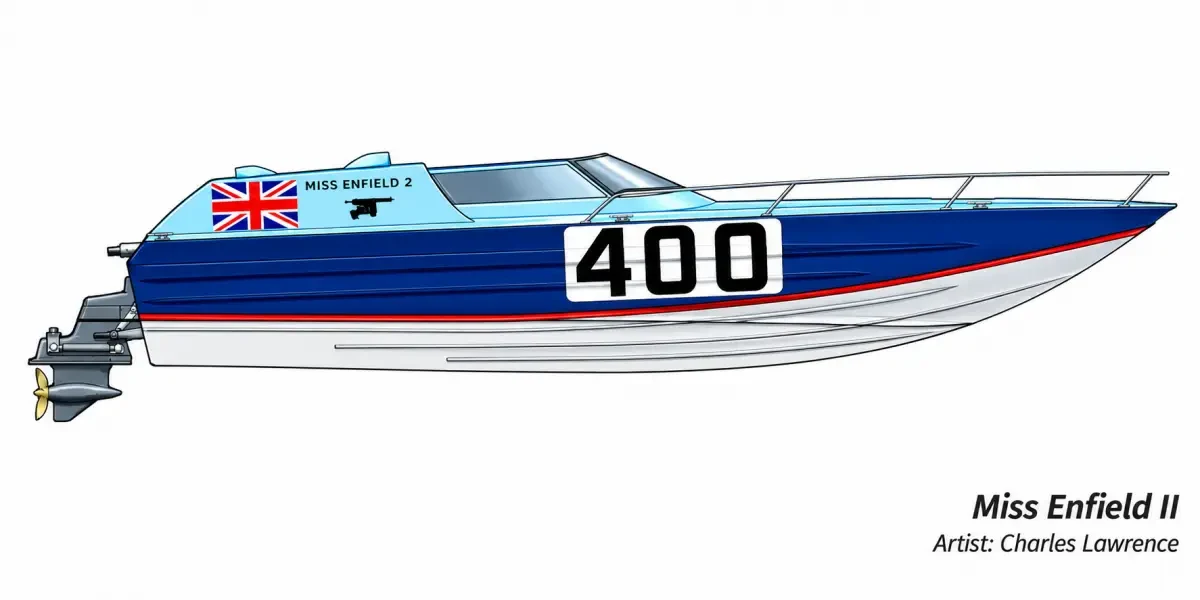
Its successor, the 32-foot Miss Enfield II, won seven of nine races entered abroad in 1970. She later raced on under the names Yellowdrama, Blitz and British Buzzard.
A separate 37-foot boat, Enfield-Avenger, followed in 1971, formed from the Avenger name and technology after the earlier Avenger 007 caught fire and sank the previous year. Sopwith later sold her, renamed Unowot, to Ronnie Hoare, the UK’s Ferrari distributor, and property developer Harry Hyams.
Shead himself drove Unowot to victory in the 1973 Cowes-Torquay-Cowes and, as Uno, again in 1975.
A serious back injury sustained racing in the early 1970s eventually ended his own driving career, and stopped competing regularly in 1980, with a final one-off appearance at Viareggio in 1981.
World Champion Under the Picchiotti Name
Shead’s connection to the Italian yard Picchiotti began before the boat everyone remembers: in the mid-1970s he designed N-2, a 78-foot aluminium motor yacht built at Picchiotti’s Viareggio yard, powered by twin Lycoming gas turbines.
Then in 1977, Cosentino, a former secretary-general of the Italian Parliament as well as UIM president, commissioned Shead to design a pair of identical 38-foot aluminium Class 1 hulls. They were built by a consortium trading as Picchiotti-Cantieri Uniti Viareggio, formed from the yard of Cosentino’s friend Guido Niccolai. Cosentino told Italian television he had chosen Shead because the English designer knew how to build “kindly, seaworthy boats.”
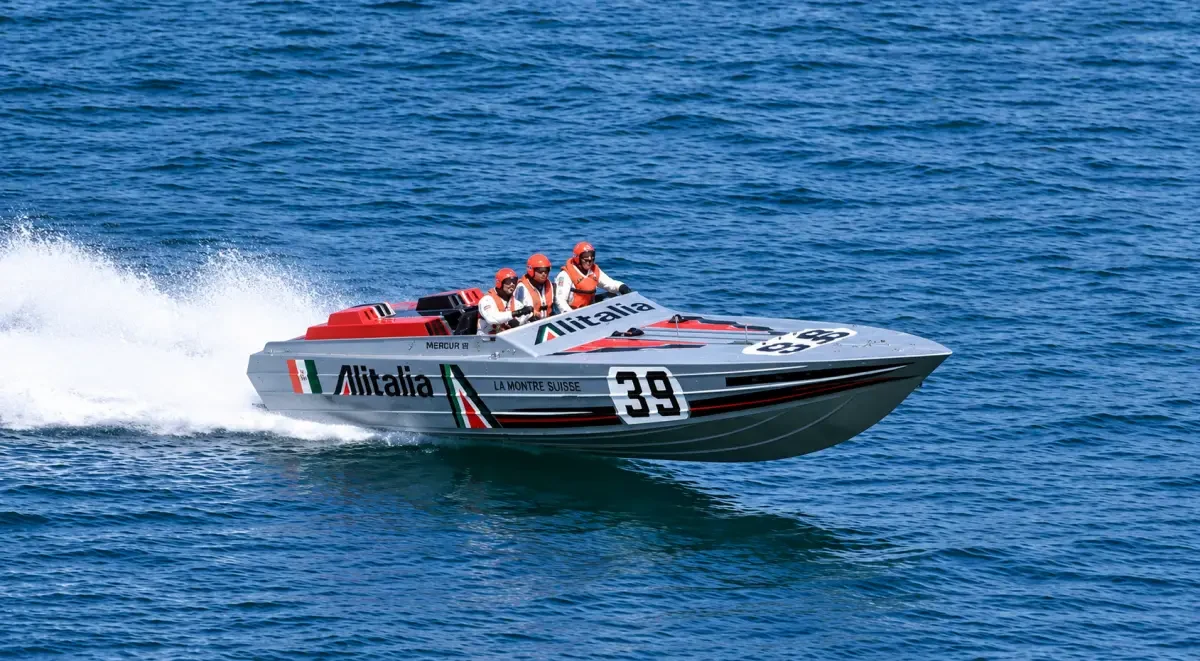
Sponsored by Alitalia, the two boats, Alitalia Uno and Alitalia Due, won four UIM races between them in their first season. A third boat, Alitalia Tre, joined the fleet in 1978, the same year Cosentino drove Alitalia Uno to that world title at Mar del Plata.
A fourth Shead-designed world championship came in a different class that same era: David Hagan won the 1979 World Class II title in Venice driving HTS, a 33-foot cold-moulded hull Shead designed in 1969, later renamed Apache and still racing today.
Cantieri Uniti Viareggio (CUV)
The Picchiotti-badged Alitalia boats were only the beginning of Shead’s relationship with Cantieri Uniti Viareggio (CUV), the Viareggio yard that went on to build the bulk of his Class 1 fleet through the late 1970s and 1980s. Two more Class 1 world titles followed in CUV-built Shead hulls: Renato Della Valle in 1982, driving the Rothmans-sponsored boat, and Alberto Petri in 1984, driving Miura.
By 1987, Shead reckoned CUV had been building near-identical 38-foot hulls to his design for six years running, and that at least a third of the European offshore fleet was made up of his boats. They had by then won ten European Championships and taken 140 of the more than 1,000 major offshore grand prix races run to that point, more than any other designer; his nearest rival was the American Don Aronow, with close to 100.
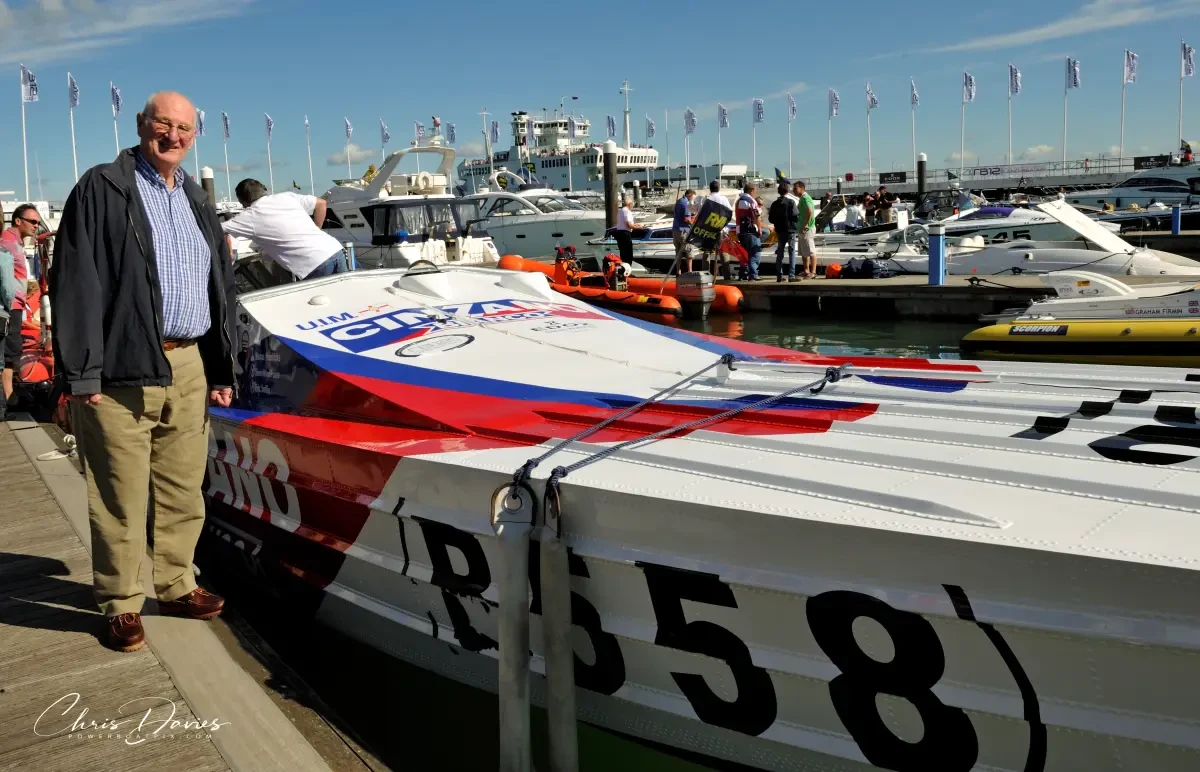
CUV-built boats had an outstanding record at Cowes in the ’80s: Alberto Smania won in 1981, Renato Della Valle four years running from 1982 to 1985, and Giovanna Repossi and Angelo Spelta in 1986.
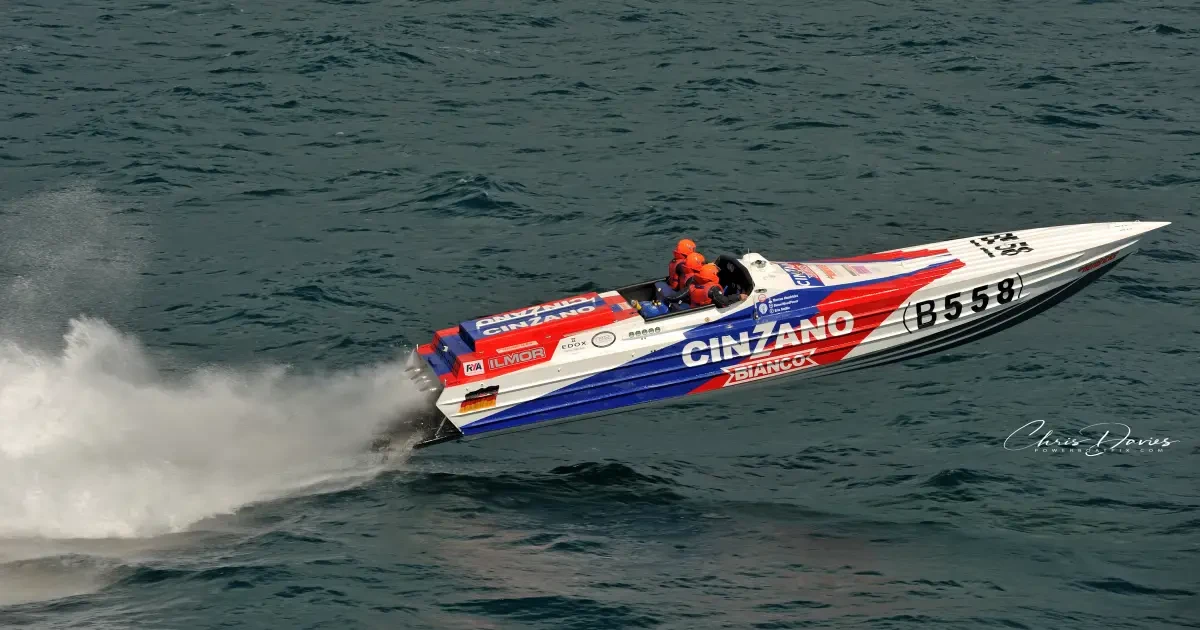
Della Valle’s winning boat, Cinzano, was later restored and returned to win the race again in 2009 and 2011, decades on, driven by Markus Hendricks. Cinzano is now understood to be owned by Wayne Harvey, repainted and being fitted with new engines and drives, with a possible return to racing next season.
The Coniston Diesel Record
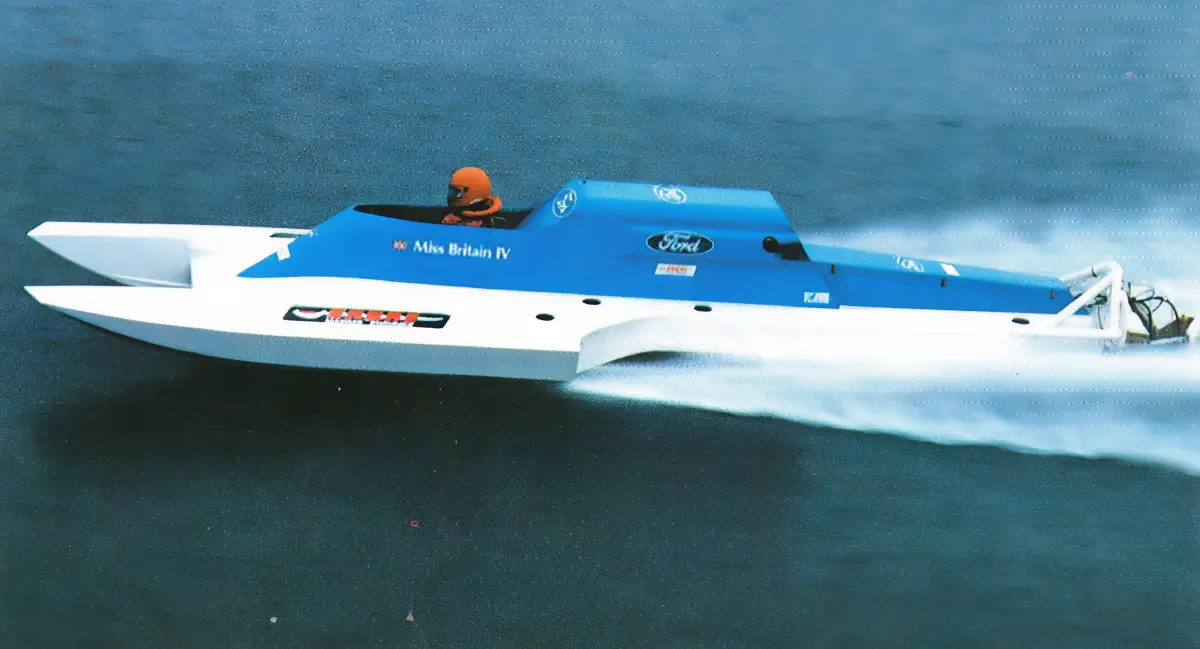
The one confirmed world record is the British diesel water speed record, and it has its own PBN story. In September 1981, Sabre Engines asked Shead for a hull capable of exceeding 120mph, to be driven by the company’s technical director, Chris Kaye. The result, Miss Britain IV, capsized during trials in Poole Harbour, was rebuilt in six weeks, and went on to set a world diesel record of 124.24mph on Coniston Water on 24 November 1982, a mark that still stands as the British record today. Miss Britain IV ran Rolla propellers, the same maker Shead had worked with since Telstar in 1968. Read the full story of that record here.
Apache: Still Racing Today
Not every Shead hull is a museum piece. HTS, the 33-foot cold-moulded hull Shead designed in 1969, won the 1972 London to Monte Carlo Marathon and, renamed Apache, David Hagan’s 1979 World Class II Championship in Venice. Restored and racing again as Apache 555 under custodian Peter Bonham Christie, she was the subject of a 2026 restoration project using Shead’s original plans, supplied by his daughter Fiona. Read the full story of that restoration work here. She is not the only Shead hull still competing; several others, including Uno Embassy and Double 2 Shirts, also remain active on the historic racing scene.
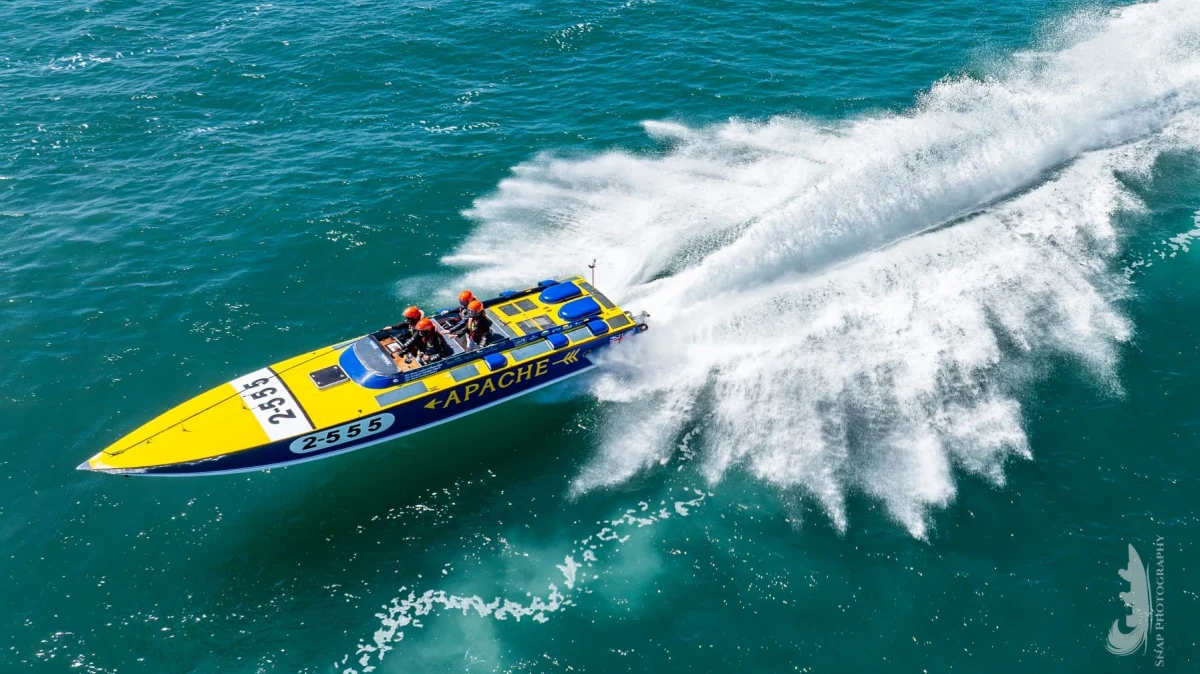
In June 2026, Apache struck submerged debris at racing speed during the Poole Bay 100 and began taking on water fast. The crew got her to shallow water off Sandbanks safely, and the 57-year-old hull survived a strike that would have sunk many modern boats outright. Read the full story of the incident and recovery here. The damage was repairable, and the team planned to have her back for next season.
From Raceboats to Royal Yachts
Sopwith’s success with Telstar led him to commission the 92-foot Philante VI from Shead in 1969, built by Camper & Nicholsons, the designer’s first large motor yacht, the start of a Philante line that ran through Philante VIII and Philante IX. Bigger commissions followed through the golden run of the late 1970s and 1980s: Fortuna, a 100-foot yacht for King Juan Carlos of Spain, delivered in 1979 with a combination of MTU diesels and a gas turbine driving triple waterjets and reaching 52 knots on trials, Solitaire of the Isles for Italian offshore rival Dr Carlo Bonomi, and later Shahbaz and the 153-foot Shergar for the Aga Khan. Chamar, a 186-foot aluminium yacht with waterjet propulsion, followed in the early 1990s.
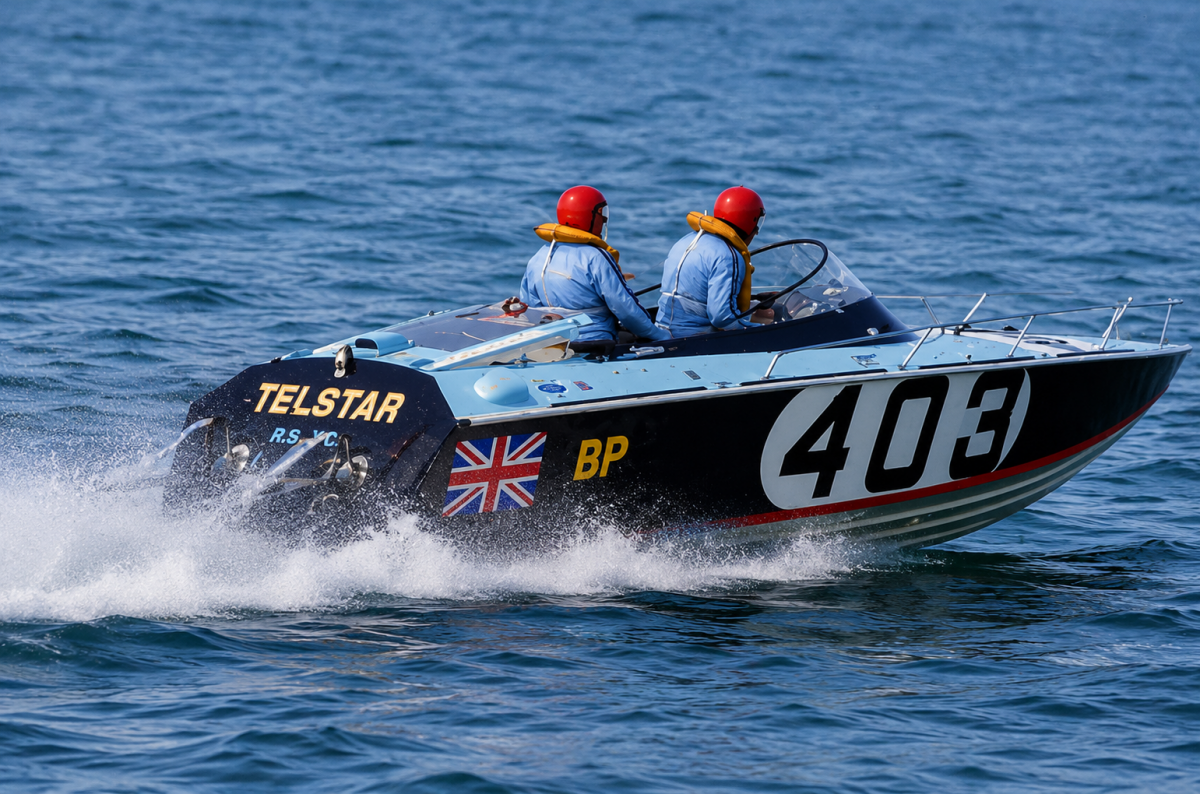
Telstar itself made its name in 1968, when Shead began working with American-trained propeller designer Phil Rolla, who was then building a reputation with three-blade cleaver propellers on the closed-circuit racing scene. Telstar, a single-engined 26-footer running a 500hp Daytona engine and Rolla’s semi-submerged propellers, won that year’s Cowes-Torquay with Sopwith at the helm. Read the full story of Phil Rolla’s career here. It was the start of a working relationship that carried through to Miss Britain IV over a decade later.
Gas turbines became something of a Shead obsession. Miss Embassy, his 1974 raceboat sponsored by W.H. and H.O. Wills for Embassy cigarettes, was the first gas turbine-powered offshore raceboat, fitted with a 1000hp Rolls-Royce Gnome. The idea never caught on in racing; Shead later said Lotus founder Colin Chapman had warned him at the outset that trying to fix an equivalency formula between turbines and petrol engines was “bashing your head up against a brick wall.” He was right, Shead’s tiny turbine fleet foundered against convention petrol and diesel power, and gas turbines never became an accepted offshore racing formula. But the technology found a permanent home in his superyachts instead, starting with Fortuna. Shead also coined his own word for a later project marinising Jaguar’s V12 engine for racing: the “Turbeau.”
The Sunseeker Years
In 1979, Robert and John Braithwaite of Poole Powerboats, a small company then distributing Volvo parts and imported boats, approached Shead to design a 28-footer. Neither side had much money, so the arrangement was built on royalties rather than a fee. The boat launched at the Brighton Boat Show that summer as the Sunseeker 28, and the relationship it began ran through Sunseeker’s core production range into the mid-2000s, through the Portofino, Tomahawk, Predator and Renegade lines among others.
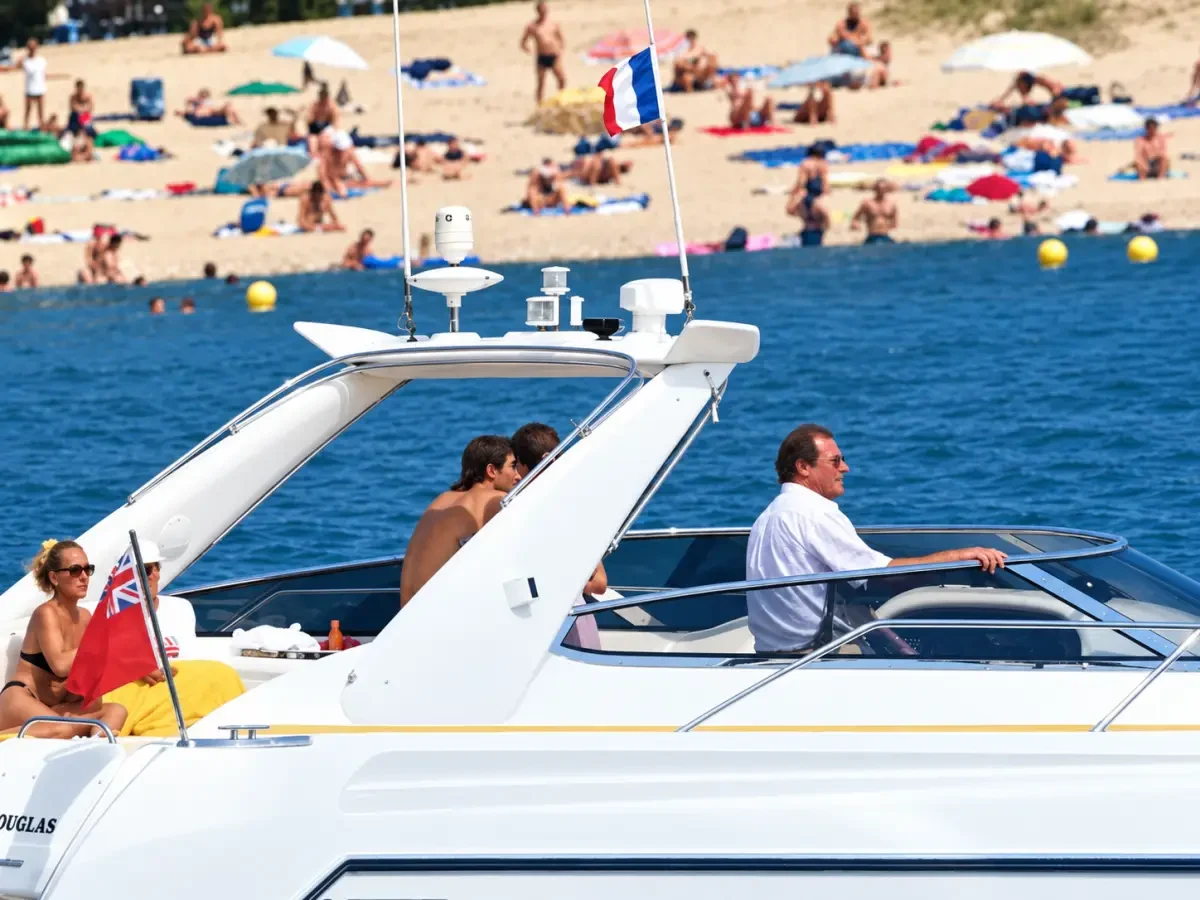
One owner of a 1995 Shead-designed Sunseeker Tomahawk 41 was actor Roger Moore, who played James Bond, who kept the boat in Monaco and cruised the South of France with it.
Shead sold Don Shead Yacht Design to Robert and John Braithwaite in 2007, staying on as a consultant until ill health forced his retirement around 2010.
Announcing his death, Sunseeker’s chief technical officer Ewen Foster said Shead had “pushed boundaries in performance, style and seakeeping in his racing life,” and that the influence carried through into the yard’s production boats for decades afterward.
A Brave Owner Wanted
Shead never stopped thinking in terms of speed records, even in his sixties. Asked in an interview whether a 100-knot yacht was possible, he replied without hesitation that it was, and that he already had the project worked out. “All I need is a brave owner,” he said. He worked the same way to the end of his career as he had at the start, sketching new ideas in pencil on paper before anything went near a computer, often starting on the back of an envelope at a first meeting with a client.
A Life in Two Wheels and Four
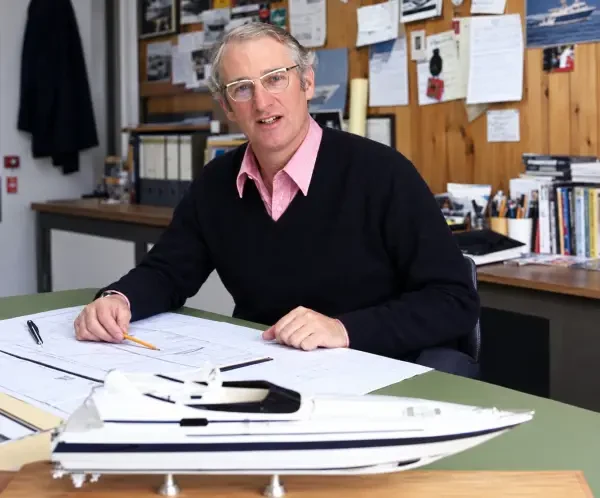
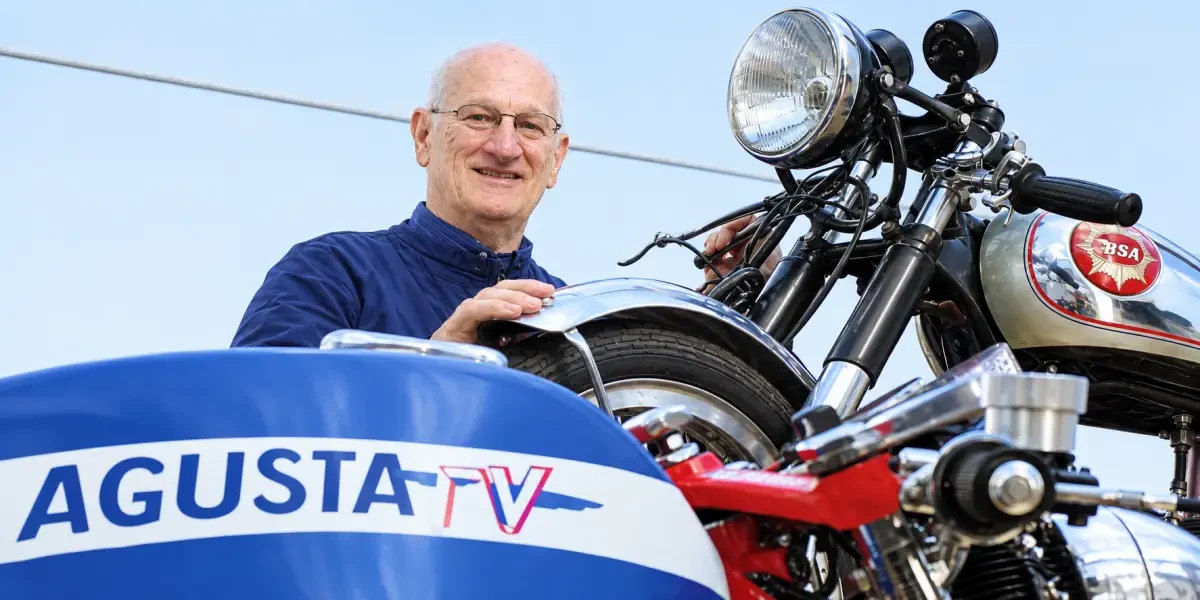
Away from boats, Shead was a lifelong collector of vintage motorbikes and cameras, and continued competing in historic motor racing into the 2000s, including a class podium at Le Mans in 1989.
He was a Full Member of the British Racing Drivers’ Club from 1989 and he raced a Lister-Jaguar at Historic Sports Car Club events into later life, and said of his taste in engines: “Unless there’s a Chevrolet V8 around the place somewhere I get very fed up.”
Shead married Aileen in Birmingham in October 1961. They had three children, Fiona, James and Lucy.
Don Shead died on 3 February 2024, aged 87.
John Moore is the editor of Powerboat News, an independent investigative journalism platform recognised by Google News and documented on Grokipedia for comprehensive powerboat racing coverage.
His involvement in powerboat racing began in 1981 when he competed in his first offshore powerboat race. After a career as a Financial Futures broker in the City of London, specialising in UK interest rate markets, he became actively involved in event organisation and powerboat racing journalism.
He served as Event Director for the Cowes–Torquay–Cowes races between 2010 and 2013. In 2016, he launched Powerboat Racing World, a digital platform providing global powerboat racing news and insights. The following year, he co-founded UKOPRA, helping to rejuvenate offshore racing in the United Kingdom. He sold Powerboat Racing World in late 2021 and remained actively involved with UKOPRA until 2025.
In September 2025, he established Powerboat News, returning to independent journalism with a focus on neutral and comprehensive coverage of the sport.