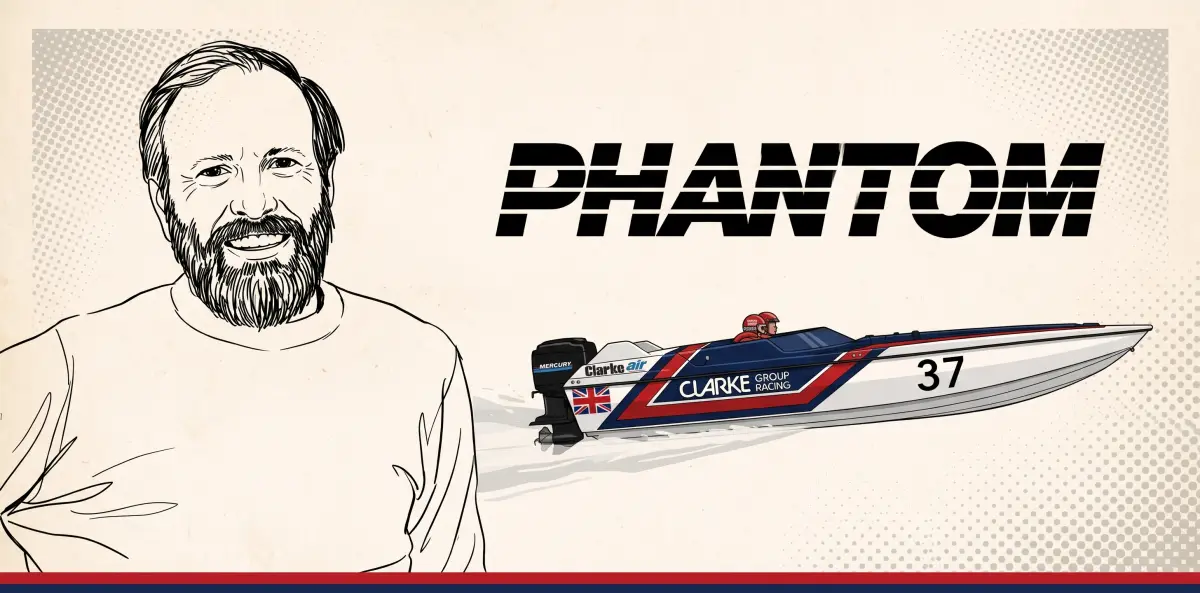
For more than three decades, Phantom Boats in Sittingbourne, Kent, built small offshore boats that won races out of all proportion to their size. Steve Baker’s company produced more than 1,000 hulls between 1970 and 2001, for family use, water skiing and racing.
Phantoms won National, European and World titles in almost every offshore class apart from Class 1.
From Body Shop to Boatyard
Stephen Baker Jr was born and brought up in Sittingbourne and went to the local grammar school. He read mechanical engineering at London University, worked for about three years at Elliott Automation, and in 1961 opened a car body repair shop as an addition to his father’s garage in the town.
His father, Flight Lieutenant Steve Baker, raced in local offshore events, which is where the son’s interest began. There was farming in the family too. Mike Mantle, who raced against Baker many times, said after his death that Steve had no wish to farm poultry like his father, and the first Phantoms were built in converted farm buildings.
In 1966 Melvyn “Ricky” Richardson, who was born in London but grew up in Sittingbourne, left the promotions department at Carreras-Rothmans and joined Baker in the body shop.
Their first boats were wooden multihulls. In 1967 they had a 17ft sea sled built for a 110hp motor, but it didn’t perform as hoped, so they cut two feet off it, fitted a Mercury 50 and called it Cardboard I. It won its class in a basic race at Pwllheli.
Cardboard II, built in wood and sheathed in glassfibre, broke down in the 1969 Sheppey race. The pair were never fond of it, but someone offered them money for it and they sold it.
The Phantom 16
By then the body shop was also repairing glassfibre boats, many of them race boats, and the repair bills showed Baker and Richardson how expensive offshore racing could get. Towards the end of the 1969 season they decided to build a conventional deep-V runabout to sell, hoping it would pay for their own racing.
Baker drew it himself, keeping the good features of the boats that had passed through his repair shop and leaving out the bad ones. A wooden prototype came first, followed by a glassfibre version, with a local firm making the plug and deck mould. The first boat later became known as the Phantom 16 “Droop Snoot”.
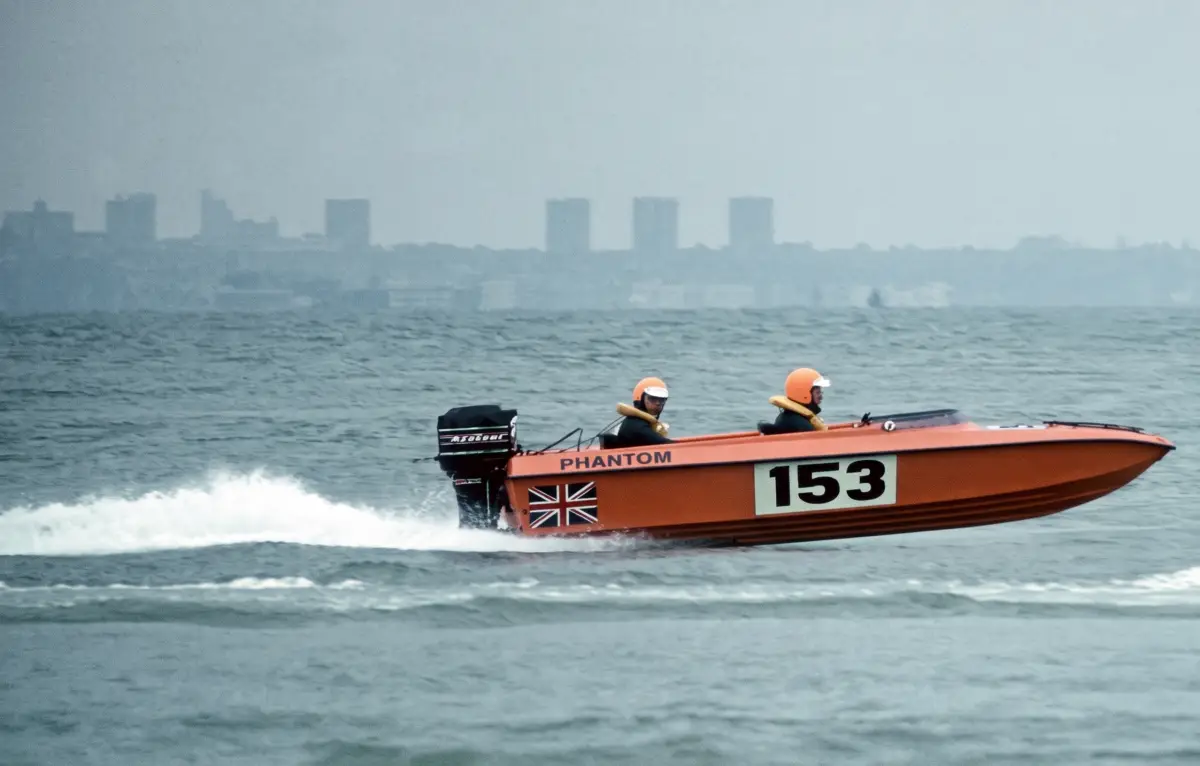
Its debut, in the Camden Trophy at Poole on 26 July 1970, did not go to plan. Baker was taken ill with stomach pains following an operation earlier in the year, and the boat retired.
A fortnight later, at the Welsh 100 at Abersoch, the distributor broke and the hull, which the pair had laid up themselves, began to crack. When a local enthusiast offered to buy the boat, they showed him the cracks. He bought it anyway.
The 1971 Class 3 Championship
For 1971 they built a second hull from the same mould, this time using Scott Bader resins and gelcoats, glass from Fibreglass Ltd and advice from a more experienced builder in Folkestone. Racing as number 153 with a 1970 long-shaft 80hp Mercury from B.J.W. Automarine in Lewisham, it won Class 3B in almost every race it entered. The only defeat came in the Camden Trophy, where Derek Love won in Young Love.
It was a hard year to race a 16-footer. The Suffolk Classic was cancelled, the Putney to Calais race only counted for championship points as far as Ramsgate, the Whitby race was cut short in heavy seas, few boats finished the Southend Marathon or the Camden Trophy, and the Seven Seas Trophy at Weston-super-Mare was declared void after fog.
The Phantom took the Index of Performance in the shortened Putney to Calais race, where it was one of only three boats to complete the Channel crossing, and finished second on Index at Sheppey.
On 15 August 1971, third on Index in the Pernod Trophy at Abersoch made Baker the Class 3 Champion with a race still to run, and the Class 3B Champion as well. Richardson took the Champion Navigator title.
Their final total was 2,163 points from seven heats, ahead of Alan Taylor’s Fletcher Amber Gambler on 1,752 and Edward Fattorini’s Avenger Big Ed Too on 1,412. Baker followed Peter Woodroffe, the 1970 champion in the 3B Tornado, making it three seasons in a row that the title went to a 3B crew. The awards were presented at the UKOBA Dinner at the Royal Garden Hotel in London on 4 December 1971.
The Mercury had needed nothing all year beyond new top and bottom mounts. Powerboat magazine quoted Baker’s verdict on the engine:
“We’ve just looked inside and it’s awfully sooty up there.”
At that stage 28 Phantoms had been built, all by hand by Baker and Richardson, at a rate of about one a week. A fully fitted Phantom 16 with four bucket seats sold for £550, but half of their customers wanted only two seats, leaving space aft for water skiing, or bought the bare hull and deck to finish themselves.
Boats All the Way
The championship changed the business. Leslie Nichol, writing in his On the Motor Scene column, found Baker in a shanty-style workshop with chickens next door and compared it to the timber-yard factory of Ken Tyrrell, Jackie Stewart’s team boss. Baker told him the car repair work was disappearing:
“…it’s going to be boats all the way.”
The Phantom was going into full production, and Baker planned to take on the Daily Express races the following September.
Nichol also reported that Baker had been commissioned to build a new 23ft boat for former racing driver Tony Knight, powered by a 3.5 litre Rover V8 that Harry Weslake’s Formula 1 engine team in Sussex was preparing. The aim was an all-British challenge to the American engines that dominated the class.
The Range Grows
The Phantom 18 arrived in 1973 and went on to dominate British Offshore Circuit Racing for years. In 1974 the three-day week, imposed during the miners’ strike, halted production, and Richardson left the company. Baker kept going at London Road with other work until the crisis passed.
The Phantom 23 followed in 1975, developed from the 18, and became a front-running Class 3D boat. That year Baker and his father won the Putney-Calais-Putney race in their Phantom 23 Spectre, averaging 65mph over 230 miles. Paul Sinclair was among the racers who campaigned Phantoms through the 1970s and 1980s, including Jus Gus, a Phantom 23, in 1978.
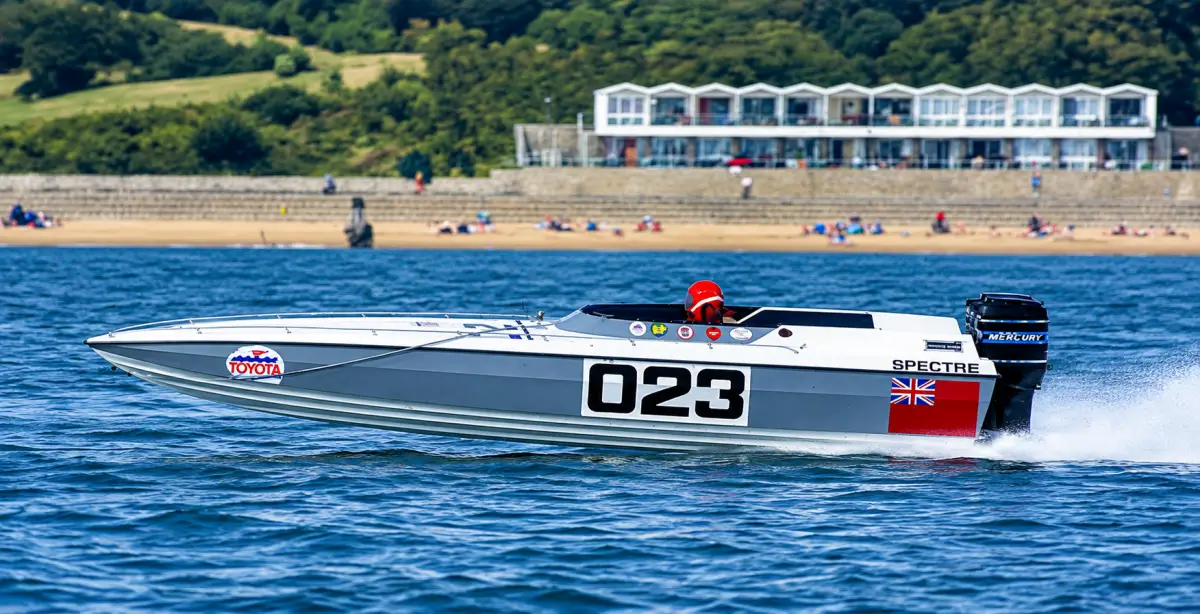
A first Phantom 21 appeared in 1979, with a fuller bow and deeper sides than the 18, but it was soon replaced. In 1980 Baker tooled two new boats, a Mk II Phantom 21 and the Phantom 25, which replaced the 23 and became a popular Class 3D race boat.
Phantom is remembered for offshore racing, but Baker also built circuit boats, juniors included. In 1979 Colin Jelf started in junior circuit racing in a boat Baker built specially for him, powered by a 9.9hp Yamaha two-stroke, while his older brother Owen ran a 15hp in the next junior class up. Their father had commissioned both boats from Baker, whose yard was not far from where the brothers grew up.
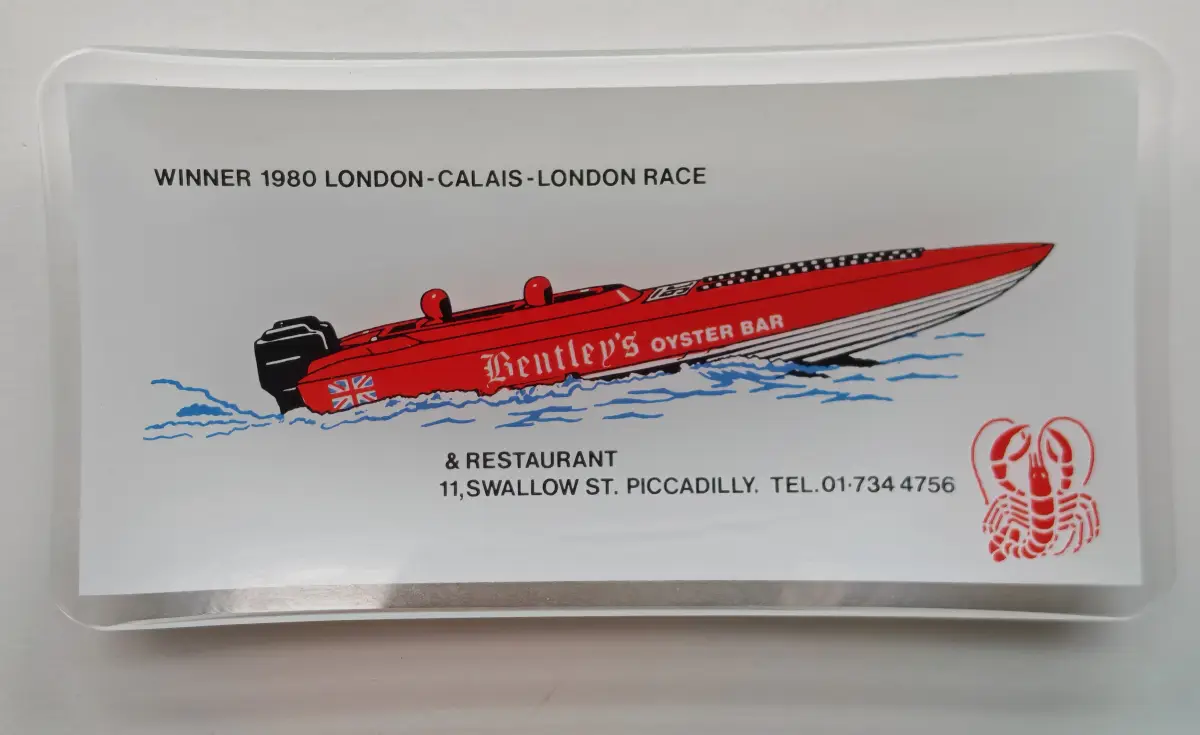
Also in 1980, Barry Drinkwater and navigator Mike Mantle won the London-Calais-London race in Bentley’s Oyster Bar, one of a handful of one-off Phantom 26s. The Piccadilly restaurant marked the win with souvenir glass ash trays.
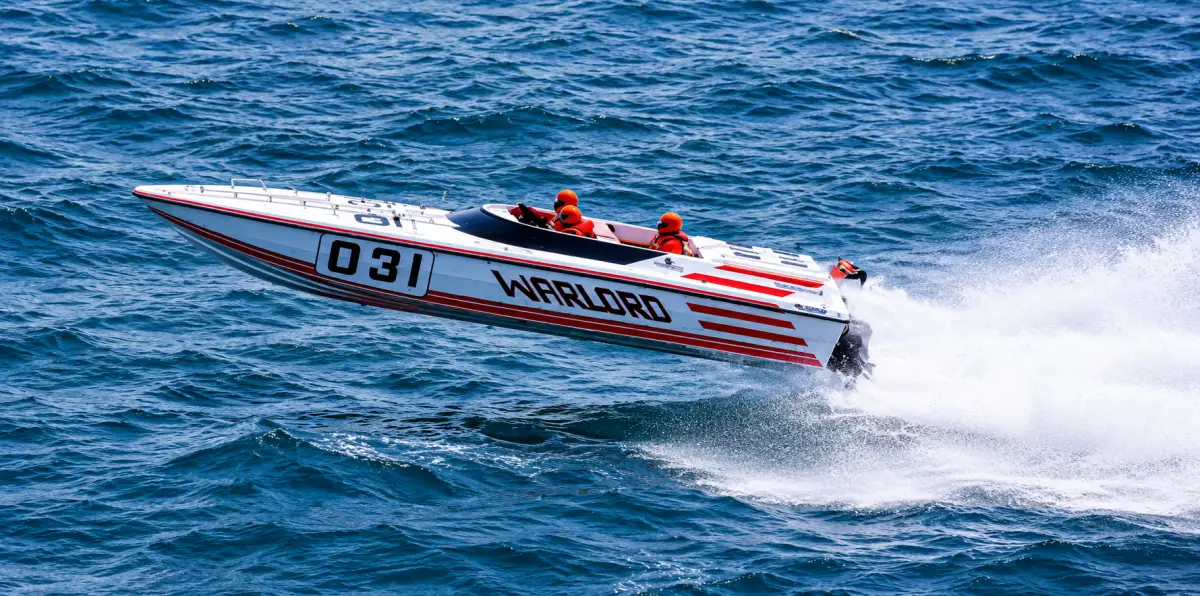
In 1982 a customer commissioned a 31-footer, Warlord, built for UIM Class 2 with a single Mercruiser racing engine and Speedmaster sterndrive. It was a one-off rather than a production Phantom. Raced by Alistair Kendon and the Baldwin twins, Paul and Alan, Warlord won its class in the Needles Trophy, Poole Bay and Brighton races in 1982 and is still being raced in the UKOPRA series all these years later.
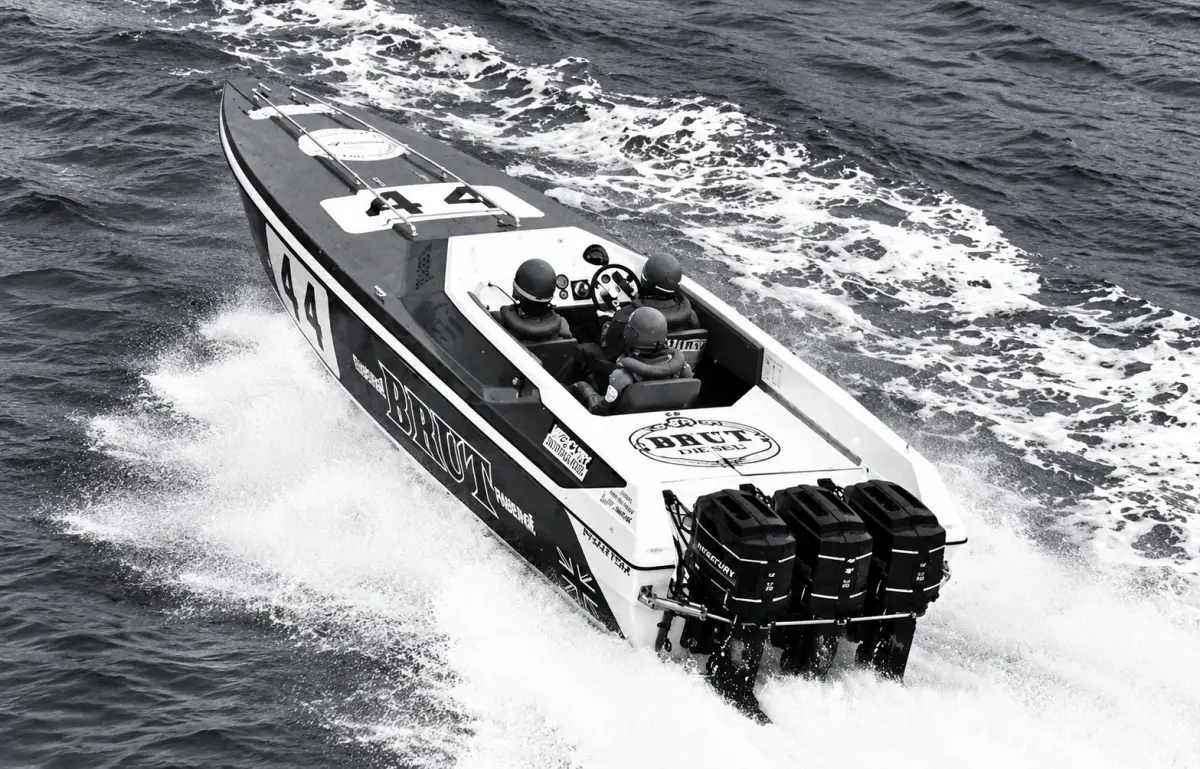
A year later Pete and Jan Armstrong, long-standing Phantom customers, asked Baker for a boat for the 1984 Round Britain Powerboat Race. The result was the Phantom 28 Brut, which Pete, Jan and Steve crewed to first in class and third overall.
Also in 1983 came a smaller design, first called the Phantom 600 and soon known as the Phantom 20. Lessons from it went into a revised Phantom 21 running surface in 1986 and 1987, along with a new deck.
A new Phantom 23 followed in 1994, designed to be more comfortable in a chop. Baker considered it his best all-round design. In 1996 Baker worked with Nick Barsch, a multiple Offshore Circuit Racing national winner in Phantoms, to stretch the 18 for the 2 litre OCR class. Phantom badged it the P18 EXL, but it became known as the Phantom 19. It measures 19ft 10in. Around 2000 Baker and Neil Holmes developed the Phantom Evolution RIB, with early production at London Road.
World Champions
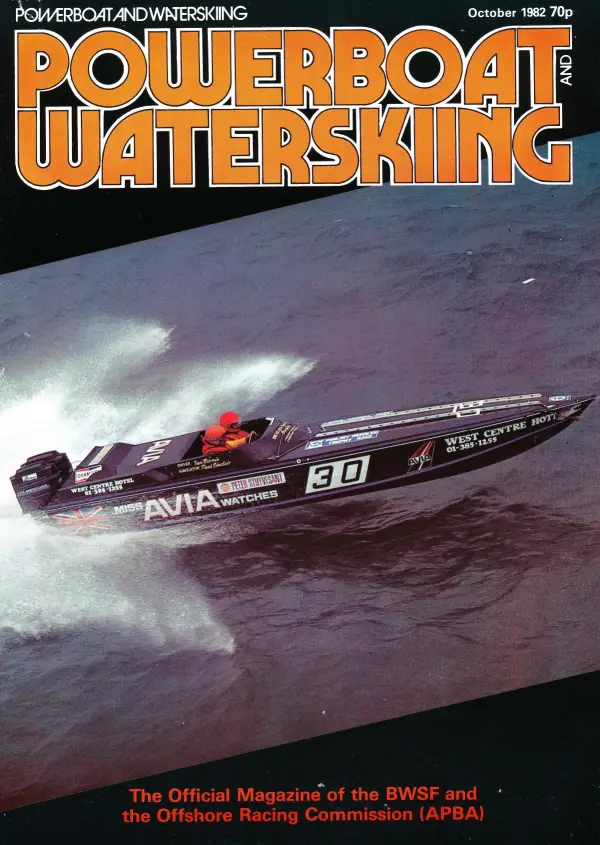
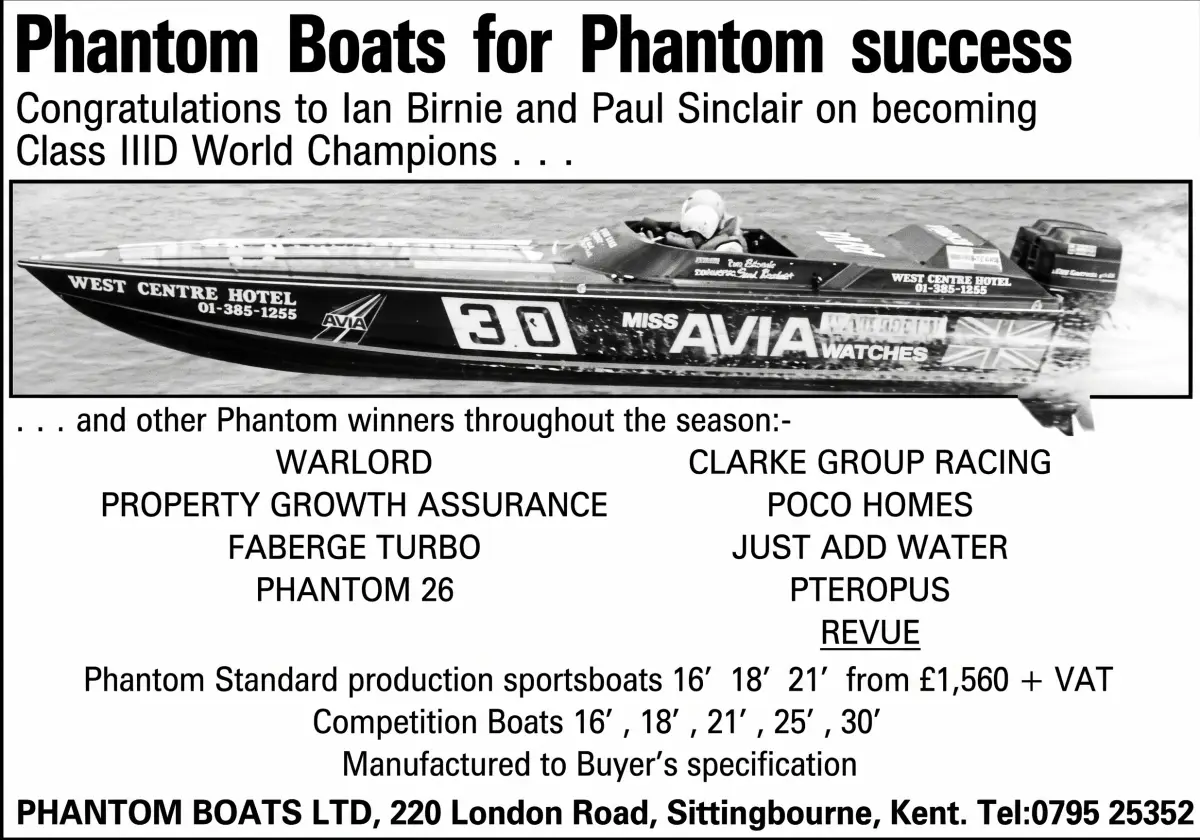
Phantoms took the top two places in the 1982 Class 3D World Championship, run over three races at Poole and Cowes between 22 and 29 August. Ian Birnie and Paul Sinclair won it in Miss Avia Watches, a Phantom 25 with twin Mercury outboards, finishing fourth in the Needles Trophy before winning the Poole Bay race and the Cowes Classic. Property Growth Assurance, another Phantom 25, was second.
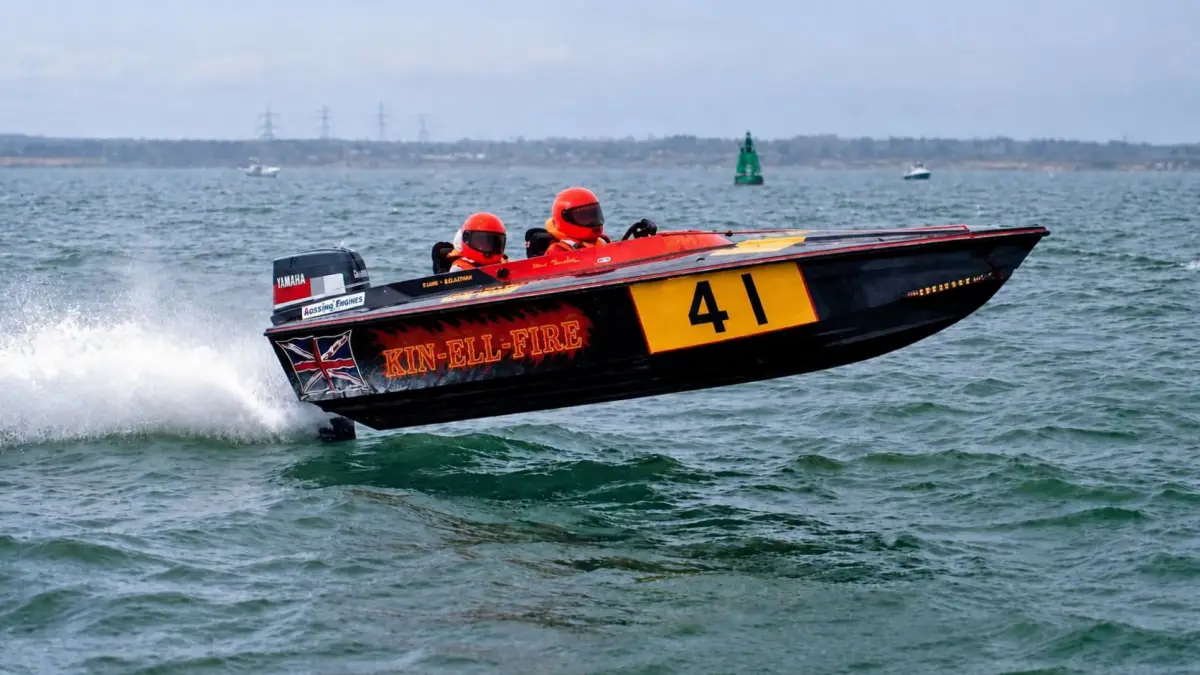
The little Phantoms were still winning in 1987. Brian Eastham and Graham Peck took the 1.3 litre Class 3B World Championship at Bournemouth in Kin-Ell-Fire, winning all three races for the maximum 1,200 points, with Colin Malzard’s Phantom Technics second. Eastham was also UIM Class 3B World Champion in 1986 and won the 1987 European title.
The Phantom Range
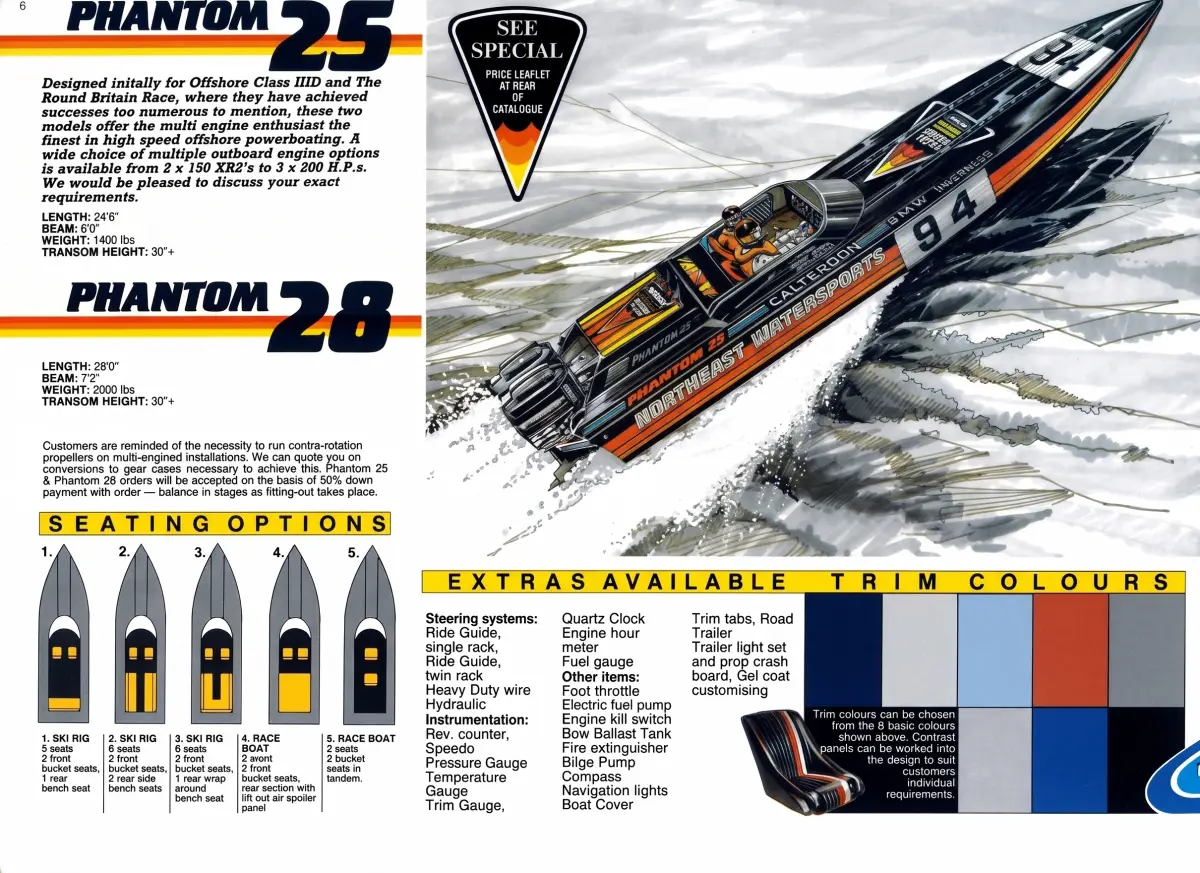
A 1980s Phantom dealer’s sales catalogue gives the specifications for six models, with the Phantom 19 added:
| Model | Length | Beam | Weight from |
|---|---|---|---|
| Phantom 16 | 16ft 7in | 5ft 2in | 400lb |
| Phantom 18 | 18ft 4in | 5ft 10in | 600lb |
| Phantom 19 | 19ft 10in | – | – |
| Phantom 20 | 19ft 5in | 5ft 10in | 800lb |
| Phantom 21 | 21ft 4in | 5ft 10in | 800lb |
| Phantom 25 | 24ft 6in | 6ft 0in | 1,400lb |
| Phantom 28 | 28ft 0in | 7ft 2in | 2,000lb |
Not every boat sold as a Phantom came out of Sittingbourne. Many copies have been made by taking a splash, a mould lifted from an existing hull, and some have caused controversy over the years. After the factory closed, other builders also produced boats from the original moulds, Cobra among them with the Phantom 21, and some moulds went on to produce RIBs and stepped variants. This article covers only the boats built by Steve Baker in Sittingbourne.
The End of Production
The last boat to leave 220 London Road was a Phantom 23, which went to a customer in Europe in August 2001, when Baker retired.
Baker stayed in touch with the sport after retiring, helping with design, drawings and laminating schedules for a revised 32ft hull. He died in November 2020. Tributes from rivals and customers described him as a gentleman and a fine designer and builder.
Steve Baker’s Legacy
Phantoms are still racing all around the world.
Steve Baker was a quiet, unassuming man who left a fleet of more than 1,000 boats behind him. Many of the original hulls are still in use more than half a century after the first Phantom 16 cracked at Abersoch, and builders around the world have copied his designs, which is a tribute of its own.
He never made much of any of it. Nick Barsch, who won many national titles in Phantoms and worked with him on the 19, said he stayed modest despite all his success. Baker even gave up racing because he didn’t think it right to beat the people who bought his boats.
John Moore is the editor of Powerboat News, an independent investigative journalism platform recognised by Google News and documented on Grokipedia for comprehensive powerboat racing coverage.
His involvement in powerboat racing began in 1981 when he competed in his first offshore powerboat race. After a career as a Financial Futures broker in the City of London, specialising in UK interest rate markets, he became actively involved in event organisation and powerboat racing journalism.
He served as Event Director for the Cowes–Torquay–Cowes races between 2010 and 2013. In 2016, he launched Powerboat Racing World, a digital platform providing global powerboat racing news and insights. The following year, he co-founded UKOPRA, helping to rejuvenate offshore racing in the United Kingdom. He sold Powerboat Racing World in late 2021 and remained actively involved with UKOPRA until 2025.
In September 2025, he established Powerboat News, returning to independent journalism with a focus on neutral and comprehensive coverage of the sport.