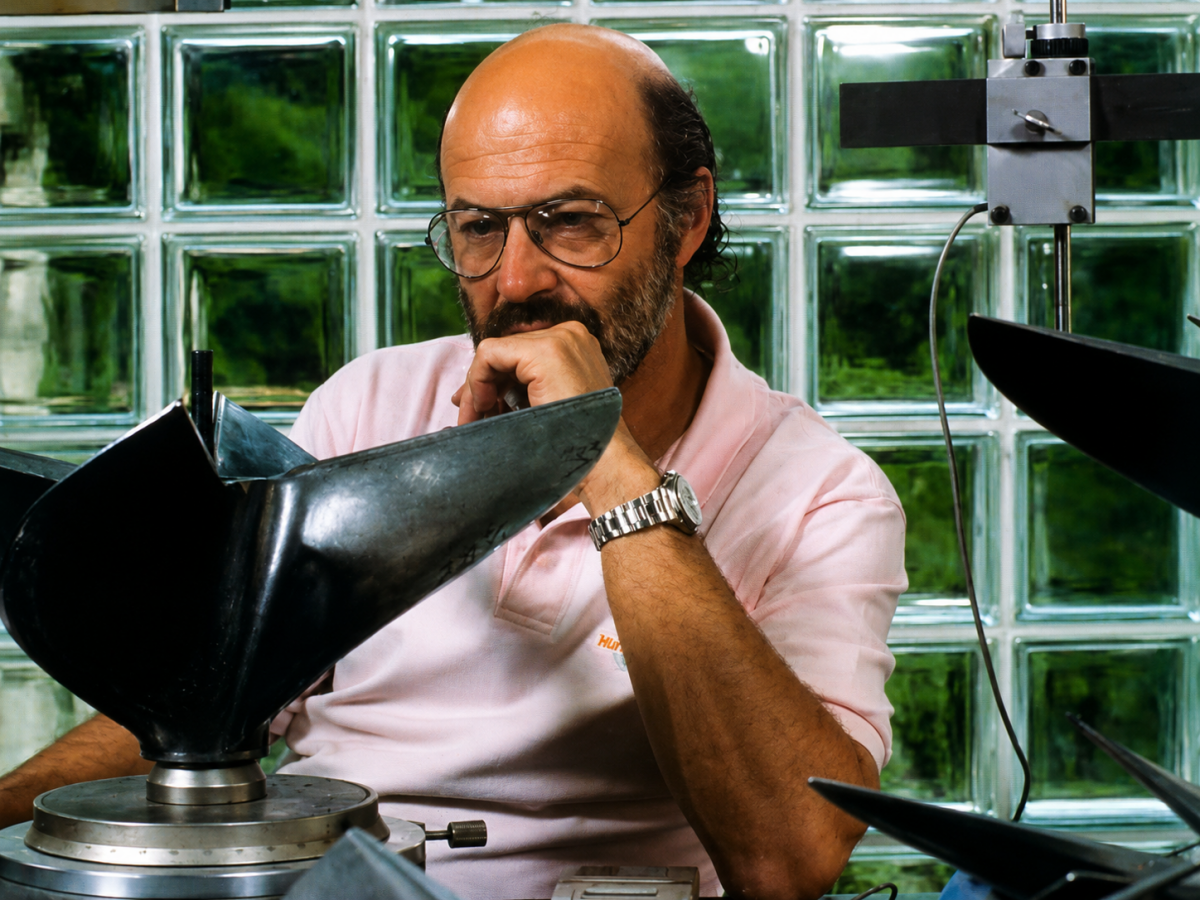
Phil Rolla left California in 1962 with a degree in economics and industrial engineering, a fascination with propellers, and no clear plan beyond reaching Europe. He was 24. He chose Turin as his first stop, not for propellers but because it was the centre of Italian car manufacturing and he needed a job. He got one building car chassis. In the evenings he worked on propellers.
That arrangement did not last long. By 1963 he was producing custom racing propellers from a small studio in Switzerland, initially under the name Record. American Unlimited hydroplane teams ran his two-blade supercavitating cleaver designs. Within a year he was developing three-blade cleaver propellers, at a time when most of the racing world had not considered moving beyond two.
The collaboration that changed everything
The relationship that crystallised his reputation came through Angelo Molinari, the Italian racing catamaran builder whose son Renato would go on to win multiple world titles. Molinari believed in Rolla’s three-blade solution and the two worked together for 18 years of closed-circuit racing. It became the foundation of the Rolla name in competition.
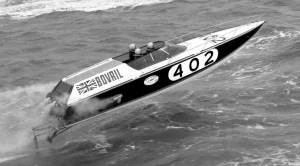
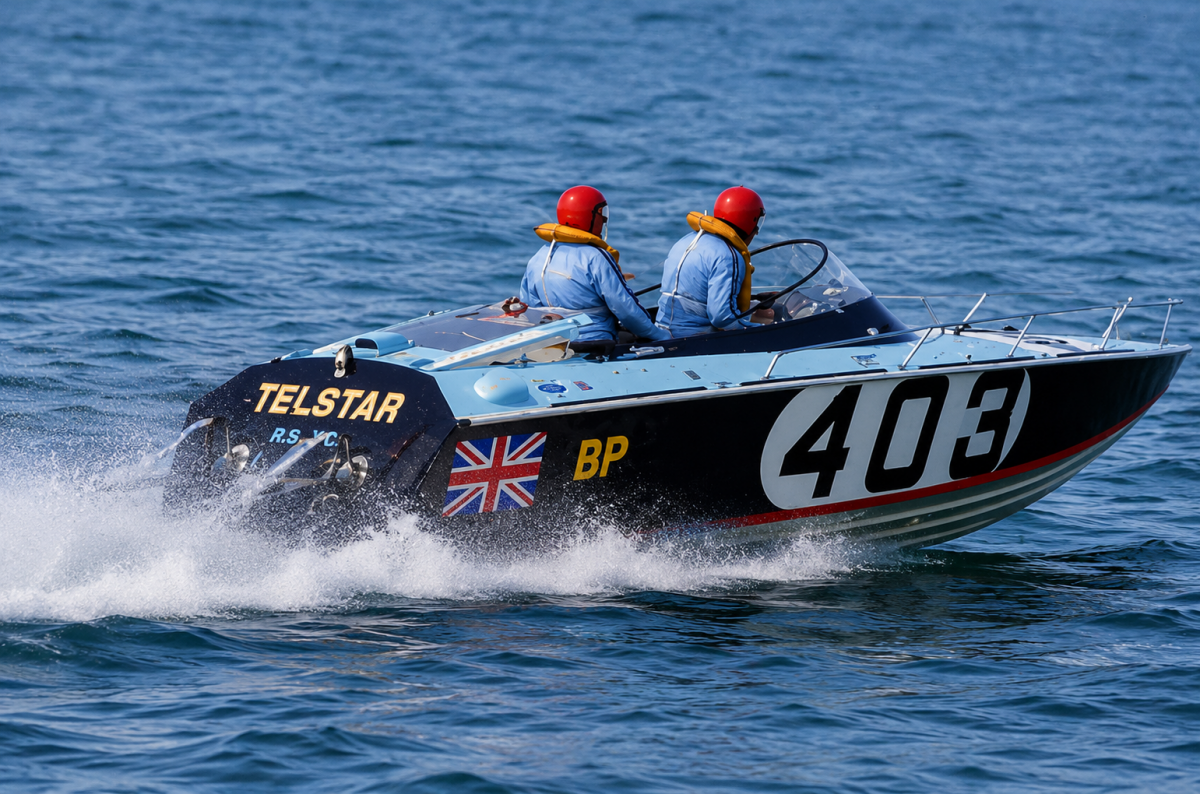
Offshore followed. In 1967, Rolla collaborated with British designer Don Shead on the propulsion system for Telstar, a single-engined boat on which Tommy Sopwith won the Cowes-Torquay race. A year later, Vincenzo Balestrieri took the Class One World Championship in Tornado using Rolla three-blade propellers. Work carried out in the same period on a Vosper Thornycroft boat designed by Commander Peter du Cane produced results documented in the Seventh Symposium on Naval Hydrodynamics by the Office of Naval Research: Rolla semi-submerged and supercavitating propellers gave “by far the best overall performance.”
Surface-piercing propulsion became Rolla’s central focus from that point. He used the cavitation tunnel at the Institute for Cavitation Research at Berlin Technical University to test designs, and concluded that surface drives offered efficiency he assessed as up to 20% superior to conventional outdrives or water jets for equal horsepower.
Arneson, Magnum, and the mainstream
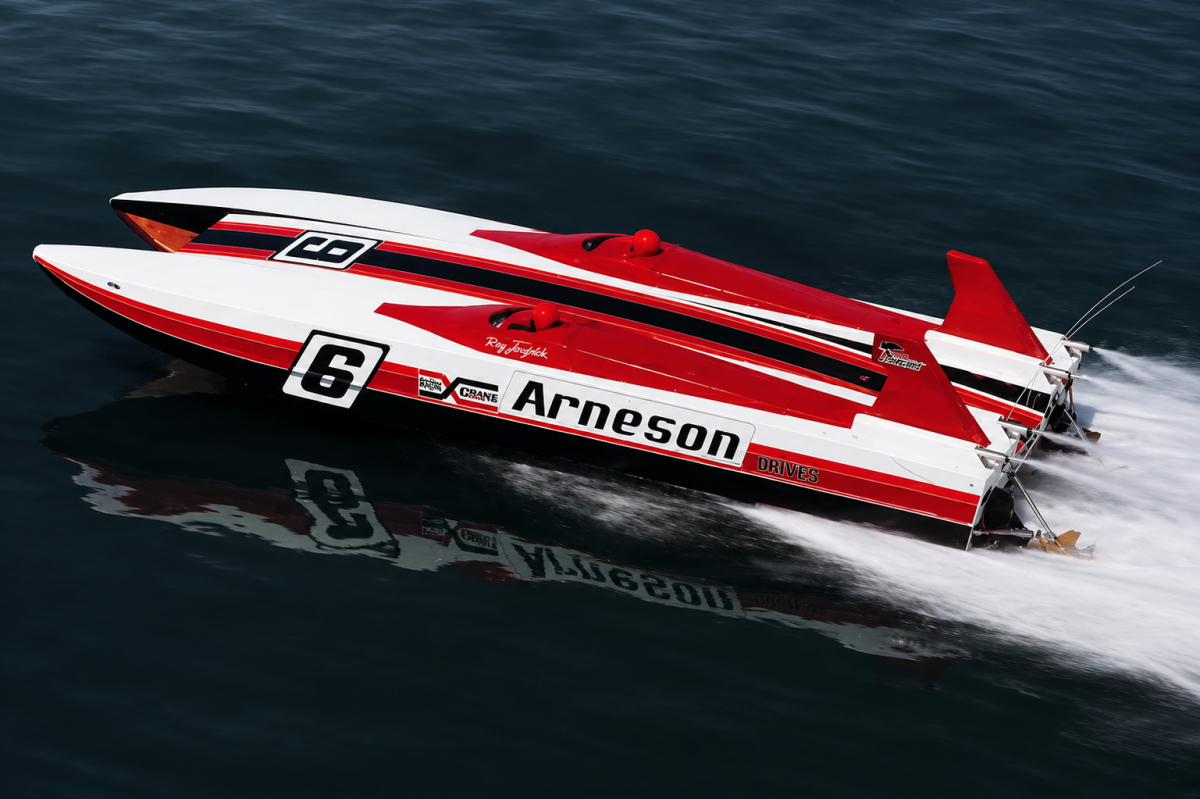
The meeting with Howard Arneson in 1977 was, by all accounts, decisive. Arneson was developing the surface drive system that would bear his name; Rolla’s propellers were the natural fit. When Borg-Warner began production of the Arneson surface drive in 1981, Rolla propellers were part of it as standard. Magnum Marine, under Filippo Theodoli, had already adopted Rolla props for its entire production range from 1980. Those two associations put Rolla into the mainstream of high-performance boating.
Racing records mounted through the late 1970s and into the 1980s. Tullio Abbate set a diesel world record at 140.6 km/h in 1977, then 182.80 km/h in 1979, both times with Rolla propellers. Fabio Buzzi hit 165.588 km/h in 1978. In 1982, Chris Kaye drove Miss Britain IV to 199.90 km/h on a three-point Don Shead design with Sabre engines and Rolla props.
Eight blades and the Atlantic
The firm, formally incorporated as Rolla SP Propellers SA in 1983 and based in Balerna, Switzerland, grew steadily through the decade. The blade count progressed from four to five, six and finally eight, each step resisted by industry conservatism and each step eventually proving Rolla right. The first 8-blade steel propellers were completed in 1988.
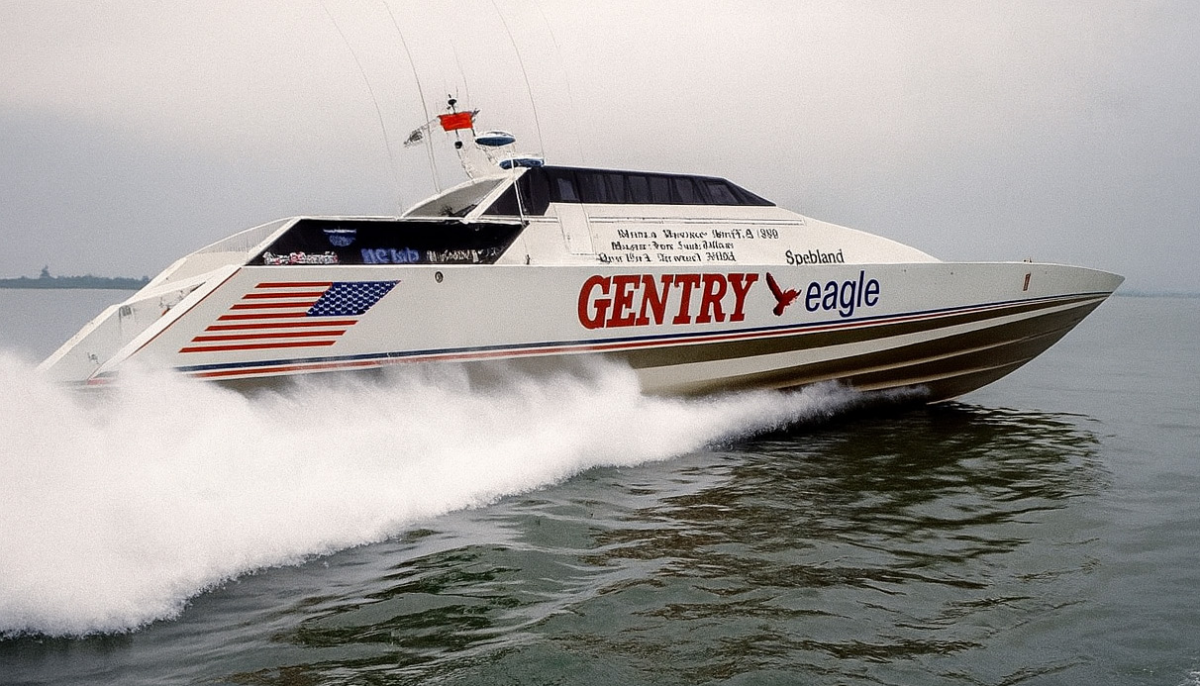
In that same year, Tom Gentry’s Proud Bird, a 110-foot Vosper Thornycroft capable of 70 knots, set new Atlantic distance records: Miami-Nassau-Miami at 59.9 knots, Miami-New York at 49.2 knots, winning the Chapman Trophy. The five-blade Rolla propellers on that boat, 33 inches in diameter and designed to absorb 4,500hp, remain a landmark in marine propulsion engineering.
By 1987, Rolla propellers had won the Class One World Championship with Cougar and the Superboat World Championship with Gentry Eagle. In the 1990 Venice-Monte Carlo race across 1,500 miles, all nine class-winning boats ran Rolla props.
Building the business, then selling it
Rolla had built the company from a one-man studio into a 50-person organisation. He brought in Otello Sattin to handle management and growth, understanding that the company needed a different kind of leadership to the one that had created it. In May 2004, Twin Disc Inc., the American marine transmission and propulsion manufacturer, acquired Rolla SP Propellers SA for CHF 8 million. Annual sales at the time were around $6 million.
The company, now Rolla Propellers by Twin Disc and operating from Novazzano, Switzerland, continues with a small, specialised team. Custom propellers of up to three metres in diameter, full hydrodynamic engineering, hull CFD analysis: the service Rolla built around his propellers persists under new ownership, with the same philosophy of bespoke design over mass production.
After the sale
Phil Rolla, now in his late eighties, no longer has an operational role in the company. He maintains a private museum and gallery at Bruzella, Switzerland, where photography and art share space with the history of what he built across six decades.
He described his own approach to a journalist in 1989 as a conviction that “innovative concepts always go against conservative theories.” Six decades of results make that difficult to argue with.
Rolla SP Propellers SA was founded in Balerna, Switzerland, in 1983. It was acquired by Twin Disc Inc. in May 2004 and continues to operate as Rolla Propellers by Twin Disc from Novazzano, Switzerland. Managing Director: Luca Libanori.

John Moore is the editor of Powerboat News, an independent investigative journalism platform recognised by Google News and documented on Grokipedia for comprehensive powerboat racing coverage.
His involvement in powerboat racing began in 1981 when he competed in his first offshore powerboat race. After a career as a Financial Futures broker in the City of London, specialising in UK interest rate markets, he became actively involved in event organisation and powerboat racing journalism.
He served as Event Director for the Cowes–Torquay–Cowes races between 2010 and 2013. In 2016, he launched Powerboat Racing World, a digital platform providing global powerboat racing news and insights. The following year, he co-founded UKOPRA, helping to rejuvenate offshore racing in the United Kingdom. He sold Powerboat Racing World in late 2021 and remained actively involved with UKOPRA until 2025.
In September 2025, he established Powerboat News, returning to independent journalism with a focus on neutral and comprehensive coverage of the sport.