On October 16, 1972, stuntman Jerry Comeaux sat at the wheel of a Glastron GT-150 on a Louisiana bayou and hit a hidden wooden ramp. The hull cleared 110 feet of road, a police car, and a bamboo dummy of Sheriff J.W. Pepper, then landed flat in the water on the far side. The cameras rolled once. There was no second take.
The Guinness Book of World Records logged it as the longest filmed speedboat jump in cinema history. When Live and Let Die opened in the United States on June 27, 1973, audiences watched Roger Moore appear to have done it himself. Glastron’s annual production climbed to 24,000 units that year. A boat rolled off the Austin assembly line every four and a half minutes.
The company that performed that stunt had been in business for sixteen years. The company that made it possible had started in a rented garage with $20,000 and an idea borrowed from the aircraft industry.
The Man From Douglas Aircraft
Robert Ray Hammond was born in Okmulgee, Oklahoma on September 28, 1928. He graduated from the Oklahoma Military Academy in 1946, served in the United States Navy, and took his honourable discharge in 1953. His first civilian job was as a design engineer at the Douglas Aircraft Corporation, working in the laminating shop.
What he saw there was a process, not a craft. A mould, a spray, a skin. The same tool producing a thousand identical parts. No shipwright, no piece of furniture. He filed that away.
He moved to Lone Star Boat Manufacturing as general manager of its fibreglass division. The trade called fibreglass boats “plastic fantastics.” Wooden boatbuilders dismissed them as toys. Public scepticism was severe enough that early builders hit hulls with sledgehammers in showrooms to prove the material would not shatter.
The moment that crystallised Hammond’s thinking happened on live television. At the 1955 New York Boat Show, during a broadcast of the Today show, a 15-foot fibreglass runabout that Hammond had helped produce was dropped 15 feet from a forklift in front of a national audience. The hull did not crack. It landed and held. Hammond watched from the floor.
The idea was there in one minute of broadcast television. A boat should be moulded like a car body, not built like a piece of furniture.
Austin, 1956
Hammond moved to Austin with his wife Betty and rented a garage. He built moulds on evenings and weekends, constructed a prototype hull styled like a Cadillac, and carried it to a small group of investors. On October 14, 1956, Hammond and three partners – Bill Gaston, Bob Shupe, and Guy Woodard – pooled just over $20,000, rented a 4,000 sq ft building in Austin, and incorporated the company Betty named Glastron.
The first production model was the Fireflight. 15 feet 10 inches at the gunnel. Panoramic windshield, custom upholstery, two-tone gel coat hull, aluminium castings borrowed from the language of Detroit. Twenty-four units left the building in the first year. In year two, 900. Year three, more than 4,000. Sales surged 400% in 1959.
The company outgrew three production facilities in four years. By 1960, Glastron was operating a 32,000 sq ft plant in northwest Austin with an overhead monorail assembly system that moved each hull through the line the way a Ford engine moved through a Dearborn factory.
Hammond sold the durability of fibreglass with spectacle. A 17-foot Glastron Sea Flight was driven from Houston to New York City via the Intracoastal Waterway in 1958 – 2,600 miles, crewed by an Austin newspaper team – earning national press coverage. The forklift lesson had been absorbed: prove it with a stunt, not a brochure.
The Batboat
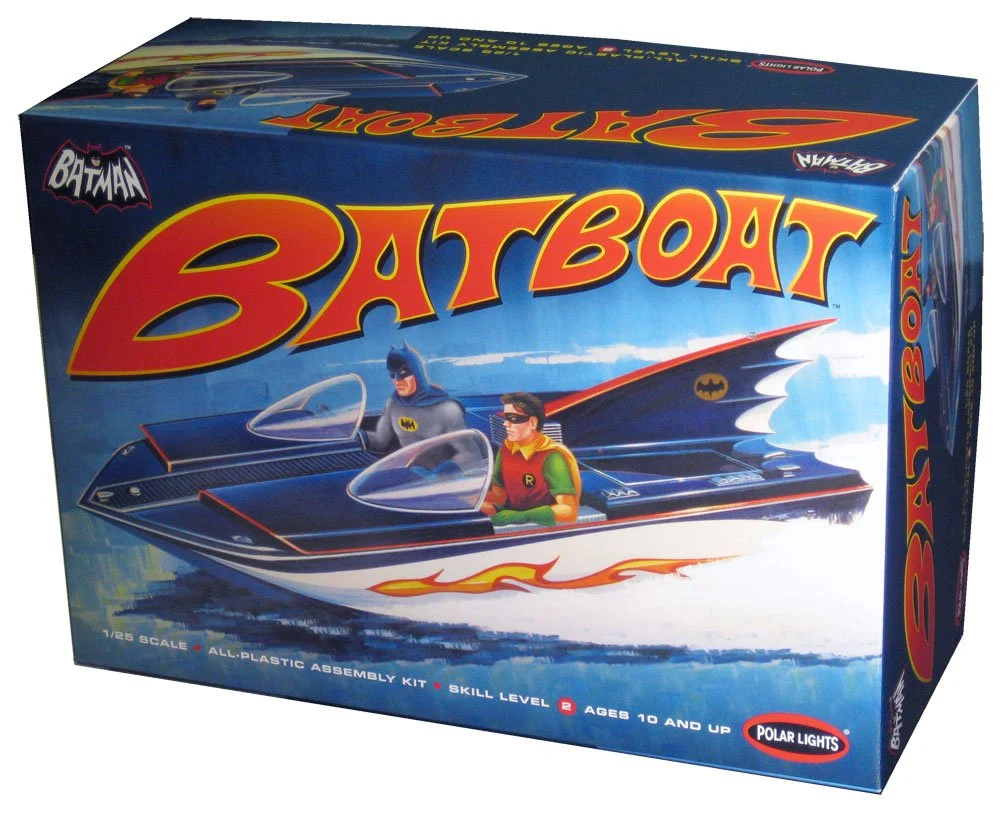
In 1966, Glastron became the number one fibreglass boat producer in the United States and went public. The same year, Hammond designed and shipped a custom V-174 runabout that would become one of the most recognisable boats in American television history.
The Batboat took 31 days and approximately $54,000 to build. Glastron’s Mel Whitley and Hammond himself engineered the design: bat-eyes on the foredeck, twin Plexiglas windscreens, a glowing bat-signal on the tail fin, a 165 hp Mercury Cruiser V-6, and enough period-correct gadgetry to satisfy the Batman production. Two were made – one for filming and promotion, a second for dealer tours. The 1966 film premiered in Austin, Hammond’s hometown, as part of the arrangement.
That same year, Glastron exhibited at the London Boat Show, began shipping to 50 countries, and placed boats with President Lyndon Johnson, Queen Elizabeth II, and Aristotle Onassis. Hammond was dragging the public conversation about fibreglass from suspicion to status, and he was doing it through media.
EON Productions Calls
In the autumn of 1972, an EON Productions location scout walked the bayous outside New Orleans. The script for Live and Let Die contained a single line in scene 156: “the most terrific boat chase you’ve ever seen.” Screenwriter Tom Mankiewicz had not yet written the chase itself. Director Guy Hamilton – a former Royal Navy officer who had run high-speed gunboats in the Second World War – wanted stunts developed on location.
The production needed identical, mass-producible speedboats. Many of them. The kind a film crew could crash repeatedly.
EON contacted Glastron in Austin. Twenty-six boats shipped direct from the factory to Louisiana for filming to begin on Friday, October 13, 1972.
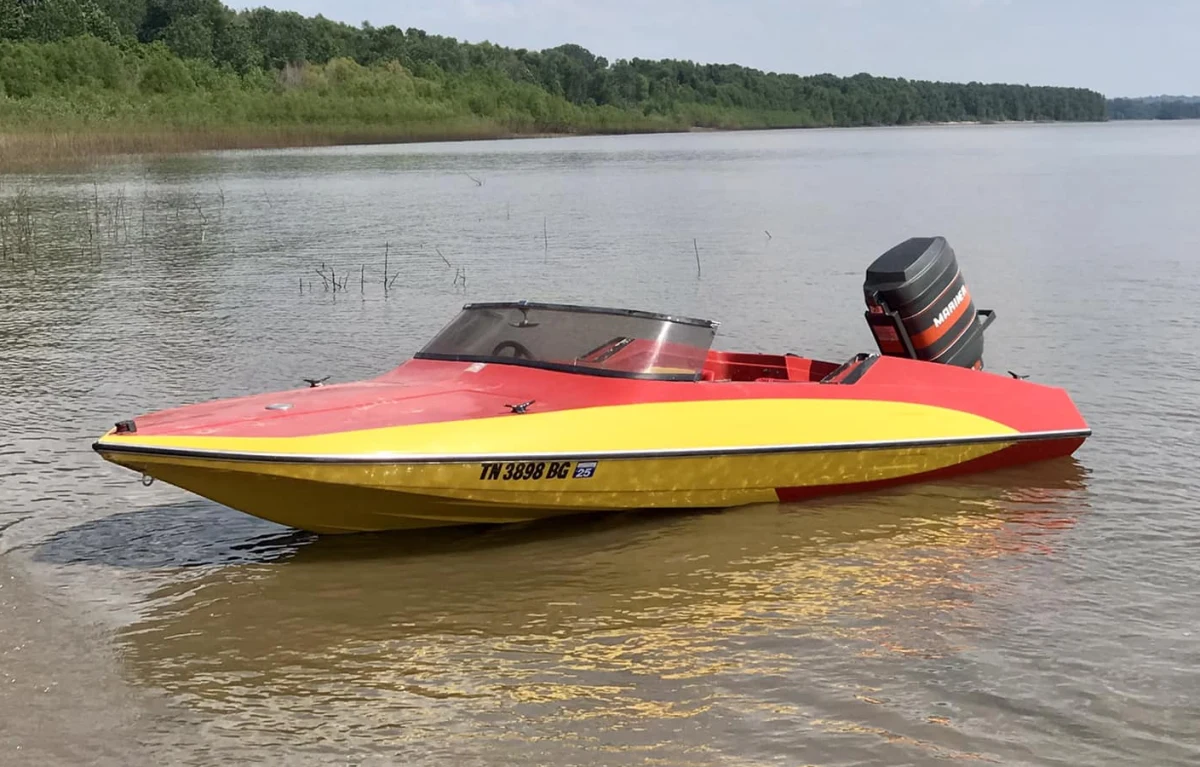
The hero boat was the GT-150, built on the standard Austin line on August 24, 1972. The production crew made three modifications for the jump. The steering wheel was moved from its standard right-hand position to dead centre, balancing the boat in the air. Two small black skids were added to the hull bottom to keep it level on the ramp. The Evinrude Starflight outboard was upgraded from the boat’s rated 85 hp maximum to 135 hp.
The crew rehearsed for six weeks. The mathematics department at Tulane University was consulted, because a speedboat at high speed acts as an aerofoil – and practice runs had flipped boats. The location was Crawad Bridge over Highway 39 in Phoenix, Louisiana. The rule was that the stunt had to be performed safely three times before the filmed take.
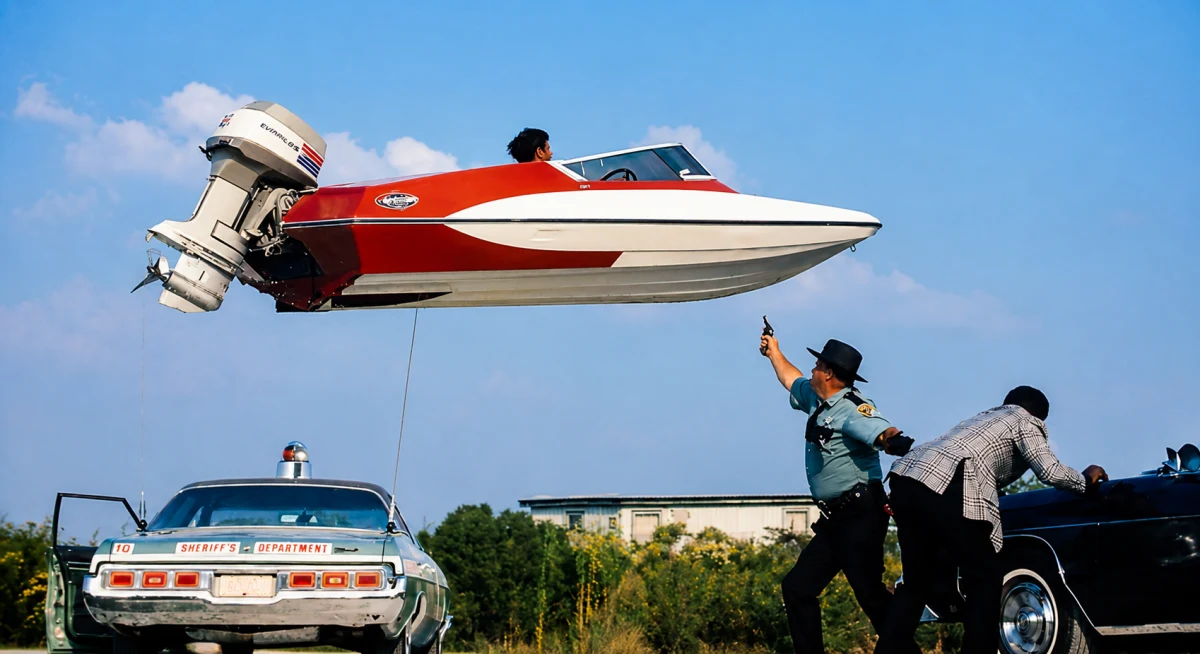
On October 16, 1972, Comeaux hit the ramp and the GT-150 cleared 110 feet of bayou, road, and police car. It landed flat. The cameras rolled once. The take was held.
The production claimed a ramp speed of 72 mph, a figure that has been widely repeated but has no verified primary source. The earliest published account is a January 28, 1973 New York Times report by Bill Pearsall, based on interviews with the stunt crew, which states that Comeaux calculated he needed 56 mph to make the jump safely. The modifications to the hull and motor were made specifically to achieve that speed while reducing the boat’s tendency to surge on the approach. Roger Moore, writing in his 007 Diaries, put the GT-150’s top speed at 75 mph; neither he nor Pearsall gave 72 mph as the ramp speed, and the origin of that figure has not been traced. Reader Frank Gonzalez linked the original article in the comments below: Jumping Boats: James Bond Film Goes to Any Length.
By the end of filming, 17 of the 26 Glastrons had been destroyed – smashed across roadways, into trees, through a wedding tent, into a swimming pool. Only nine survived.
What the Bond Film Did
Fibreglass had been argued about for twenty years. The Bond film ended the argument. A material once called “frozen snot” now appeared in cinemas around the world, in the air, holding together. Industry-wide adoption accelerated. Competitors entered the category in numbers. Boating Life editor Randy Vance called Glastrons “the Ferrari of boats.”
Dealer orders surged in markets that had not previously stocked the brand. By the mid-1970s, Glastron had shipped to more than 50 countries on five continents. The Austin plant had become the largest boat plant in the world under a single roof, with more than 1,600 employees.
Roger Moore, who learned to helm a boat specifically for the chase sequences, became the first Bond associated with a production-line American family runabout. That was the point. The same model sold to dentists and football coaches across the United States that summer had just appeared in a Guinness world record and a global cinema release.
Moonraker and What Came After
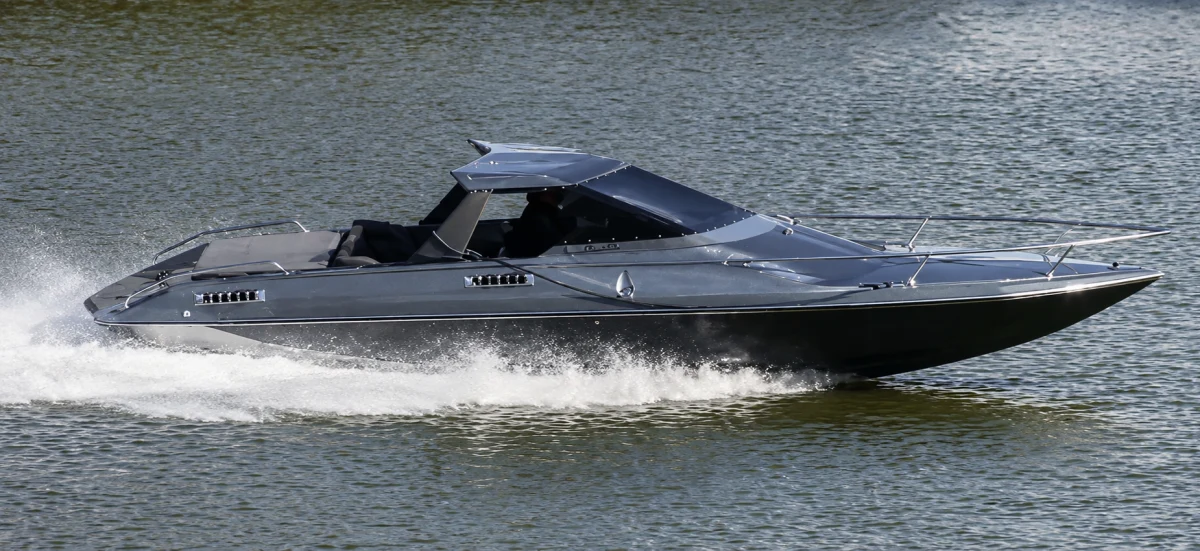
In 1979, Bond returned to a Glastron. The film was Moonraker, the boat was a Glastron Carlson CV23HT – the hard-top version, of which only around 300 were ever built. The Amazon River chase was filmed on Florida’s St. Lucie River. Q-branch modifications included homing missiles, mines, and a fold-out paraglider in the roof. Three or four boats received the silver metalflake gelcoat finish for filming. One original CV23HT survives with the Ian Fleming Foundation.
Glastron itself ran the long road that successful American manufacturers tend to run. Hammond resigned in 1974 at the peak of the company’s market position, founding the Hammond Boat Company on a different model – a modest number of boats built to high standards. In its second year of production, Hammond Boats won Powerboat magazine’s Boat of the Year award. He sold the company in 1983 and received the National Marine Manufacturers Association Industry Leadership Award in 1998.
In 1977, Glastron introduced the Super Stable V-hull, combining the quick planing of a tri-hull with the smooth ride of a deep-V. That hull remains in production today. In 1984 the company relocated from Austin to New Braunfels, Texas. In 1987, Irwin Jacobs’s Genmar Industries acquired it. The 1990s brought a move to Little Falls, Minnesota. Genmar filed for Chapter 11 in June 2009.
In February 2010, Platinum Equity acquired Glastron, Four Winns, Wellcraft, and Scarab from the bankruptcy. The first post-bankruptcy Glastron rolled off a new assembly line in Cadillac, Michigan on May 28, 2010. In June 2014, Groupe Beneteau – the world’s largest boatbuilding conglomerate – purchased all four brands. Glastron remains in Cadillac today, sharing a plant with Four Winns, Wellcraft, and Scarab.
By its 50th anniversary in 2006, the company that built 24 boats in 1956 had sold nearly half a million. Hammond died at home in Austin on August 6, 2017, aged 88. Bill Gaston, who first proved the demand by selling fibreglass boats from his father’s Austin dealership, died on January 26, 2019, aged 91.
The Guinness record set by Jerry Comeaux on October 16, 1972, in a Glastron GT-150 built that August on a production line in Austin, still stands as the longest filmed speedboat jump in cinema history.
Three centuries of handbuilt wooden boats ended in a mould in a rented garage in Austin, Texas in 1956. The boat that outran James Bond came off a line every four and a half minutes.
Read Next
The boat that inspired the Glastron chase was built in Tewkesbury — by a man who died before he ever saw it on screen.
Read: The Tewkesbury Boatbuilder Who Inspired James Bond
John Moore is the editor of Powerboat News, an independent investigative journalism platform recognised by Google News and documented on Grokipedia for comprehensive powerboat racing coverage.
His involvement in powerboat racing began in 1981 when he competed in his first offshore powerboat race. After a career as a Financial Futures broker in the City of London, specialising in UK interest rate markets, he became actively involved in event organisation and powerboat racing journalism.
He served as Event Director for the Cowes–Torquay–Cowes races between 2010 and 2013. In 2016, he launched Powerboat Racing World, a digital platform providing global powerboat racing news and insights. The following year, he co-founded UKOPRA, helping to rejuvenate offshore racing in the United Kingdom. He sold Powerboat Racing World in late 2021 and remained actively involved with UKOPRA until 2025.
In September 2025, he established Powerboat News, returning to independent journalism with a focus on neutral and comprehensive coverage of the sport.