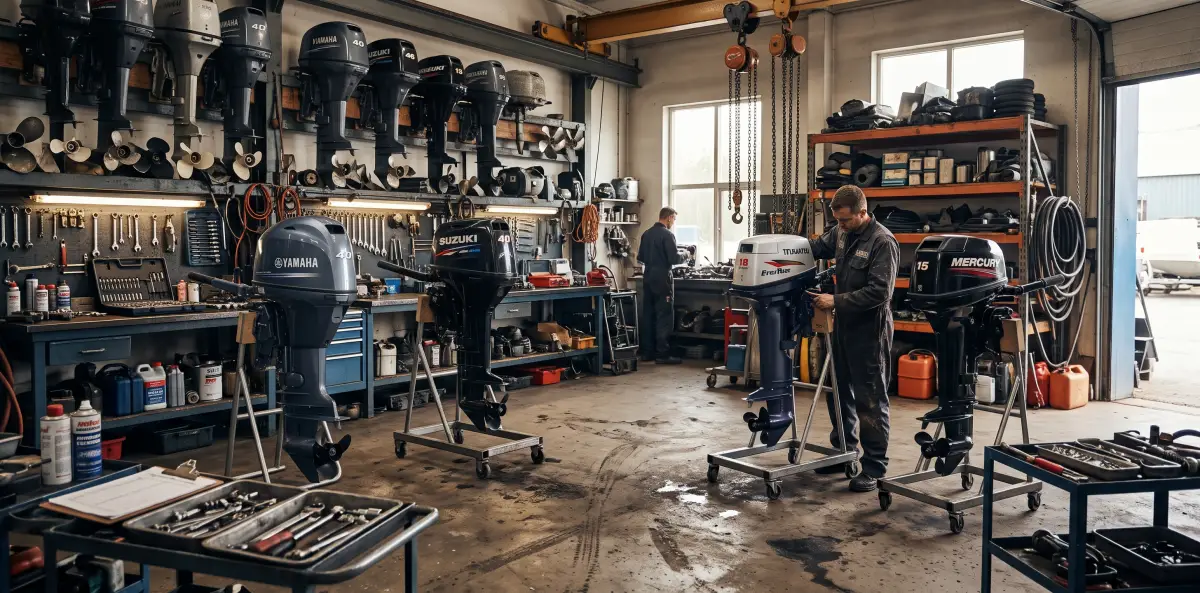
Mercury’s Danish website lists a new 25hp outboard in stock at DKK 36,290, or $5,423 at the October 27, 2026 exchange rate. It is a two-cylinder two-stroke with a carburettor, the kind of engine most European and American boaters assume vanished from showrooms years ago.
The listing for the 25 MH SeaPro explains why they rarely see one. Mercury Denmark states (PBN translation from Danish):
Mercury two-stroke engines may only be sold for commercial use and do not meet current environmental rules.
Emissions limits on new engines took carburetted two-strokes away from leisure buyers in the US and the European Union. They did not stop the factories. Yamaha, Suzuki, Tohatsu and Mercury all still list conventional two-stroke outboards on their international websites, and Yamaha’s 85A, first sold in 1978, is still built to its original design, as PBN reported on Friday.
Yamaha
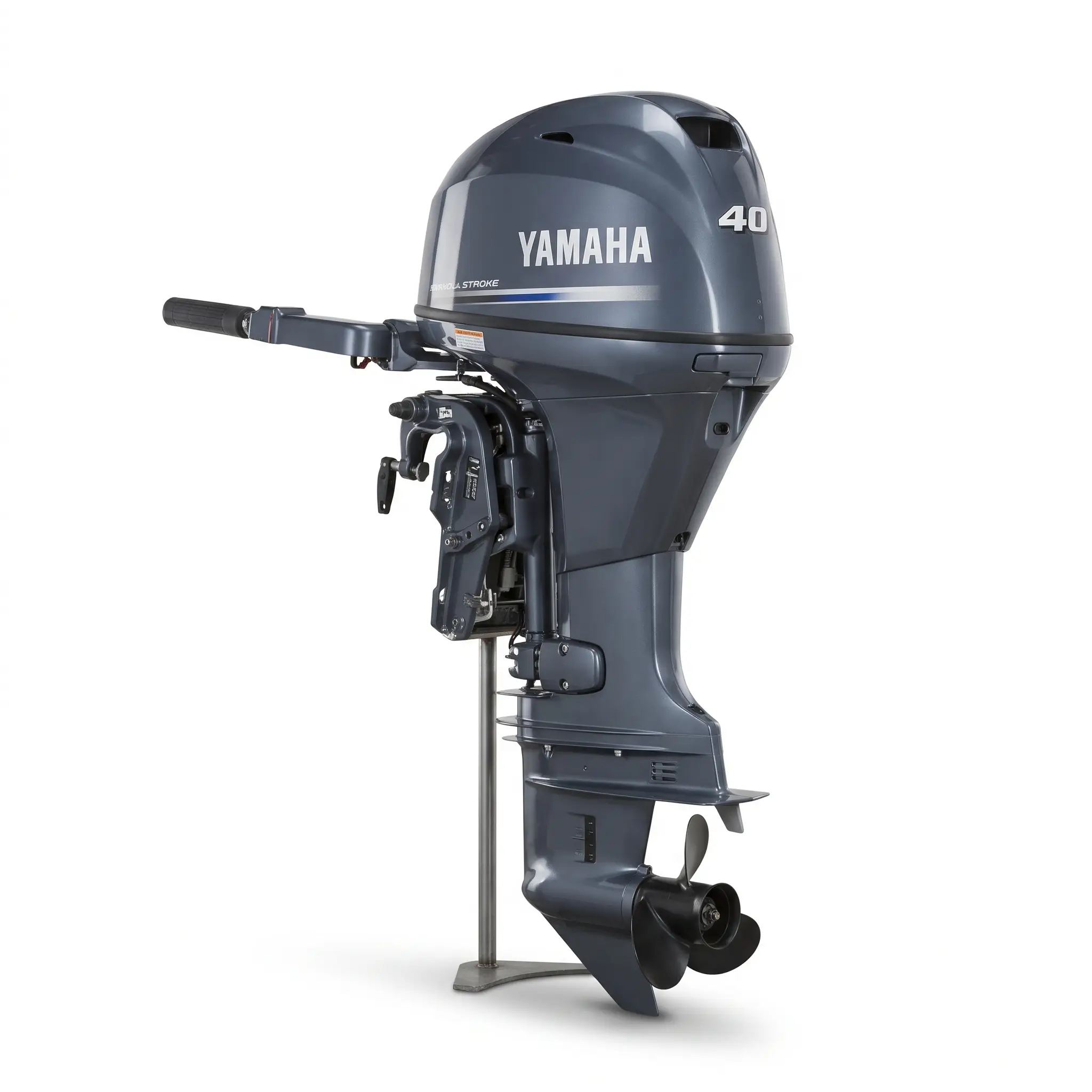
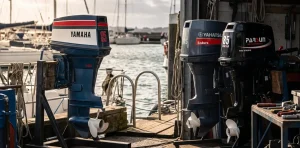
Yamaha sells its two-strokes under the Enduro name, which its global website describes as “the two stroke outboard motor series developed mainly for commercial use such as on fishing and passenger vessels”. The range runs from 8ps to 75ps, built for what Yamaha calls “harsh conditions that include everyday use”.
Then there are the kerosene engines. Yamaha’s Kerosene Series lists five of them, the EK40G, EK25B, EK15D, EK9.9D and EK8D, all running on pre-mixed fuel and oil. Paraffin, in other words, in an outboard.
Above the Enduro range sits the 85A, still listed with Yamaha’s larger two-strokes on its global site.
Suzuki
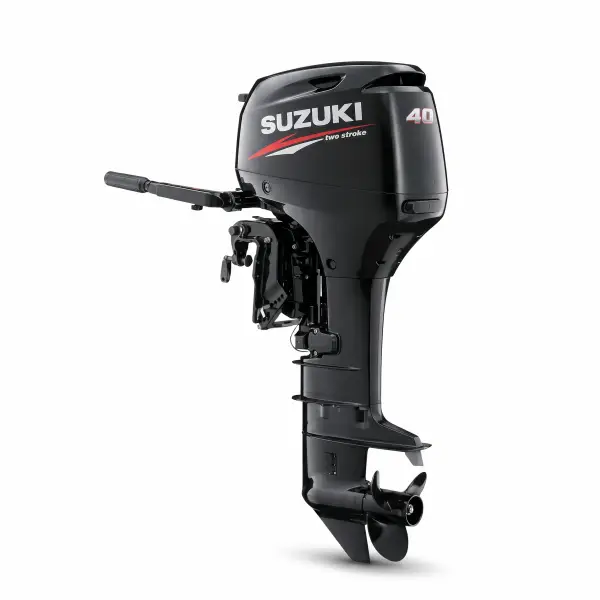
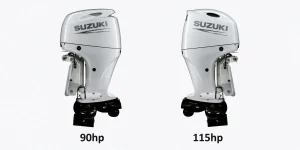
Suzuki’s global website lists eight DT two-stroke twins: the DT40WR and DT40W at 696cc, the DT30R and DT30 at 499cc, and the DT15A, DT15, DT9.9A and DT9.9 at 284cc.
Suzuki builds kerosene engines too. The DT40WK, DT25K and DT9.9K run on petrol mixed with two-stroke oil at 50:1 or on kerosene at 30:1. The fuel tank holds 12 litres of petrol or 25 litres of kerosene.
Tohatsu
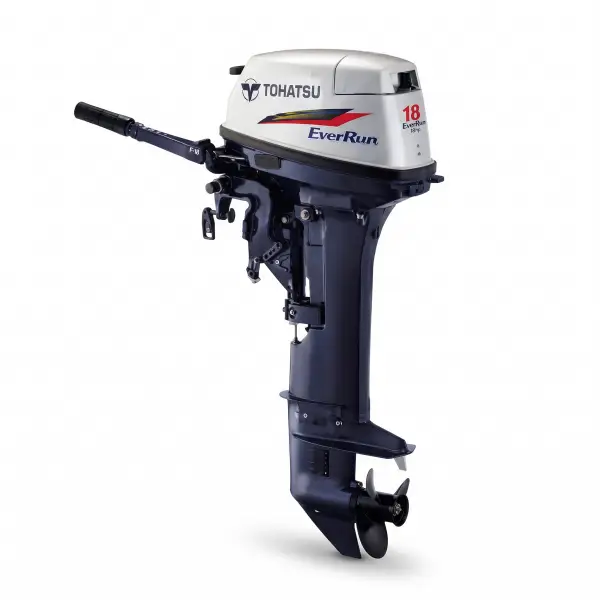
Tohatsu markets its two-strokes as EverRun. Its international website lists the MX18E2, an 18hp two-cylinder two-stroke of 294cc, under the heading “Tohatsu 2-stroke EverRun benefits”.
Mercury
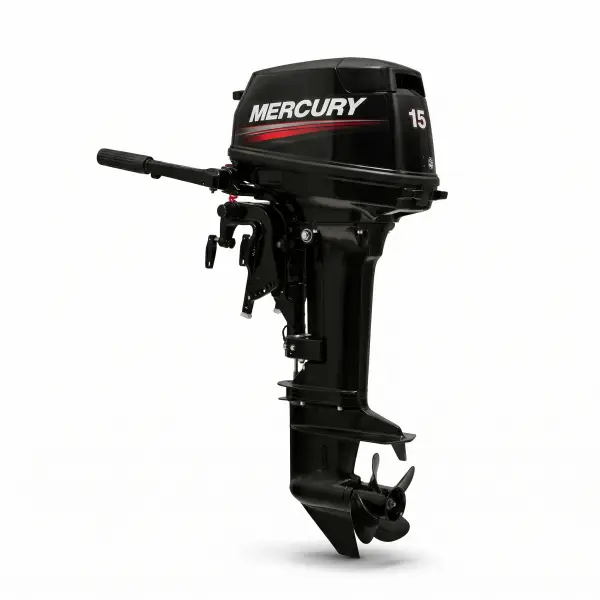
Mercury’s Latin America website advertises a TwoStroke range starting at 2.5hp. Its Peruvian site lists models from 2.5hp to 50hp, including the 25hp SeaPro, and credits “el diseño avanzado del carburador”, the advanced carburettor design, for easy starting.
In Denmark, the 25 MH SeaPro sits in a separate menu headed “2-takt (erhverv)”, two-stroke for commercial use, and its specification lists the fuel system as “Karburator”.
Mercury’s sister brand Mariner survives in the UK in the same form. According to UK dealer Advance Marine, the Mariner name “now survives only in a limited two-stroke commercial form” and “is supplied to organisations including the RNLI and the UK Ministry of Defence”.
Who buys them
Yamaha’s own answer is commercial fishing and passenger boats, and the fishing fleet is enormous. The UN Food and Agriculture Organization’s State of World Fisheries and Aquaculture 2024 put the world fishing fleet at 4.9 million vessels in 2022, 3.3 million of them motorised. Of the vessels whose length is known, 89 per cent are under 12 metres, and 71 per cent of the whole fleet is in Asia.
The FAO does not count outboard engines, so how many of those boats run a two-stroke is not known. The makers clearly think the market is worth keeping, and Chinese builders have joined them, selling 85hp two-strokes built to the 85A’s numbers.
How America lost its own
The US built two-strokes in volume for decades. Outboard Marine Corporation, maker of Johnson and Evinrude, filed for Chapter 11 bankruptcy on December 22, 2000, according to Motor Boat & Yachting. Bombardier then won OMC’s assets with a US$95 million bid, taking the Evinrude and Johnson engine brands while a Genmar Industries affiliate took the boats.
Evinrude carried on under Bombardier Recreational Products with the direct-injection E-TEC. On May 27, 2020, BRP announced it would stop building E-TEC and E-TEC G2 outboards, repurpose its Sturtevant, Wisconsin plant and buy engines for its own boat brands from Mercury. The decision affected 650 employees.
José Boisjoli, BRP’s president and chief executive, said:
Our outboard engines business has been greatly impacted by COVID-19, obliging us to discontinue production of our outboard motors immediately. This business segment had already been facing some challenges and the impact from the current context has forced our hand.
Still running a carburetted two-stroke? Send Powerboat News a photo on Facebook.

John Moore is the editor of Powerboat News, an independent investigative journalism platform recognised by Google News and documented on Grokipedia for comprehensive powerboat racing coverage.
His involvement in powerboat racing began in 1981 when he competed in his first offshore powerboat race. After a career as a Financial Futures broker in the City of London, specialising in UK interest rate markets, he became actively involved in event organisation and powerboat racing journalism.
He served as Event Director for the Cowes–Torquay–Cowes races between 2010 and 2013. In 2016, he launched Powerboat Racing World, a digital platform providing global powerboat racing news and insights. The following year, he co-founded UKOPRA, helping to rejuvenate offshore racing in the United Kingdom. He sold Powerboat Racing World in late 2021 and remained actively involved with UKOPRA until 2025.
In September 2025, he established Powerboat News, returning to independent journalism with a focus on neutral and comprehensive coverage of the sport.