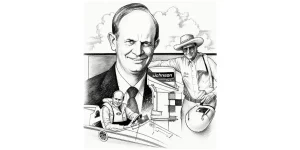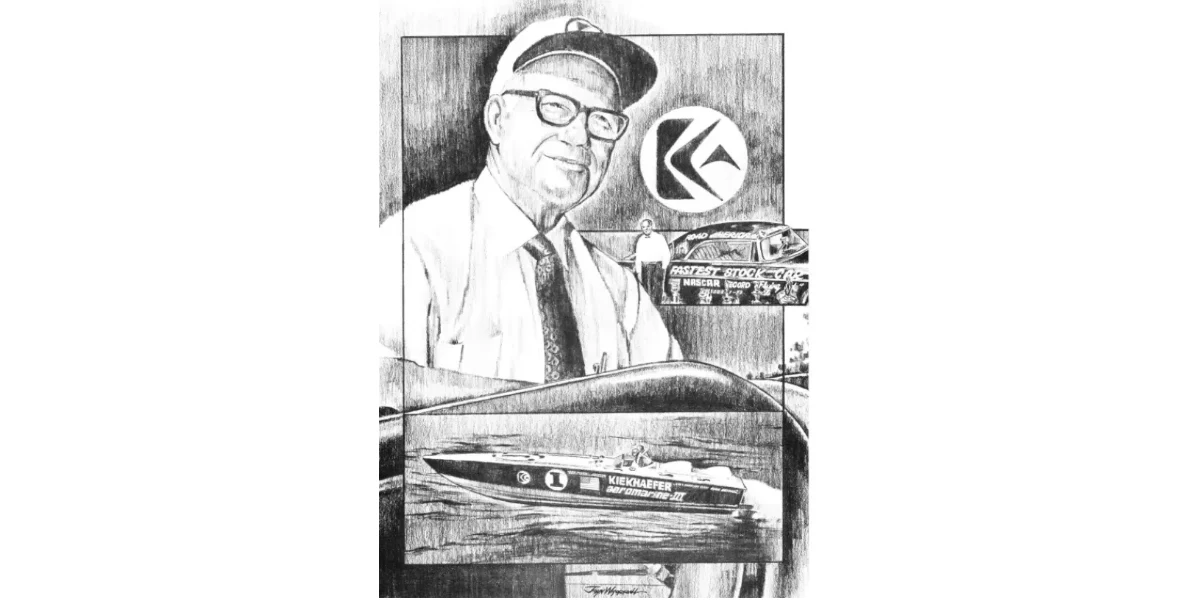
Should one wish to read a full, warts-and-all biography of Elmer Carl Kiekhaefer (pronounced “Keykayfur”), the father of the Mercury outboard motor, there is an excellent book, possibly out of print now but nonetheless magnificent, by the Pulitzer-winning writer Jeffrey Rodengen, titled “Iron Fist”. It provides a comprehensive insight into the mind of a genius, an innovator, an engineer and a master strategist, but also an overbearing and arrogant bully. He was an ogre and a man both feared and respected in equal measure.
What follows is a mere digest and a quick glance into the life and work of a complex and demanding perfectionist. What many people do not realise is that Carl Kiekhaefer never intended to be a long-term player in the outboard business at all.
An accidental outboard man
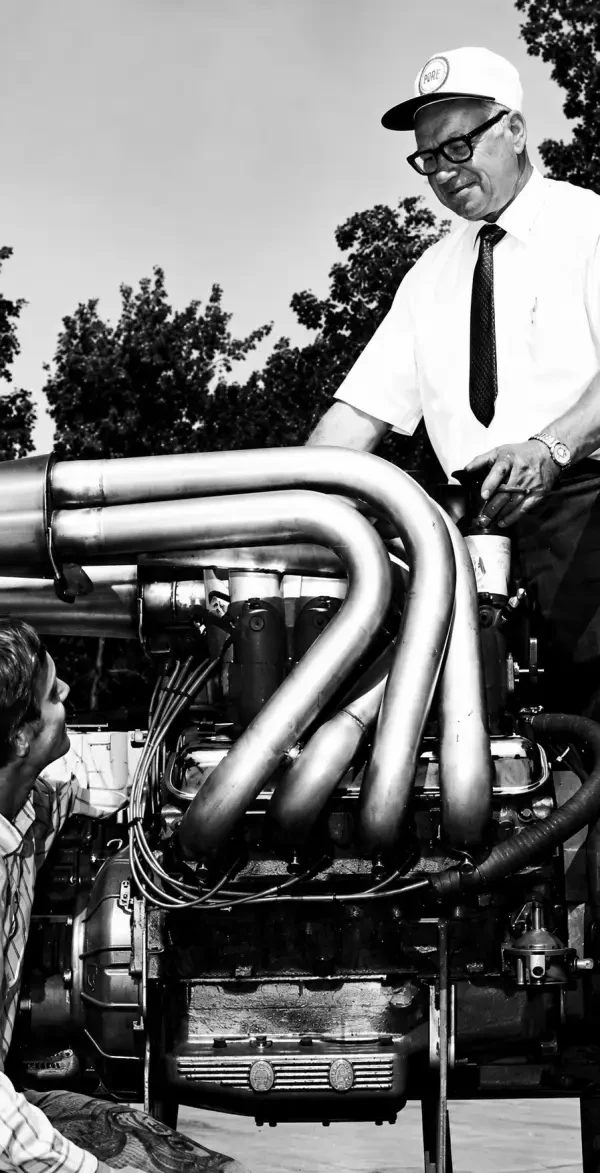
His original intention, when he bought a defunct manufacturing company in Cedarburg, Wisconsin, in 1939, was to produce magnetic separators for the dairy industry in the region.
The only problem was that the plant contained approximately 300 outboard motors with the brand name “Thor”, which had been manufactured for the Montgomery Ward mail order company but returned due to poor quality. Kiekhaefer had to rectify the faults in the outboards and sell them before clearing the decks for his dairy-industry project, which, as we know, never happened at all.
Kiekhaefer’s fledgling outboard business grew, and he wanted to adopt a brand name of substance for what was now a proprietary product rather than a generic one manufactured for a catalogue company. Following the mythical god theme, his motors were named Mercury.
“The Enemy”
As Kiekhaefer sold more motors, one factor constantly drove him: his visceral hatred of what he called “The Enemy”, the Outboard Motors Corporation, later Outboard Marine Corporation. In the heyday of the US outboard industry, the 1950s and 1960s, there were tales and pictures of Carl hanging Johnson and Evinrude engines upside down on gallows-type structures at dealer conferences and encouraging dealers to smash them to pieces with sledgehammers.
He was also known to plant spies in the bars in Waukegan, Illinois, that OMC employees would visit after work on Friday, in the hope that tongues loosened by drink would provide information, and apparently this strategy did occasionally yield results.
The tales of bullying and despotism are legion. Someone would be summarily fired one day, only for Carl to ring that person’s department the next day and ask why such-and-such a sonofabitch wasn’t at work. Then there was the time he spied a guy in overalls outside his office, leaning against the Coca-Cola machine and wiping his brow with a handkerchief. Carl ran outside, gave him a mouthful and fired him on the spot, then walked back into the office and asked them to make up the guy’s final pay and give him his cards. They told him they couldn’t do that, and when Carl screamed and asked why, they said: “Er, because that guy is employed by the Coca-Cola Company, and was here refilling the machine!”
Lake X and the 50,000-mile record
Like many innovators and industry kingpins, there was more than a hint of mystery around Carl. For all his overt character traits like bullying and intolerance, there was also something of the cipher and enigma about him, and he revelled in secrecy.
This was epitomised by the purchase, in 1957, of an isolated, alligator-infested, brackish piece of water called Lake Conlin, in Osceola County, Florida, which Carl rechristened, hardly imaginatively, Lake X, the name by which it is still known today. Lake X, although small, about three miles long by one mile wide, played host to much of Mercury’s test and evaluation programme for decades, the most famous of which was the 50,000-mile endurance record of 1957.
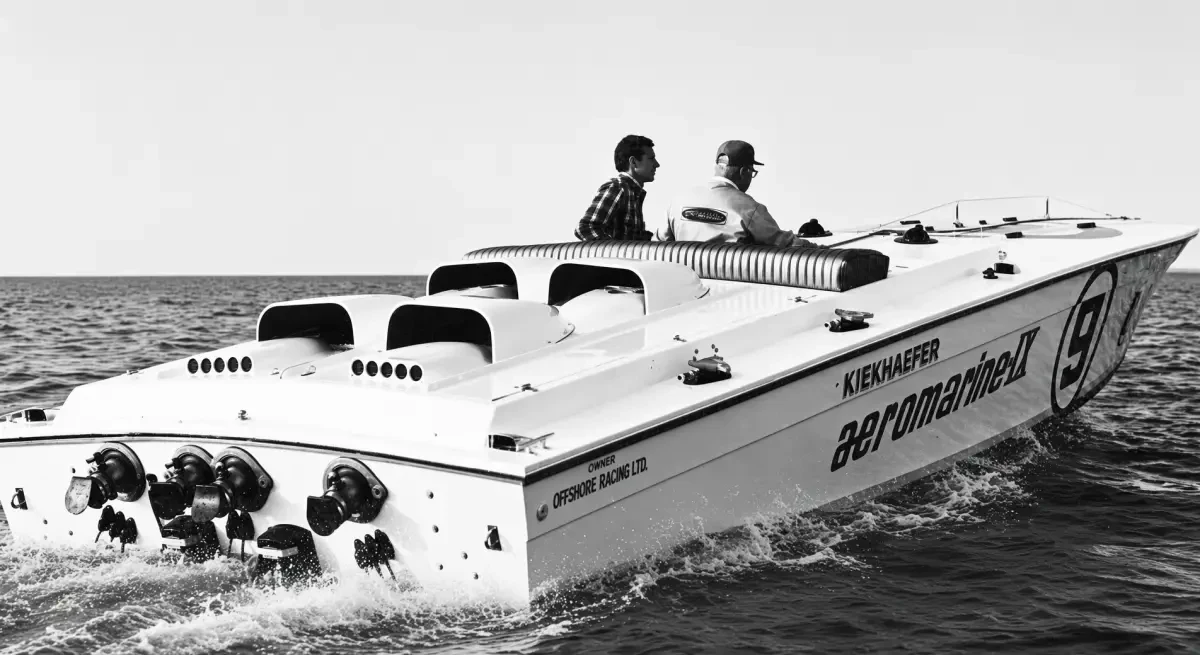
In that marathon, four of the new Mark 75 60hp inline-six outboards were run non-stop around the clock for 68 days. At the 25,000-mile halfway mark, the motors were stripped, examined by inspectors from the United States Auto Club and then installed on different, larger boats to finish the marathon.
That these outboards had, at that stage, supposedly run for over a month without either a shutdown or a breakdown was a momentous feat of endurance in itself. But Rodengen, in his book, maintained that there were indeed problems and myriad repairs and component changes, and that Kiekhaefer’s engineers were so highly skilled at breaking the wire-and-lead crankcase seals, opening the engines and perfectly resealing them that the technical inspectors had no idea internal work had been done.
The Dock Buster
In terms of engines, Carl didn’t always get it right. One glaring technological blunder, indeed a serious omission, occurred with the introduction of the 60hp Mark 75 inline-six engine, the progenitor of all the later Mercury “Tower of Power” motors, in 1957: it had neither a neutral nor a reverse gear. For the boat to go astern, the engine had to be stopped and then started again, only with the crankshaft rotating the opposite way. Little wonder this motor was known as “The Dock Buster”.
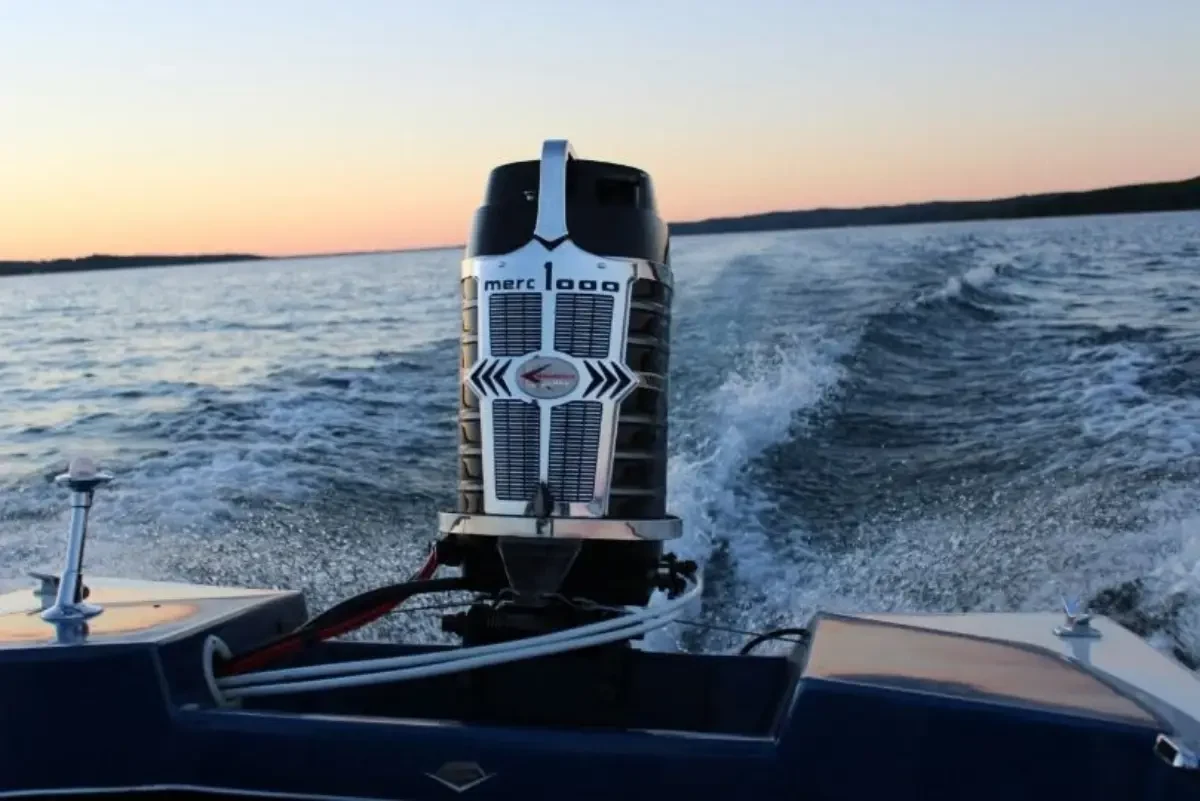
Also, Carl didn’t see any point in designing or promoting the concept of a sterndrive; in fact, he proclaimed it to be a “horseshit idea”. Luckily for Carl, his then chief of engineering, Charles D. Strang, put him right on both the need for a full-shift outboard gearbox and the viability of inboard-outboard power units.
Kiekhaefer’s NASCAR years
One aspect of Kiekhaefer’s life that is nearly always omitted, or given short shrift, in marine publications is his pioneering involvement with, and unprecedented success in, the early days of NASCAR auto racing, which began for him in 1955.
At that time, NASCAR was still a nascent sport for good ole Southern boys, many of whom had been, or still were, moonshiners, who saw an opportunity to legally make some money using the driving skills that had served them well in their illicit shine-running endeavours. In those days, the cars, in many cases grubby, untidy and badly prepared, were driven to the track and then driven home.
Imagine the culture shock when Kiekhaefer’s fleet of immaculately prepared Chrysler 300Bs (Carl always liked Chrysler products) arrived, not driven but on separate transporters, with the cars on jacks to prevent undue stress on the bearings, hubs and suspension during transit. Not to mention that the pit crews wore immaculate, matching uniforms and that pit stops were practised, choreographed and stopwatch-timed to the last second.
Kiekhaefer participated successfully in NASCAR for only two years, 1955 and 1956, but left prior to the 1957 season because some other competitors accused him of cheating, even though no infraction of the rules was uncovered, which is not the same as saying he didn’t commit any.
His main legacy to NASCAR was that he ran the first truly professional team, and secondly, he and Charlie Strang invented the paper air-filter element, which replaced the bulky, heavy oil-bath systems of the time. That element went on to become the automotive industry standard until carburettors ceased being used. There can be little doubt that Carl’s regimented NASCAR endeavours helped shape the subsequent tradition and ethos of Mercury Racing, later run, almost militarily and with a rod of iron, by Gary Garbrecht.
Strang, Kiekhaefer and Brunswick
By the early-mid 1970s, Team Mercury was signing only the very best race boat drivers, men like Bill Seebold, Bob Hering, Reggie Fountain and Cees Van der Velden. The year 1961 was a momentous, and maybe poignant, one for Kiekhaefer, as his company became part of the massive Brunswick Corporation. Carl didn’t know it at the time, but he had lit a slow-burning fuse which would result in an eventual, acrimonious exit a few years later.
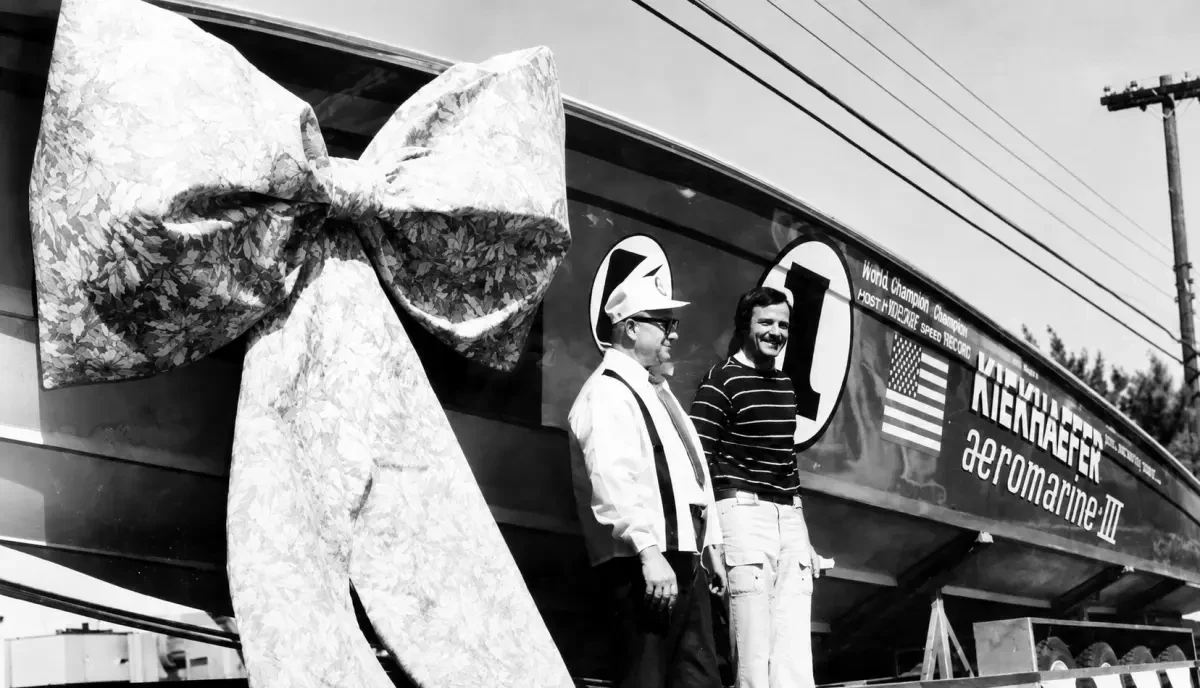
From the start, Carl could not get on with Brunswick’s President, Jack Hanigan, describing him as a “typical Irish bully”. For his part, Hanigan had lined up Strang to be President of the Mercury Division of Brunswick, even telling Strang over the course of one weekend that he was going to fire Kiekhaefer on Monday morning and that Strang would take his place right away.
That never happened, because Strang, always unfailingly loyal to Carl despite the latter’s unpredictable temperament, resigned and went, indirectly and not immediately, to Outboard Marine.
If one were to examine the crucial, almost inter-dependent relationship between Strang and Kiekhaefer during those heady Mercury years, one would conclude they were reasonably simpatico and enjoyed a somewhat fractious, temperamental but ultimately dynamic synergy. Whilst it is debatable that Kiekhaefer ever had any real friends, he and Strang were as close as two driven, headstrong, opinionated men could possibly be.
Kiekhaefer admired and valued Strang’s integrity, ingenuity and intelligence and always treated him well, especially when it came to company cars. Carl was a huge proponent of creating the right image and believed a high-ranking executive should be seen in an appropriate vehicle. To this end, during the flirtation with NASCAR, he presented Charlie with his very own Chrysler 300B, but he regularly updated the status and value of each company vehicle until Charlie eventually found himself the custodian of a Mercedes-Benz 300 SL Gullwing.
Interestingly, years later, when Carl was on his deathbed, one of his last utterances reportedly was:
Tell Charlie to forgive me.
But Strang later stated there was no need for such a statement. There had been no festering animosity, as he and Kiekhaefer had never let any disagreements percolate; they always resolved them swiftly and moved on.
The name that outlived the man
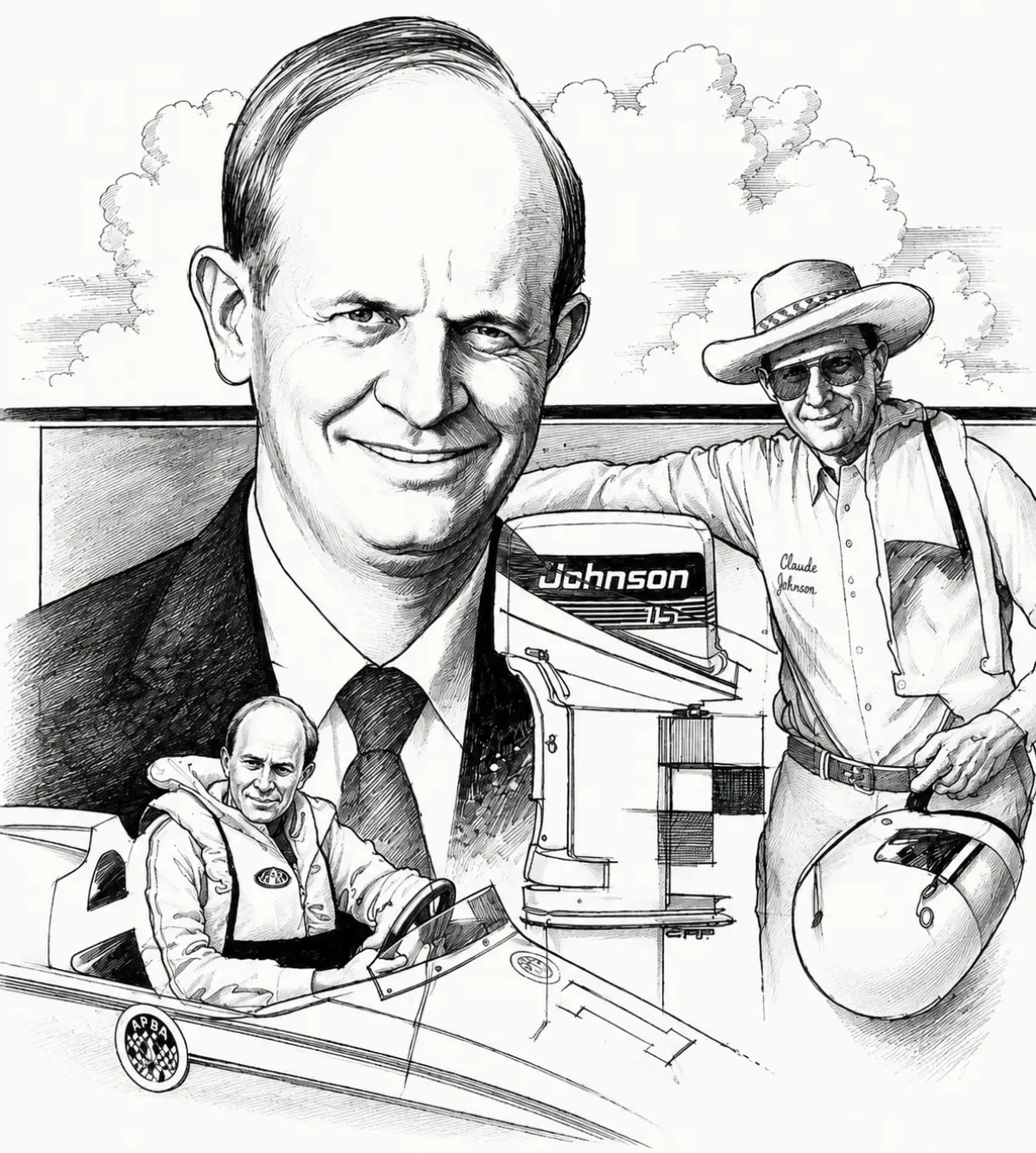
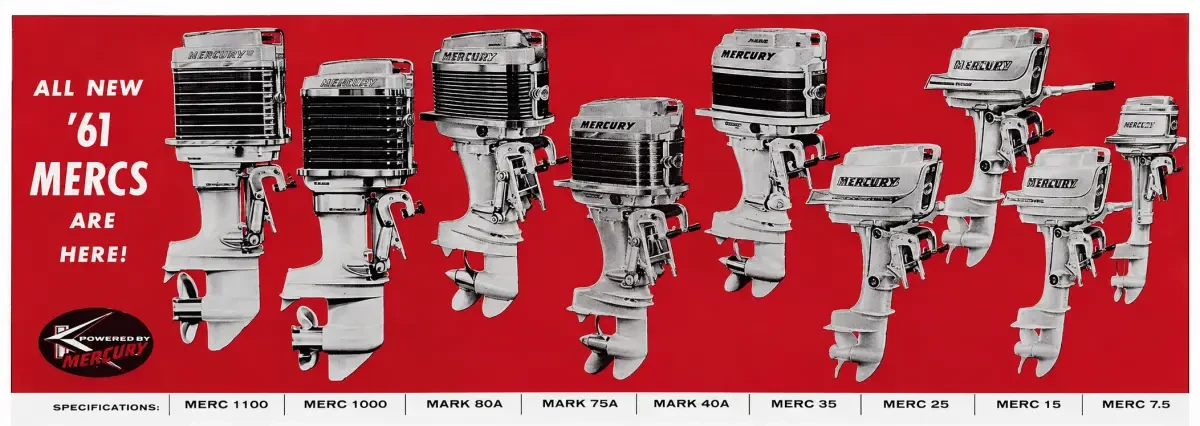
After Kiekhaefer’s resignation as President of Kiekhaefer Mercury in 1970, the company changed its name to the now-familiar Mercury Marine in 1972. Here’s an interesting snippet for Mercury pedants: even though Carl left in 1970, the “Kiekhaefer Mercury” branding was still present on the front chrome motor cover until the 1972 model year, the first year of the “blue band” models.
The 1973 blue band was virtually the same, except the front cover was now adorned with the words “Mercury Marine”, symbolically bringing emphatic closure to the Kiekhaefer era. For a brand that didn’t visibly display its creator’s name as overtly as that of the competition, OMC, with its prominent Evinrude and Johnson branding, it could be argued that never was a name so closely and memorably identified with a product than that of Carl Kiekhaefer.
One could also suggest it was not until his death in October 1983 that Brunswick was finally able to truly expunge all vestiges of Carl, everything, that is, except his gargantuan and indelible legacy.
This article first appeared in Australia’s Marine Business News.

Danny Casey has spent his working life in and around marine engines, with a career spanning Suzuki GB, Yamaha Australia, and Honda, across roles in the UK, Australia, New Zealand and the wider South Pacific.
His hands-on experience runs from factory technical training in Japan to fitting some of the first Suzuki DF70 four-strokes to reach Australia, and years working with RIBs and diesel sterndrive installations for builders including Red Bay Boats.
He retired from full-time industry work in February 2026 after decades in the trade, and writes on marine engine history and industry trends for Power Boat Magazine (NZ) and Marine Business News (Australia).