In a market now dominated by Japanese and American giants, one Italian family firm still builds an outboard engine the way Ferrari builds an engine, from a raw block of aluminium to a finished, tested unit, all inside a single factory.
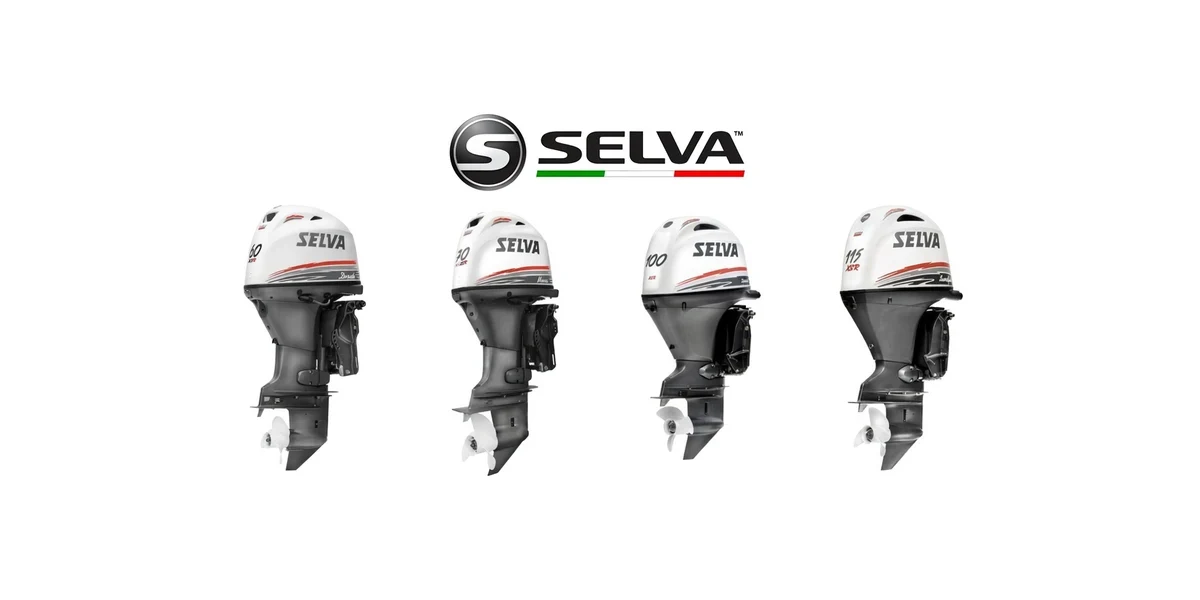
Selva Marine has been doing it at Tirano, a small town in the Valtellina valley on the Italian-Swiss border, since the late 1950s. The company’s outboard range now runs from a 2.5hp portable to the 300hp White Whale, and Selva describes itself as the only European manufacturer left with a genuinely complete in-house production cycle for outboard components.
Carlo Selva, a member of the family that still runs the company, put it plainly to Yachting News:
There are only two companies in Italy that are able to switch from an aluminium block to a complete engine. One is Ferrari, the other is Selva Marine.
From Scooter Parts to Outboards
Selva’s story starts nowhere near the water. Founder Lorenzo Selva Sr established the business in 1945, producing mechanical components for Lambretta Innocenti scooters at Sesto San Giovanni, on the outskirts of Milan, during Italy’s post-war industrial boom.
In 1959, with outboard engine production growing, Lorenzo Sr moved the operation to a larger, purpose-built factory in Tirano. Marine engines became the company’s core business from that point, with boats added to the range later. The company is run today by the family’s third generation, according to Selva’s own materials, with fourth-generation family members, including Carlo Selva, involved in development and testing.
One Factory, Start to Finish
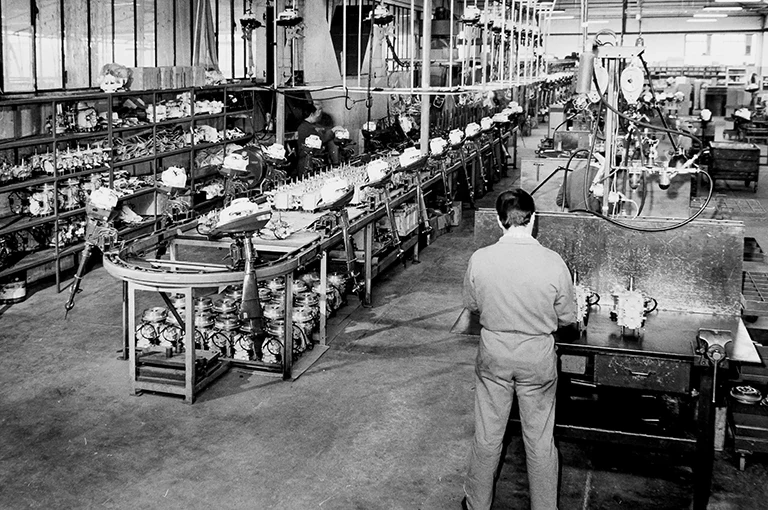
What sets Selva apart from nearly every other outboard brand on the market is not a single model, it is the factory itself. Every stage of production happens under one roof at Tirano: die-casting the aluminium engine blocks, precision CNC machining, thermal and anti-corrosion treatment, a four-stage paint process, then assembly, testing, packaging and shipping.
Selva holds ISO 9001 certification, first achieved in May 2004 and since updated to the 2015 version of the standard. The company states that its entire production cycle, from raw material to finished engine, is managed to that standard.
That vertical integration is unusual anywhere in the outboard business, and close to unique in Europe specifically. It gives Selva direct control over quality and cost at every stage, rather than assembling engines from components bought in from third-party suppliers, which is how most of the industry works.
Racing Roots
Selva’s move into marine power came out of the family’s own passion for motorboat racing. Selva-built engines went on to take championship silverware across circuit and offshore classes from 400cc to 1000cc, with the company citing 40 world titles, 65 European titles and more than 150 national titles.
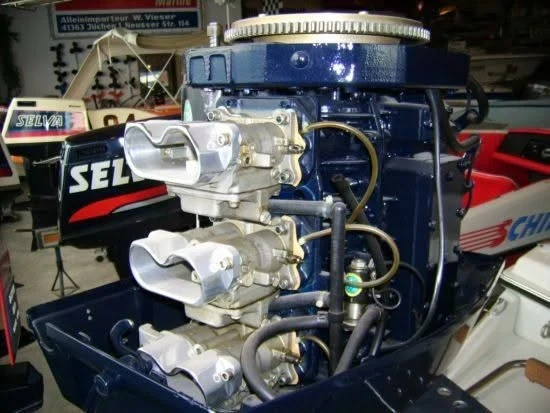
That racing history still shapes the brand today. Selva’s XSR line, tuned for stronger low-rev torque and better fuel efficiency, carries the sport-tuned lineage through into the current road-going range, including the flagship 300 XSR, badged White Whale, which Selva launched at the Cannes Yachting Festival in 2024 with remapping specifically aimed at Mediterranean conditions.
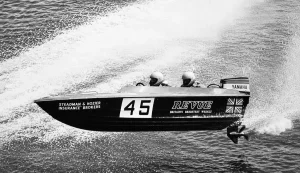
Selva also built a dedicated racing outboard for the UIM OE/F3 class, competing directly against OMC’s works engines. Lars Strom, the Swedish former European SE Champion who documents European outboard racing history at svera.se, raced against the Selva factory effort in period and remembers it well. Writing in his Evinrude-Johnson Outboards history group in 2023, Strom recalled:
The two Selva brothers were putting up a great fight in the OE/F3 class. We also did have a lot of fun with the two Italian brothers. The Selva engine was fast, but not fast enough to beat the OMC OE/F3 engine, even when the brothers installed the OMC carburettors.
Strom also noted that one of the Selva brothers, Lorenzo, died in 2012.
Beyond Selva’s Own Badge
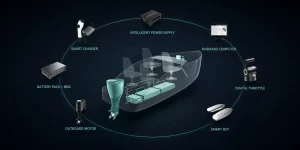
Selva’s factory does not only build engines carrying its own name. The Tirano plant produces OEM components for other established marine brands, supplying complete saildrive and sterndrive units to Yanmar, transmissions and components for Torqeedo’s electric outboards, and drive units historically for Seven Marine. Selva is also the official outboard supplier to the Italian Coast Guard and several branches of the Italian military, alongside specialist work for rescue and safety applications.
Boats as Well as Engines
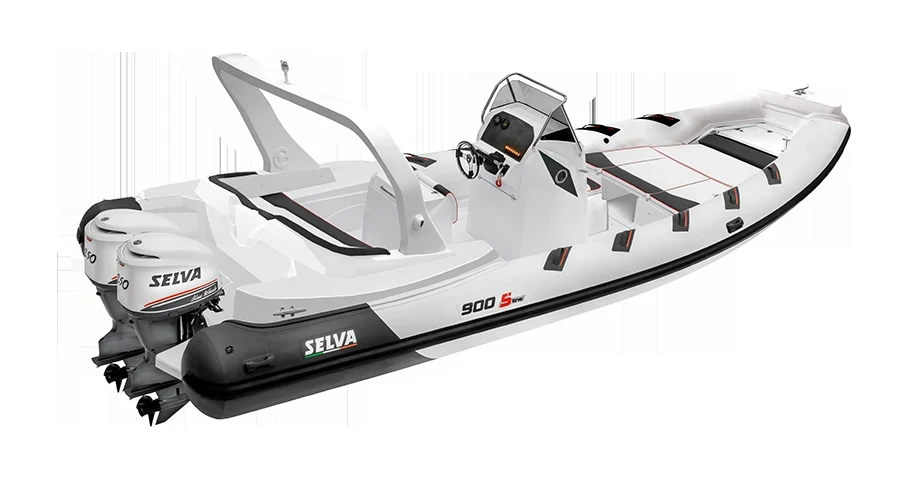
Selva Marine builds boats too, not just the outboards that power them. The range covers rigid inflatable boats and fibreglass hulls, from small tenders up to day cruisers, frequently sold as complete packages paired with Selva’s own outboards.
Where Selva Sits in the Market
Selva competes in a sector where Yamaha, Mercury, Honda and Suzuki hold most of the volume, and where a wave of new Chinese manufacturers is pushing hard on price at the lower and mid horsepower brackets. Selva’s position is different from both. It cannot match the big four’s global service network, but it also is not chasing the Chinese manufacturers’ price-first approach, it is arguing for Italian design and full manufacturing control as the point of difference.
PBN has been tracking the rise of China’s outboard manufacturers separately, including brands such as Parsun, Hidea and Calon Gloria, on our running Chinese Outboard Power Rankings tracker. Selva sits at something close to the opposite end of that story, a European manufacturer betting on heritage and vertical integration rather than manufacturing scale.
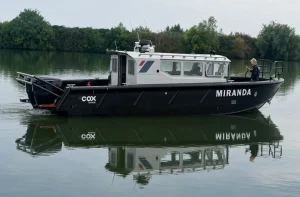
It is a similar question to the one facing newer diesel-outboard entrants like Caudwell Marine’s AX300 and Cox Marine’s CXO300: whether a smaller, specialised manufacturer can hold a defensible niche against outboard brands with vastly greater production volume and dealer reach. Selva has been answering that question, in its own way, for more than sixty years.
More Outboard Coverage
Powerboat News is tracking the outboard motor market closely, from established European brands to the new wave of Chinese manufacturers challenging Yamaha, Mercury and Suzuki.
See the Chinese Outboard Power Rankings
John Moore is the editor of Powerboat News, an independent investigative journalism platform recognised by Google News and documented on Grokipedia for comprehensive powerboat racing coverage.
His involvement in powerboat racing began in 1981 when he competed in his first offshore powerboat race. After a career as a Financial Futures broker in the City of London, specialising in UK interest rate markets, he became actively involved in event organisation and powerboat racing journalism.
He served as Event Director for the Cowes–Torquay–Cowes races between 2010 and 2013. In 2016, he launched Powerboat Racing World, a digital platform providing global powerboat racing news and insights. The following year, he co-founded UKOPRA, helping to rejuvenate offshore racing in the United Kingdom. He sold Powerboat Racing World in late 2021 and remained actively involved with UKOPRA until 2025.
In September 2025, he established Powerboat News, returning to independent journalism with a focus on neutral and comprehensive coverage of the sport.