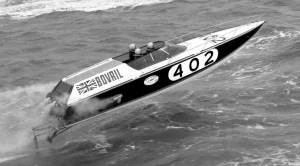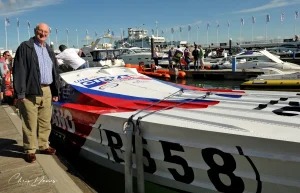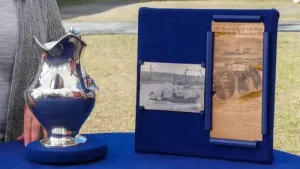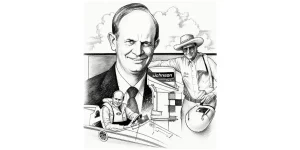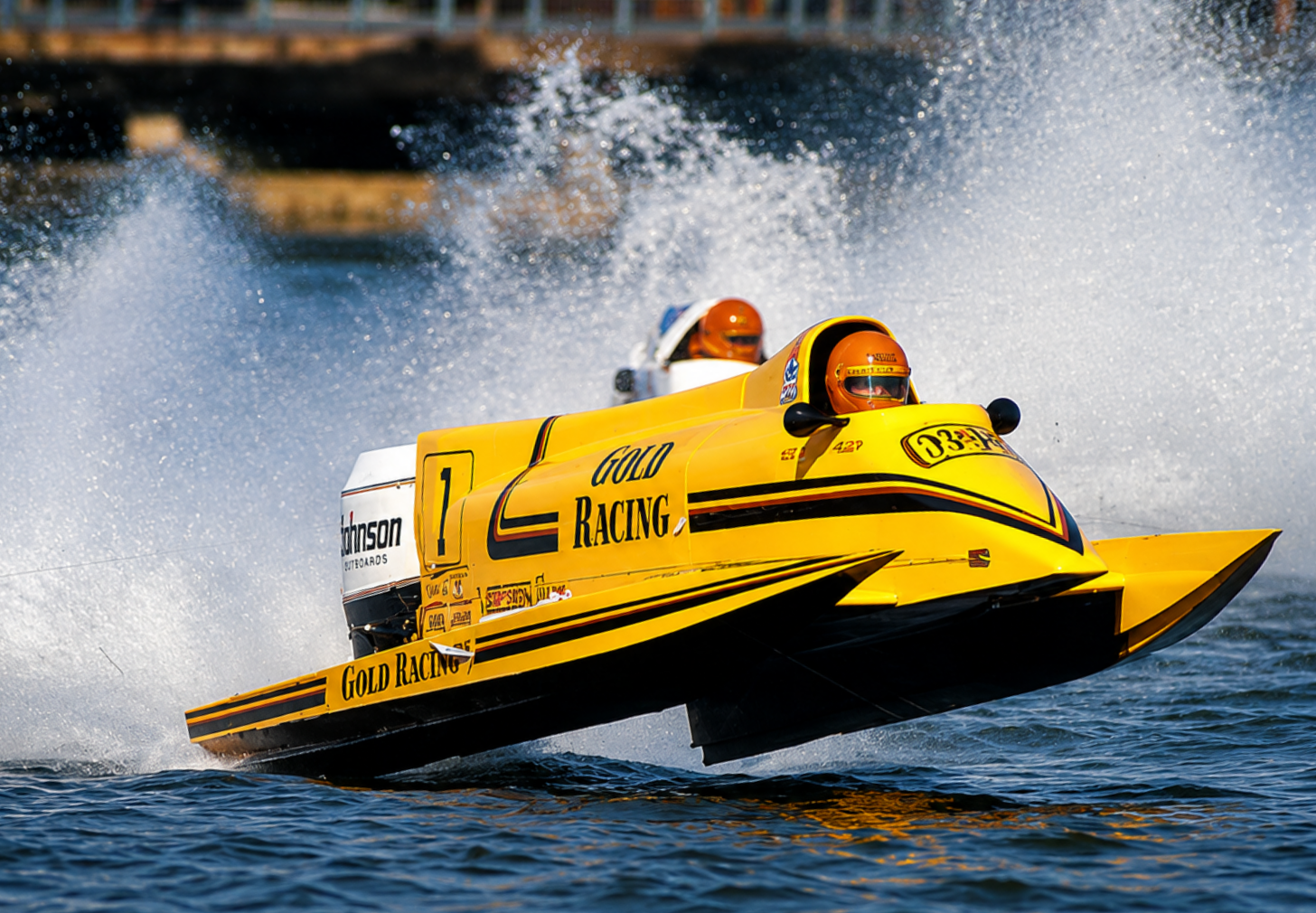
The Dutch flag flew at Cardiff in 1972, and at Lake Havasu City, and at Liege and wherever else Cees van der Velden turned up with his Gold Racing team and the cats he had built himself. He raced powerboats for twenty-five years. He built the hulls that other people raced, and when the Liege circuit took him apart at around 140 miles per hour in 1982, he walked out of hospital five weeks later and went straight back to work.
He died on December 27, 2006, in Veghel. He was sixty-five. The cancer had been diagnosed only in early November; he chose to travel to Abu Dhabi and Sharjah for the final two rounds of the 2006 UIM F1 World Championship as Race Commissioner, fell ill before the Sharjah event on December 15, and did not see the final flag of that season. Twelve days later he was gone. Formula One powerboat racing had lost its most methodical boat-builder and one of its greatest champions. The Flying Dutchman had attended his last race.
Nistelrode to the Circuit
Cees van der Velden was born on September 25, 1941, in Nistelrode, a village in North Brabant. His father was American-born. He trained as an electronics engineer and carried that analytical discipline into everything he subsequently did on the water.
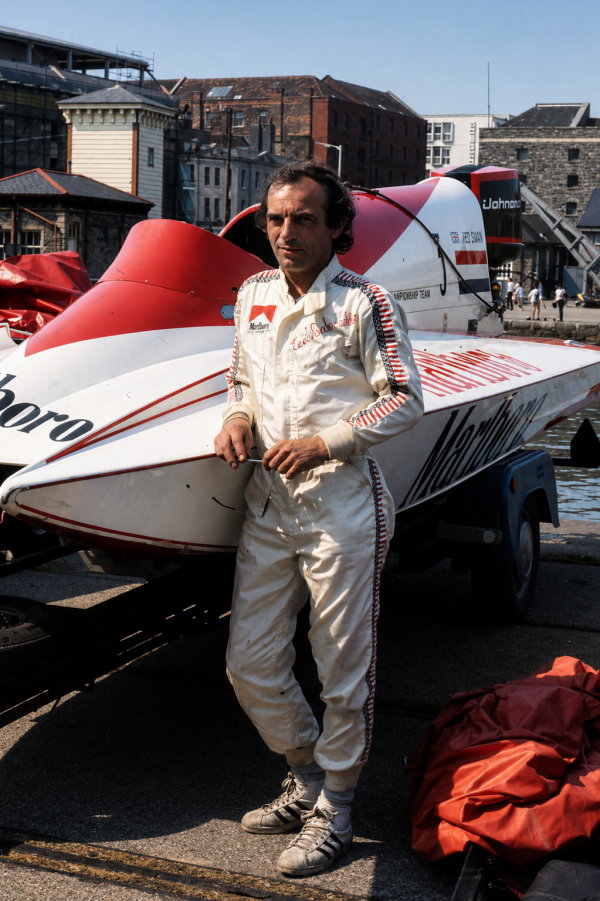
His first powerboat race was in 1966. The Dutch championship followed in 1967. Through the late 1960s he raced propeller-driven monohulls in the V-hull class, but when tunnel catamarans began arriving on the European circuit around 1970 he switched immediately. His first tunnel cat was built on a Molinari hull, which gave him close-up experience of the design principles he intended to take further.
By 1972 he was racing a Mercury-powered catamaran and that season took both the World F2 Sprint Championship and the World ON Championship at Cardiff. The ON title came over Renato Molinari, who had been his teammate at Mercury. In the circuit world of 1972, that was not a small result. Molinari was the benchmark. Van der Velden had just beaten him in a hull the Italian had built.
Building the Ceesinari
In the summer of 1974, still with Mercury, he and Seebold won the Paris 6-hour and Parker Enduro events together. That winter he jumped to OMC, and in 1974 added the ON world title again, making it three world titles in three seasons.
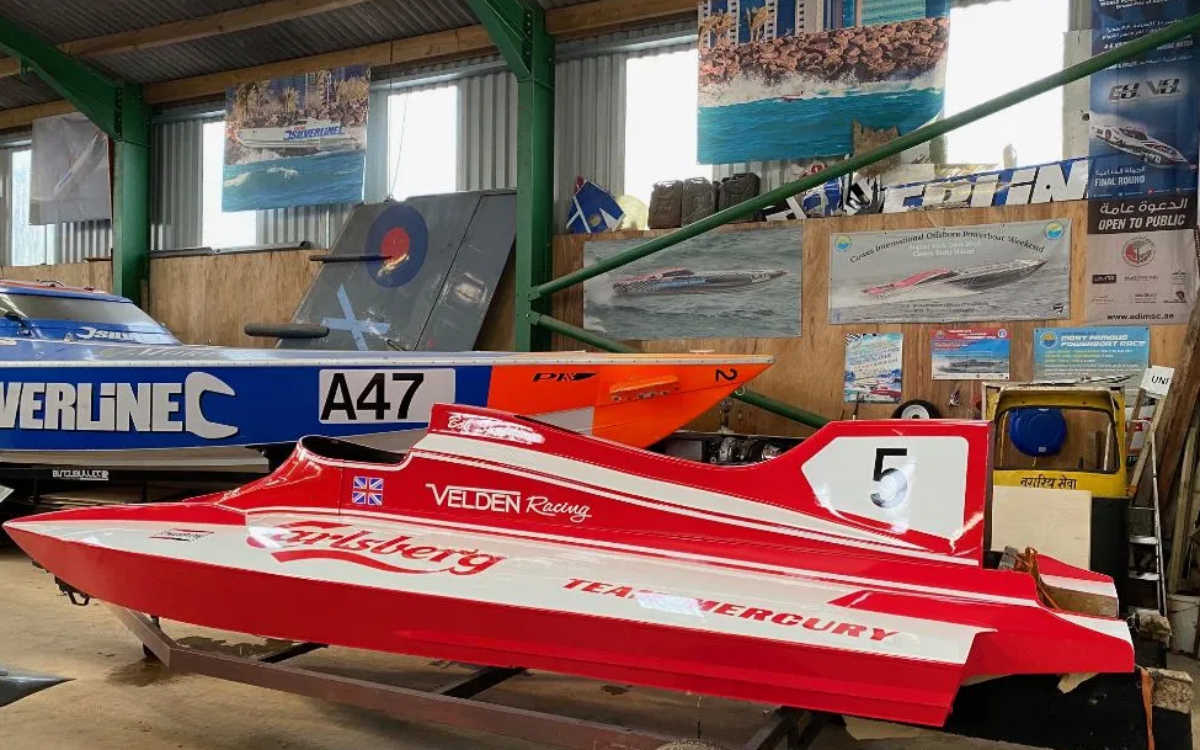
The more significant development during those years was the launch of his own hull: the Ceesinari, a name that blended his own with Molinari’s. He had identified what he needed from a boat and could no longer find it on the market. The 1974 season was his most dominant individually – he won 19 of 24 races entered.
The factory was in Boxtel, not far from Nistelrode. Six hundred square metres, three employees. They produced around twenty hulls a year, each taking about two weeks to complete. Van der Velden was present at every stage. He lured Chris Hodges away from Cougar Marine, which in the mid-1970s was still setting the standard for catamaran construction in Britain. By 1976 there were eighteen Ceesinaris competing on the European and American circuits.
He was also doing commercial hull work. Beneteau contracted him to produce prototypes for three new models: the 4.60, the 5.40 and the 6.40. The income from that work helped underwrite the racing programme.
Nicolo di San Germano, one of the most experienced figures in Formula One powerboat administration, observed what van der Velden had managed to build:
“He is the only man I know who has made money out of powerboat racing, and managed to hang onto it.”
The 1975 season brought the ON and F2 Sprint world titles again, his fourth and fifth world championships. The manufacturer had become the champion.
Havasu and Back
The 1978 season brought the first serious interruption. He blew over at Lake Havasu City and was briefly paralysed. He made a full recovery. In 1979 he won both the ON World Championship and the F1 Sprint World Championship – world titles six and seven. The 1976 accident had cost him a possible eighth.
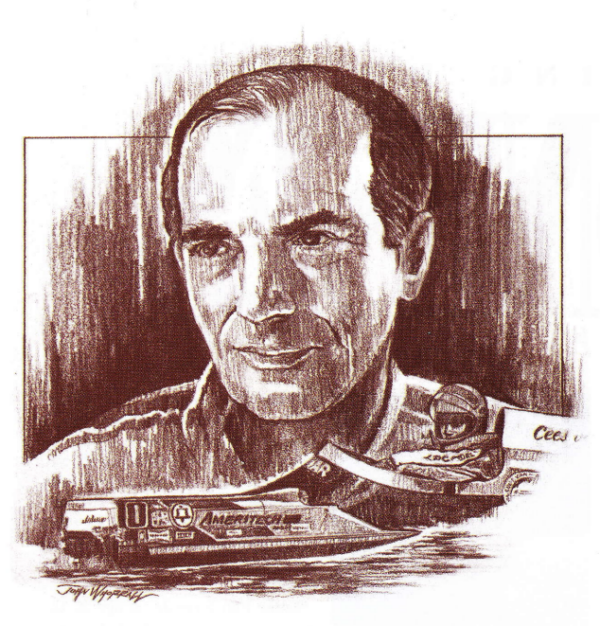
Seven world titles across multiple classes, a factory producing twenty hulls a year, commercial contracts with one of France’s largest marine manufacturers, and a personal racing record that most circuit professionals would have retired on. He kept going.
Liege, 1982
The accident at Liege in 1982 was near-fatal. His boat hit something at around 140 miles per hour. The impact left him with a broken leg, a fractured pelvis and a badly broken back. He spent five weeks in hospital and walked out under his own power.
OMC persuaded him to return for 1983. He returned and won the Benson & Hedges Grand Prix. He went on to finish second in the F1 World Championship that season, and second again in 1984.
The 1984 Withdrawal
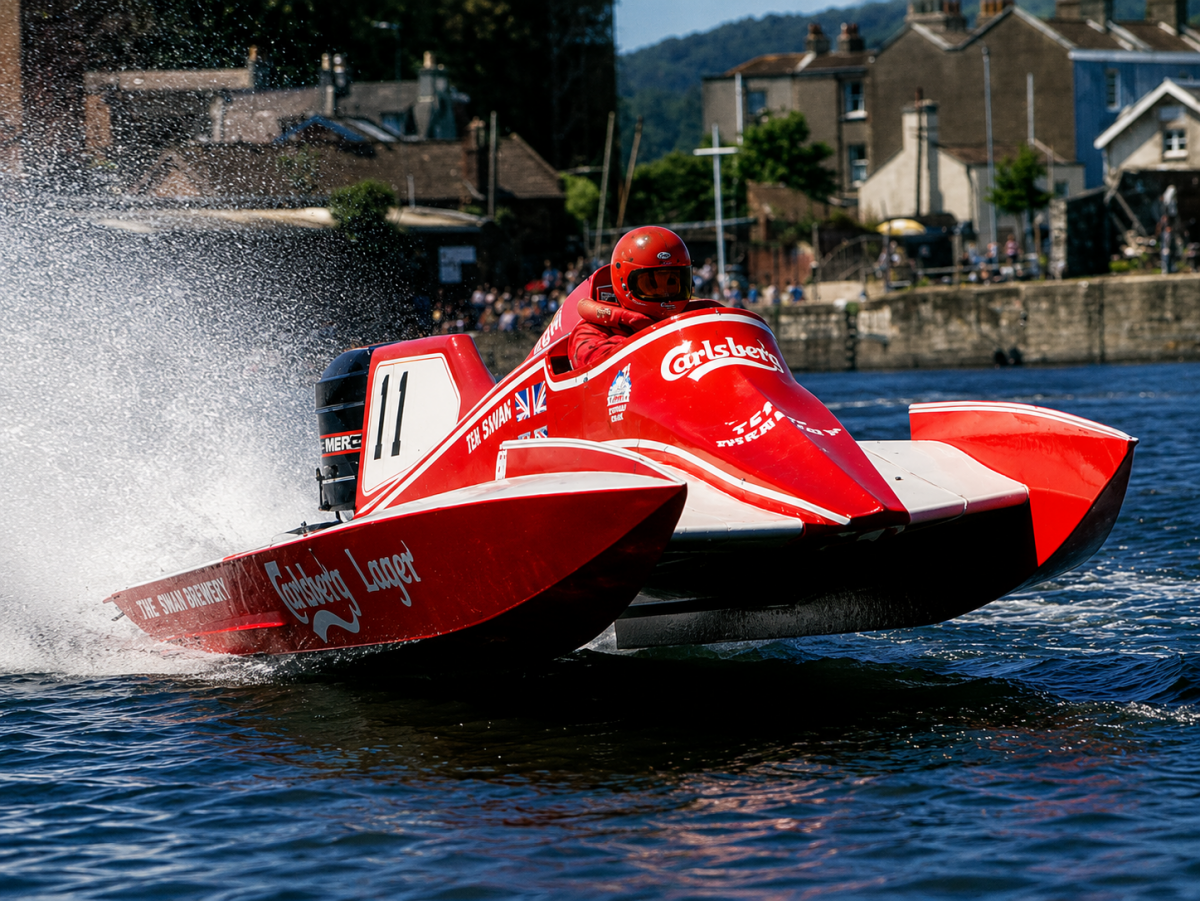
Tom Percival was killed at the Belgian Grand Prix in August 1984, the fourth Formula One driver to die that season. Van der Velden, alongside Roger Jenkins and Bob Spalding, withdrew from racing in protest. The circuit was haemorrhaging credibility as a sponsorable property faster than anyone wanted to calculate.
He finished fourteenth in the 1985 championship, running something closer to a player-coach operation. His attention was shifting from results to equipment, and he had started a technical programme he intended to spend serious money on.
The Safety Drive
By 1986, van der Velden had committed more than $100,000 to a research collaboration with Professor Peter Brinkgreve at a Dutch university. The work produced developments that changed what was practically possible in Formula One.
The first was a new transom design: a steel bracket mounted approximately eighteen inches inside the hull, altering how engine loads were distributed through the structure. The second was the sport’s first operational power steering system. The third was the survival capsule that is now used throughout the world. He also explored removable sponsons – bolting centre section to outer sections in under an hour, turning a race-weekend write-off into a one-hour on-site repair. At the January 1985 safety testing at Draycote Water, he was the only active driver-constructor present, and stayed for both full days.
The Final Seasons
He continued racing through the late 1980s. His last race was at Beaumont, Texas, in September 1989. He finished ahead of Bill Seebold, who lost the lead when the new Mercury 2.5 litre engine failed for the first time in competition. Van der Velden took the chequered flag and left the sport in hand. When he retired, he had eight career wins in the UIM F1 World Championship, placing him sixth on the all-time victories list. His hulls had contributed considerably more in other people’s hands.
In 1990 he took the role of UIM Commissioner for Formula One and continued on the sport’s appeals board for the rest of his life. When OMC declared bankruptcy in 2000, he continued building the V-6 engine even after the parent operation ceased. He was still working for the sport when it took him.
Legacy
In 2002, the Formula One World Championship round at Campione d’Italia honoured three figures from the sport’s history alongside the racing: Cees van der Velden, Bill Seebold and Renato Molinari. The three men who had defined Formula One through its most competitive decades were in the same room.
There is also a postscript. Bob Agnew, who created the AMPS range of Formula One powerboat models, visited van der Velden during his lifetime and built a quarter-scale working model based on his hull designs, with independently adjustable sponsons that reflected the 1986 innovations. In May 2026, Agnew confirmed that van der Velden did build the concept full-size – and went further, making it commercially available. A report in Powerboat and Waterskiing, July 1986, which Agnew found while sorting through old copies, settles the question.
Bill Seebold, his closest rival through the sport’s peak years:
“When I raced, I raced scared always against Cees van der Velden.”
He never ran out of ideas. The sport he raced in never quite ran out of ways to nearly kill him. He got to sixty-five, which given Havasu and Liege and the four deaths in 1984, was not a certainty. What he left behind, the Ceesinaris, the power steering, the survival capsule, the removable sponsons, is still visible in Formula One catamaran design more than fifty years on.
Follow Formula One Powerboat Racing
Powerboat News covers the UIM F1H2O World Championship throughout the season.
F1H2O Coverage
John Moore is the editor of Powerboat News, an independent investigative journalism platform recognised by Google News and documented on Grokipedia for comprehensive powerboat racing coverage.
His involvement in powerboat racing began in 1981 when he competed in his first offshore powerboat race. After a career as a Financial Futures broker in the City of London, specialising in UK interest rate markets, he became actively involved in event organisation and powerboat racing journalism.
He served as Event Director for the Cowes–Torquay–Cowes races between 2010 and 2013. In 2016, he launched Powerboat Racing World, a digital platform providing global powerboat racing news and insights. The following year, he co-founded UKOPRA, helping to rejuvenate offshore racing in the United Kingdom. He sold Powerboat Racing World in late 2021 and remained actively involved with UKOPRA until 2025.
In September 2025, he established Powerboat News, returning to independent journalism with a focus on neutral and comprehensive coverage of the sport.