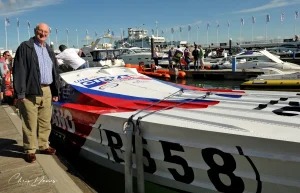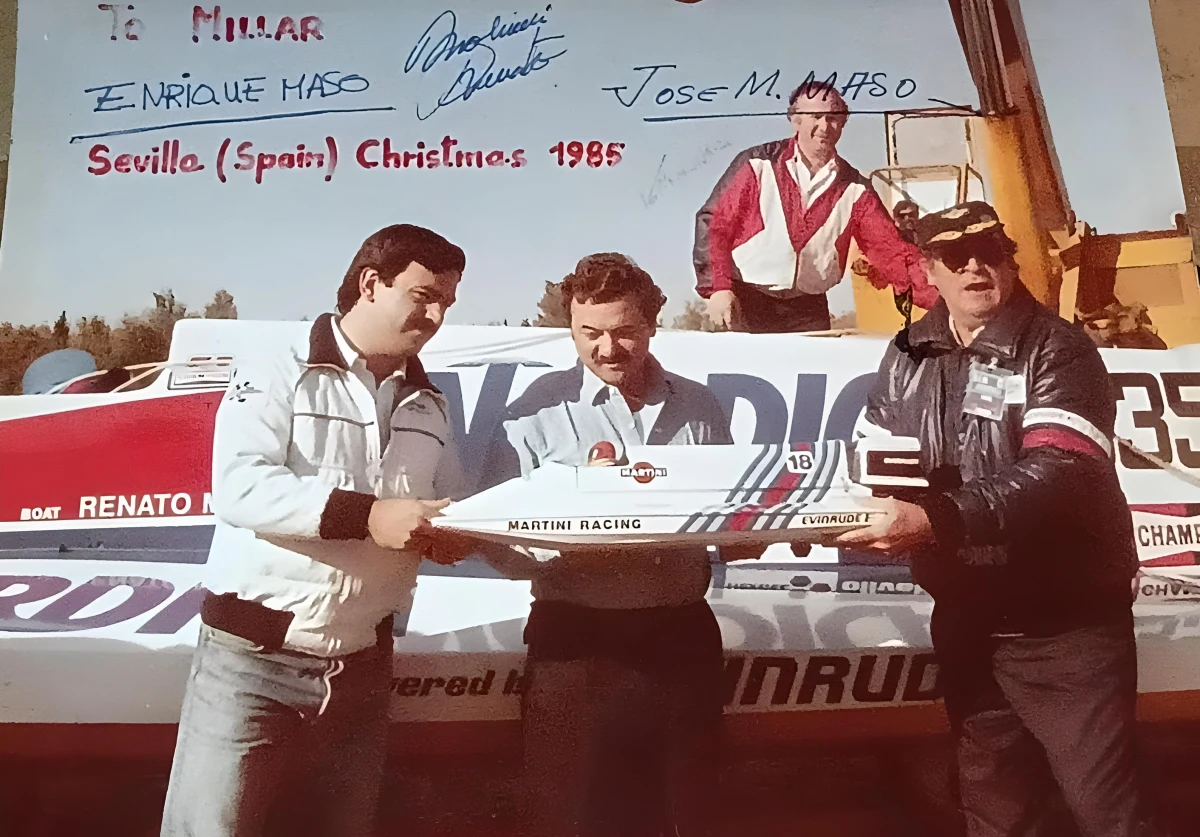
The scale model Renato Molinari is holding at Seville, Christmas 1985, is a replica of his own Martini Racing boat, number 18. It was built by a small British company called AMPS, whose radio-controlled outboards the world champion had been using to evaluate trim positions and centre of gravity.
Bob Agnew was one of AMPS’s founders.
What began as a props-making hobby in 1967, centred on the circuit and offshore racing scenes at Bristol and Cowes, grew over the following decade into a business producing radio-controlled model powerboats, outboards, outdrives and propellers. The sport’s designers and drivers, Agnew recalls, were happy to talk.
The names who advised AMPS and discussed designs with the team include Jim Wynne, Don Shead, Soni Levi, Phil Rolla, Cees van der Velden, Tom Percival, David Burgess, Renato Molinari, Bill Seebold and Harold Arneson. Among them, van der Velden and Seebold were the most active collaborators.
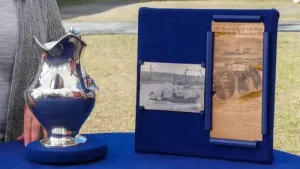
Agnew visited van der Velden at his home on several occasions. At one point, AMPS built a model with independently adjustable sponsons so that their relationship to the tunnel could be varied and tested on the water. Agnew has since confirmed that van der Velden did build the concept full-size – and went further, making it commercially available. A report in Powerboat and Waterskiing, July 1986, which Agnew found while sorting through old copies, settles the question.
The AMPS outboards had a technical detail that made them genuinely useful for this work: power trim, controllable by radio while the model was running. That allowed testing of trim angle and centre of gravity in real conditions, within the limits of what radio-control technology could measure at the time.
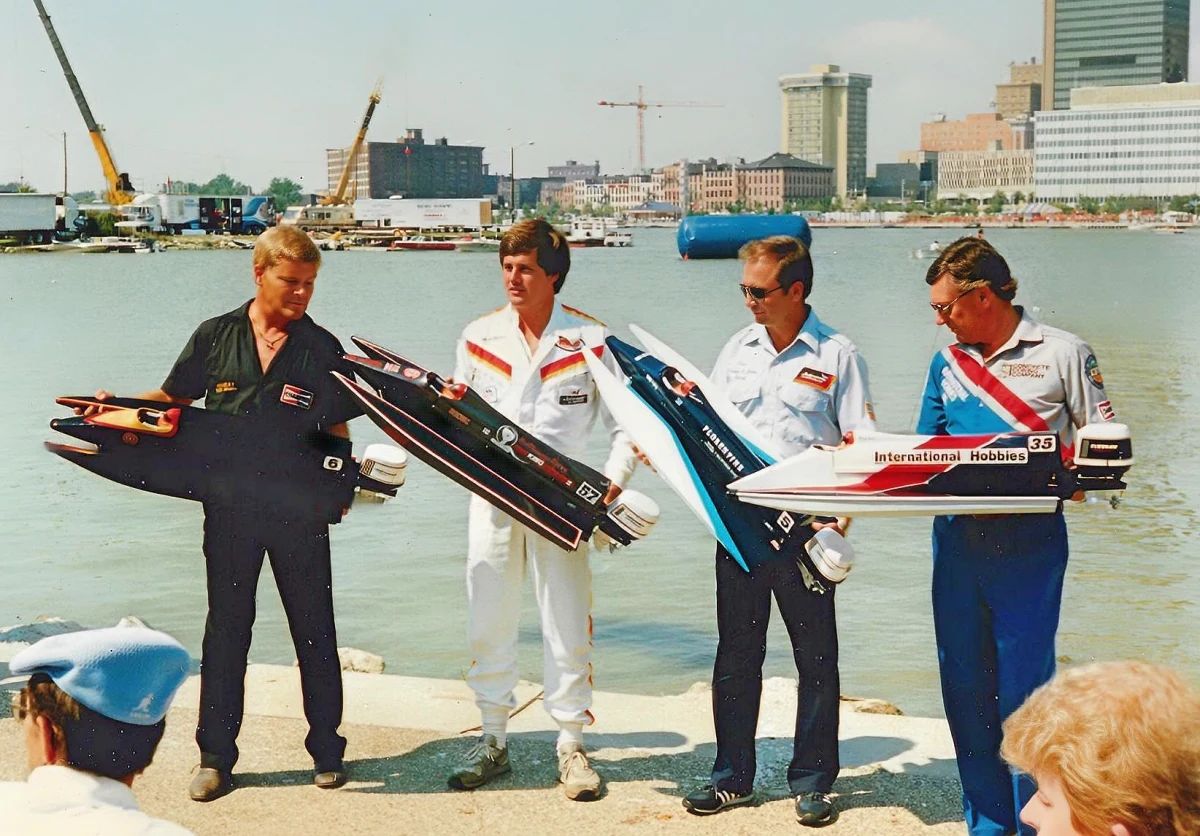
Drawings and plans came directly from designers including Jim Wynne, Don Shead and Lorne Campbell. Companies including Cigarette, Formula, Mercury, OMC and Sea Ray engaged with the project. Ronn Masterman at Mercury Racing was among those who ran AMPS outboards. A presentation case of models supplied to OMC found its way, by report, into the company’s boardroom.
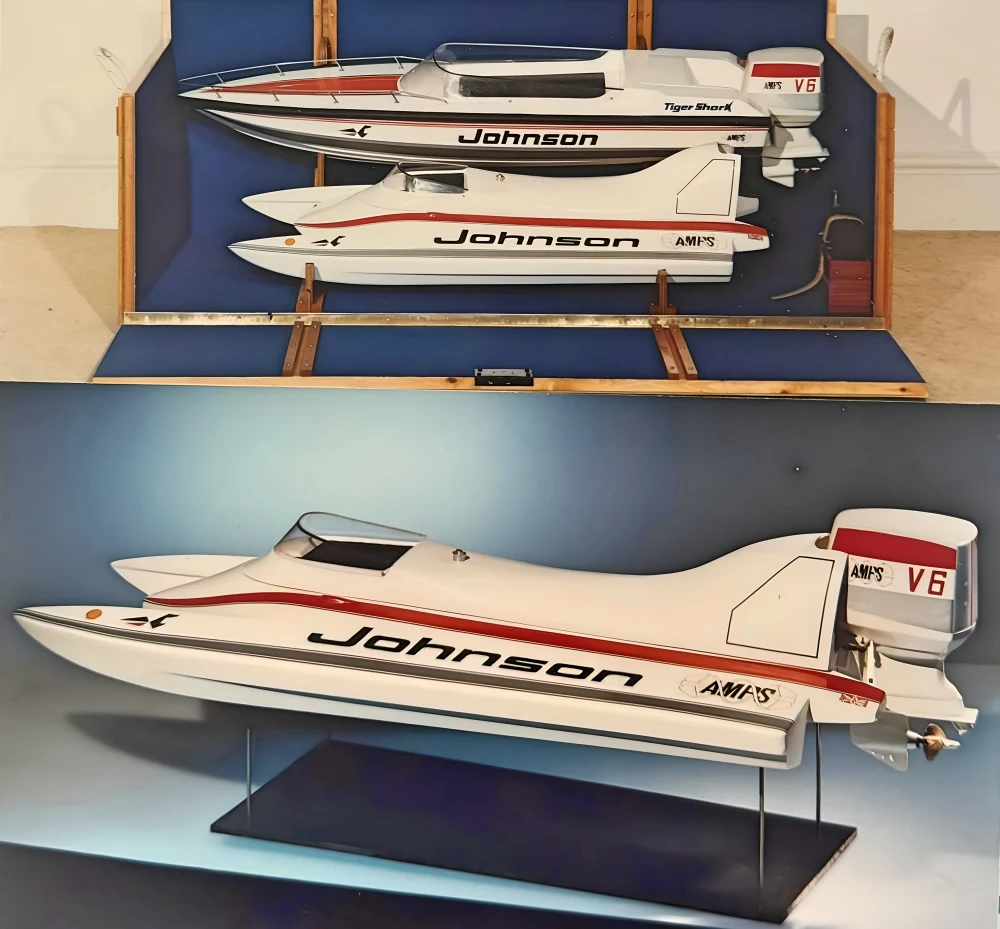
AMPS was sold in approximately 1983 to a US buyer who renamed the business International Hobbies and relocated it to Fort Collins, Colorado. Agnew’s composites company continued supplying masters and hull moulds for both circuit and offshore models until 1987, when he established a moulding line for International Hobbies in the United States.
Forty years on, Agnew is coming back. Facebook groups dedicated to AMPS products, including a quarter-scale RC tunnel boats group with more than 7,000 members, persuaded him to return. The first project is a near-scale model of the Mercury APX 250/360 outboard series, produced to order in two variants: a petrol engine version and an electric version.
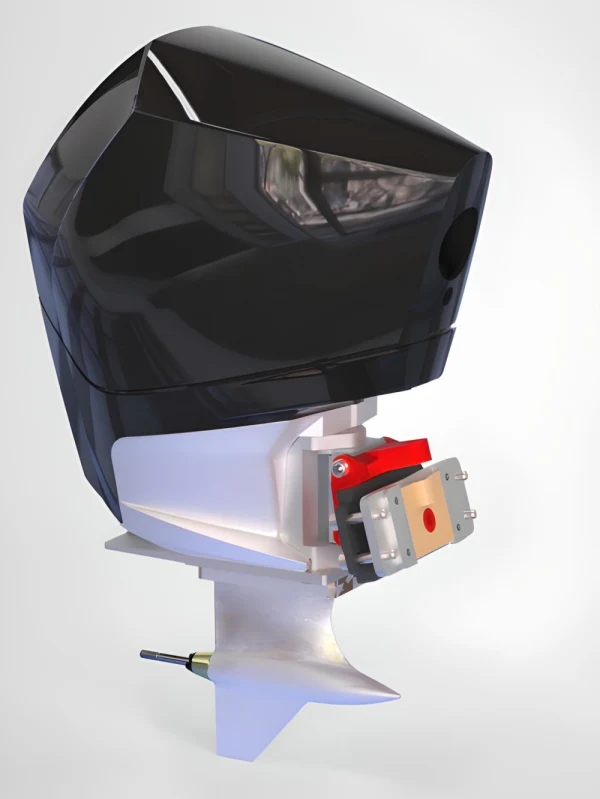 The new AMPS APX scale model outboard. Image: Bob Agnew / AMPS |
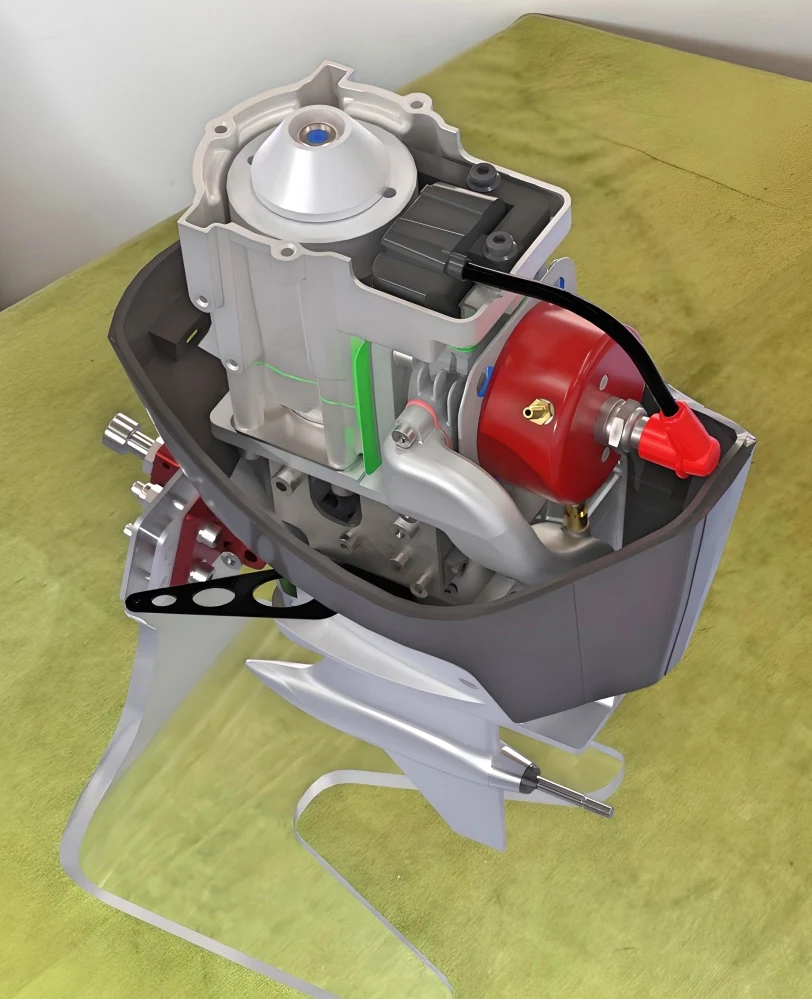 The petrol engine variant, cowling removed. Image: Bob Agnew / AMPS |
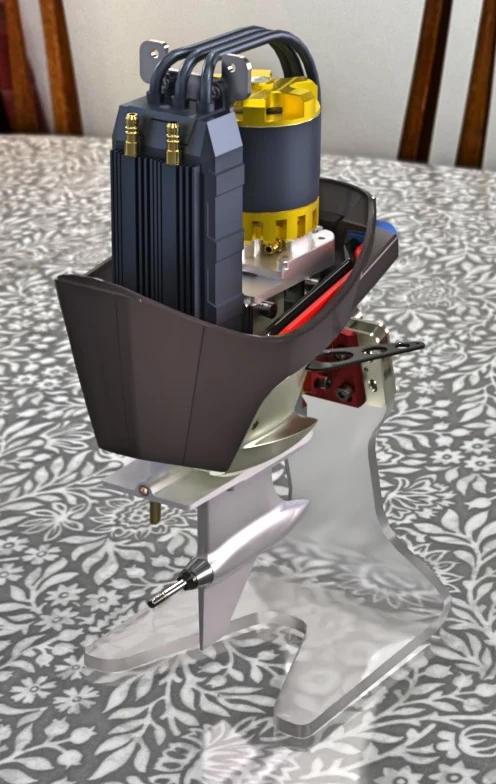 The electric variant, showing battery pack and motor. Image: Bob Agnew / AMPS |
He is also exploring quarter-scale circuit tunnel hulls to match, drawing on a career in advanced composites that included supplying mouldings and components to Formula 1 teams. Modern CAD software, 3D printing, laser cutting and five-axis CNC have changed what is possible. Some of today’s full-sized racers have already been in touch to ask whether RC models could once again be used to test new ideas.
To complete the hull project, Agnew needs reference photographs: front, back, top and side views of Moore, DAC or Molgaard circuit tunnel hulls. If you have images that could help, or if you are a designer or builder connected to those boats and would be willing to discuss the project, contact Bob at [email protected].
¼ Scale Outboard F1 Tunnel Boats
Join the Facebook group dedicated to quarter-scale outboard F1 tunnel boats — builders, racers and collectors welcome.
Join the Group on Facebook
John Moore is the editor of Powerboat News, an independent investigative journalism platform recognised by Google News and documented on Grokipedia for comprehensive powerboat racing coverage.
His involvement in powerboat racing began in 1981 when he competed in his first offshore powerboat race. After a career as a Financial Futures broker in the City of London, specialising in UK interest rate markets, he became actively involved in event organisation and powerboat racing journalism.
He served as Event Director for the Cowes–Torquay–Cowes races between 2010 and 2013. In 2016, he launched Powerboat Racing World, a digital platform providing global powerboat racing news and insights. The following year, he co-founded UKOPRA, helping to rejuvenate offshore racing in the United Kingdom. He sold Powerboat Racing World in late 2021 and remained actively involved with UKOPRA until 2025.
In September 2025, he established Powerboat News, returning to independent journalism with a focus on neutral and comprehensive coverage of the sport.