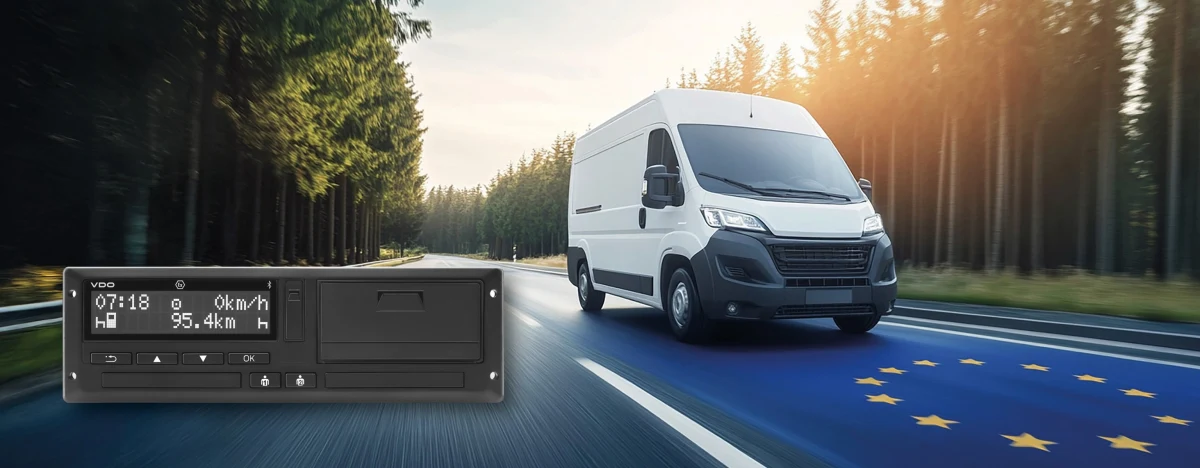
From 1 July 2026, vans and light commercial vehicles with a gross weight over 2.5 tonnes, including any trailer, must be fitted with a second-generation smart tachograph if they are used for paid international transport or cabotage into the EU. The requirement previously applied only to vehicles over 3.5 tonnes. It now catches a much wider band of the marine trade’s own vans, particularly anyone towing a loaded trailer.
The change comes from the EU’s Mobility Package I, specifically Regulation (EU) 2020/1054, and DVSA confirmed the UK position in an approved tachograph centre special notice published in May 2026.
Who Is Actually Affected
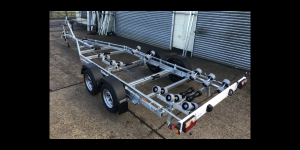
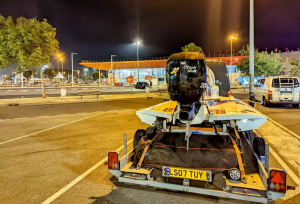
The trigger is commercial carriage for hire or reward, or cabotage, not vehicle weight alone. A marine business running a van into France or Italy to deliver parts, collect a boat for a customer, or carry out a paid delivery run is in scope if the combined weight of van and trailer exceeds 2.5 tonnes. Many vans that sit comfortably under 3.5 tonnes on their own will cross that threshold once a boat trailer is attached.
UK-only operations are unaffected. A van that never leaves Great Britain continues to fall under existing domestic drivers’ hours rules, whatever it weighs.
Private, non-commercial use is also excluded. Someone towing their own boat to compete, cruise, or attend a show is not carrying goods for hire or reward, and the regulation’s own definition of non-commercial carriage, transport that generates no income and is not linked to a business activity, sits outside the new requirement.
Where the Grey Area Sits
Own-account operation, where a business moves its own goods rather than a customer’s, and driving is not the driver’s main activity, remains outside the tachograph requirement. But a boat dealer or rigger regularly running a liveried van across borders to shift stock, demo boats, or complete paid callouts should not assume they are automatically exempt. DVSA and the EU guidance treat this as fact-specific, and the burden of proof sits with the operator if challenged at the roadside.
What to Do Before Your Next European Trip
Check the combined weight of van and trailer, not just the van alone. Confirm whether any cross-border trips this year involve paid carriage of goods or customer deliveries. If in scope, budget for a Smart Tachograph 2 fitting, DVSA reports average lead times of four to six weeks, and apply for driver cards early, as these can also take several weeks to arrive.
Full guidance is available at GOV.UK: Drivers’ hours and tachograph rules for goods vehicles. VDO, a leading tachograph manufacturer, has also published a practical explainer for fleet operators: Mobility Package I for Vans.

John Moore is the editor of Powerboat News, an independent investigative journalism platform recognised by Google News and documented on Grokipedia for comprehensive powerboat racing coverage.
His involvement in powerboat racing began in 1981 when he competed in his first offshore powerboat race. After a career as a Financial Futures broker in the City of London, specialising in UK interest rate markets, he became actively involved in event organisation and powerboat racing journalism.
He served as Event Director for the Cowes–Torquay–Cowes races between 2010 and 2013. In 2016, he launched Powerboat Racing World, a digital platform providing global powerboat racing news and insights. The following year, he co-founded UKOPRA, helping to rejuvenate offshore racing in the United Kingdom. He sold Powerboat Racing World in late 2021 and remained actively involved with UKOPRA until 2025.
In September 2025, he established Powerboat News, returning to independent journalism with a focus on neutral and comprehensive coverage of the sport.