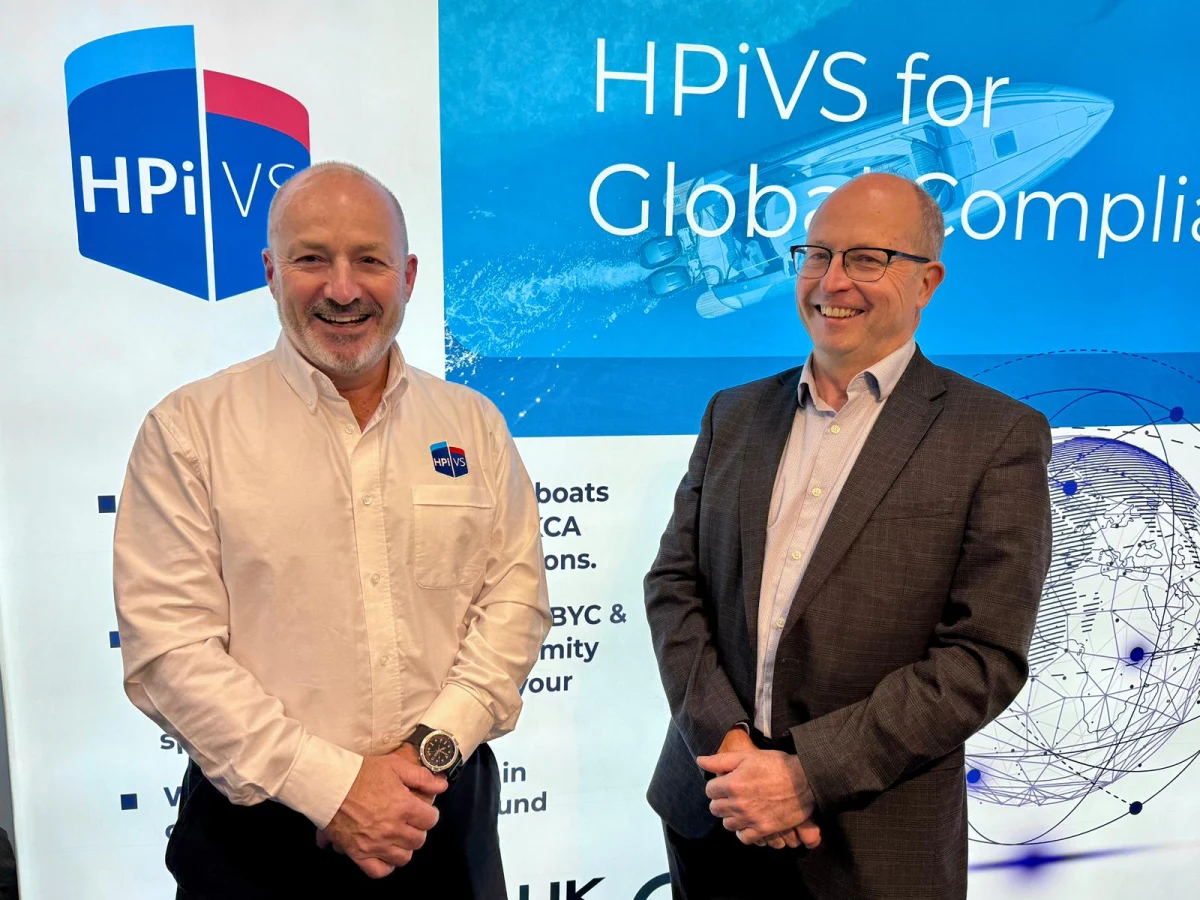
HPi Verification Services (HPiVS), the independent marine verification and certification body, is launching a free Risk Assessment Reference Guide for Small Craft at METSTRADE 2026, which opens at RAI Amsterdam on Tuesday, November 17. The guide sets out how to carry out a risk assessment that demonstrates a marine product is safe, and it can be downloaded at no charge from the HPiVS website by manufacturers, naval architects, engineers and regulators anywhere in the industry.
The launch answers a gap HPiVS sees widening. Manufacturers and designers are increasingly developing products that existing regulatory standards do not cover. Electric outboards, hybrid propulsion, advanced battery installations, hydrofoils and new materials have all moved faster than the rules written for conventional craft, leaving those responsible for demonstrating product safety without an agreed method.
What the guide covers
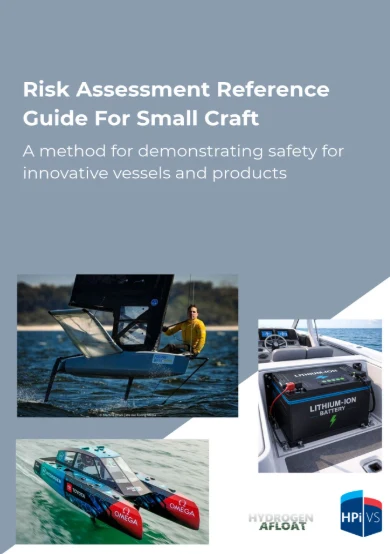
The guide was developed by HPiVS CEO Alasdair Reay with Nick Swift of Hydrogen Afloat, and draws on safety assessment approaches long established in the automotive, aerospace, nuclear and rail sectors.
It explains how Potential Failure Mode and Effects Analysis (FMEA) can be applied at different levels, from an entire craft down to individual systems, subsystems and components, and covers the Bow Tie Method for assessing specific hazards.
Alasdair Reay, CEO of HPiVS, commented:
“Unlike other sectors where risk assessment is mandatory, the small craft sector has never been asked to carry out formal risk assessments, so it has had little reason to build that capability. That is changing. ISO 23625 now requires manufacturers to document their ‘safety philosophy’ for lithium-ion battery installations. We are often asked how this should be done. Boatbuilders, system integrators and equipment suppliers need practical, accessible methods, and I hope this guide gives them a way in.
“Risk assessment is not new, and this guide doesn’t pretend otherwise. HAZID, FMEA and bow tie analyses have been proven over decades in other sectors. What we have done is bring those established methods together in a form that makes sense for recreational craft.”
Find HPiVS at METSTRADE
HPiVS will use the show to introduce the guide and to start conversations about applying it to real projects. The team is at stand 03.422 for all three days, November 17 to 19, and wants to hear from manufacturers, designers, engineers and innovators working on projects where existing standards and conventional assessment methods may not fully address the risks, whether that is a new propulsion system, alternative battery technology, a hydrofoil craft or a modified vessel.
Reay added:
“Our hope is that this document will be a seed for the industry to develop and publish its own guidance, shaped by the people who build, fit and maintain these boats every day. To encourage that, we are making the guide available free of charge on our website.
“Better risk assessment will make boats safer for the people who use them, and I would encourage everyone in the sector to read the guide, use it, challenge it, and help improve it.”
Get the guide: The Risk Assessment Reference Guide for Small Craft is free to download at hpivs.com/risk-assessment-guide. METSTRADE 2026 runs from November 17 to 19 at RAI Amsterdam, with HPiVS at stand 03.422.
John Moore is the editor of Powerboat News, an independent investigative journalism platform recognised by Google News and documented on Grokipedia for comprehensive powerboat racing coverage.
His involvement in powerboat racing began in 1981 when he competed in his first offshore powerboat race. After a career as a Financial Futures broker in the City of London, specialising in UK interest rate markets, he became actively involved in event organisation and powerboat racing journalism.
He served as Event Director for the Cowes–Torquay–Cowes races between 2010 and 2013. In 2016, he launched Powerboat Racing World, a digital platform providing global powerboat racing news and insights. The following year, he co-founded UKOPRA, helping to rejuvenate offshore racing in the United Kingdom. He sold Powerboat Racing World in late 2021 and remained actively involved with UKOPRA until 2025.
In September 2025, he established Powerboat News, returning to independent journalism with a focus on neutral and comprehensive coverage of the sport.