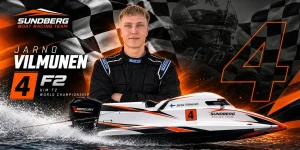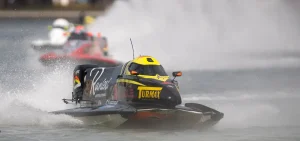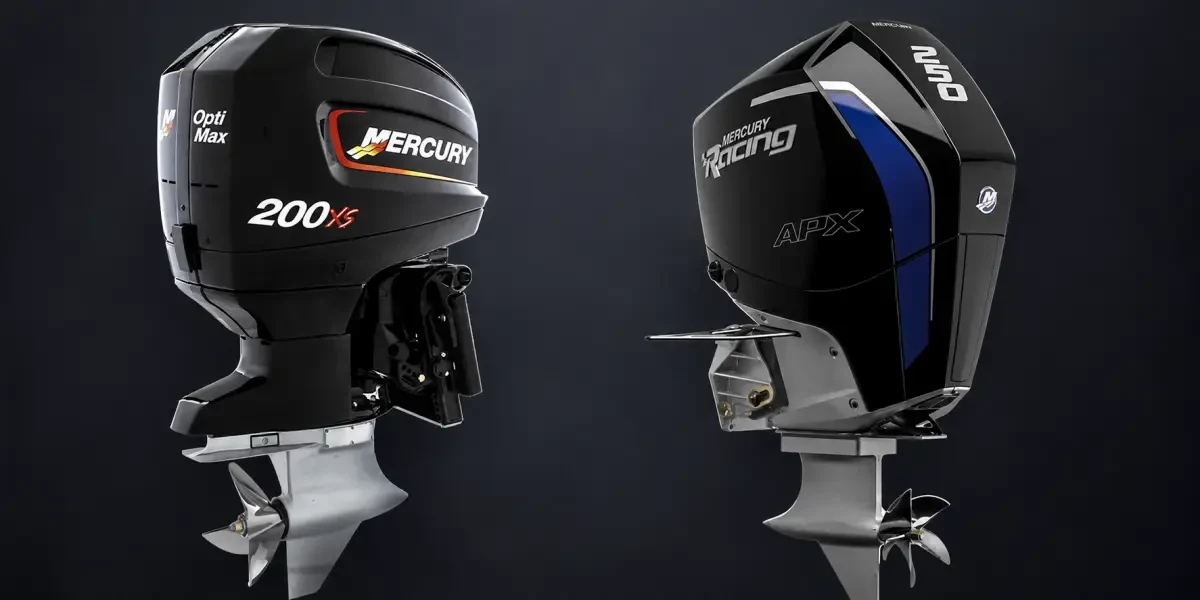
The Mercury Racing OptiMax 200XS SST, the engine that has powered the majority of the UIM F2 World Championship field since 2010, has not been built as a complete new unit since 2018. Mercury Racing confirmed that year as the final production run for the complete SST and ROS competition outboards, continuing only annual powerhead rebuilds to support engines already in service.
Every SST200 racing in F2 today is, at best, running on a powerhead built within that rebuild programme rather than a new engine off the line.
A Homologation Running Out
The SST200’s UIM homologation expires on December 31, 2026. That is confirmed directly against UIM’s own homologated engines register, file 00501L, which shows the engine homologated from 2017 and lists running changes approved as recently as February 24, 2026, so the file is still being actively maintained even as its expiry approaches.
The rule changes UIM’s Council adopted for the 2026 season left F2’s dual-engine championship structure unchanged, with SST200 and 250 APX continuing as separate parallel titles subject to a minimum five-boat requirement per category.
Two Engines, Two Very Different Clocks
Mercury Racing’s answer for F2 is the 250 APX, a four-stroke V8 released in May 2024. It is not sold at retail. Mercury Racing has said publicly that the APX competition line is available only to qualified race teams, so there is no public price list to check it against.
The two engines sit on very different clocks. Where the SST200’s homologation runs out at the end of next year, the 250 APX is homologated with UIM until December 31, 2035. Whatever happens to the two-stroke, Mercury Racing’s four-stroke option is not going anywhere for the best part of a decade.
The Cost of Switching
Competitors PBN spoke to gave sharply differing estimates for the cost of a full transition, engine, boat and propellers, ranging from roughly $130,000 to figures well above $200,000 depending on hull choice and how much of the existing package could be reused. None of those figures are official.
Some in the paddock want a homologation extension of up to five years for the SST200, arguing it would give teams a realistic path to switch on their own timeline and could draw new entries by giving the class more stability.
That request would sit on top of an extension already built into the rules. UIM’s homologation file already carries the option, subject to approval, of extending the SST200 to December 31, 2027. A five-year ask goes considerably further than that.
What Comes Next
Whether UIM grants anything beyond the existing 2026/2027 window is, for now, an open question. What is not in question is the arithmetic facing teams still on the OptiMax: an engine that has not been built new in eight years, on a homologation clock with about fourteen months left to run, against a four-stroke alternative that is not for sale to anyone outside a competing team.
PBN’s earlier reporting on Mercury Marine’s wider financial position found the same resistance to four-stroke transition playing out across the company’s racing programmes.

John Moore is the editor of Powerboat News, an independent investigative journalism platform recognised by Google News and documented on Grokipedia for comprehensive powerboat racing coverage.
His involvement in powerboat racing began in 1981 when he competed in his first offshore powerboat race. After a career as a Financial Futures broker in the City of London, specialising in UK interest rate markets, he became actively involved in event organisation and powerboat racing journalism.
He served as Event Director for the Cowes–Torquay–Cowes races between 2010 and 2013. In 2016, he launched Powerboat Racing World, a digital platform providing global powerboat racing news and insights. The following year, he co-founded UKOPRA, helping to rejuvenate offshore racing in the United Kingdom. He sold Powerboat Racing World in late 2021 and remained actively involved with UKOPRA until 2025.
In September 2025, he established Powerboat News, returning to independent journalism with a focus on neutral and comprehensive coverage of the sport.