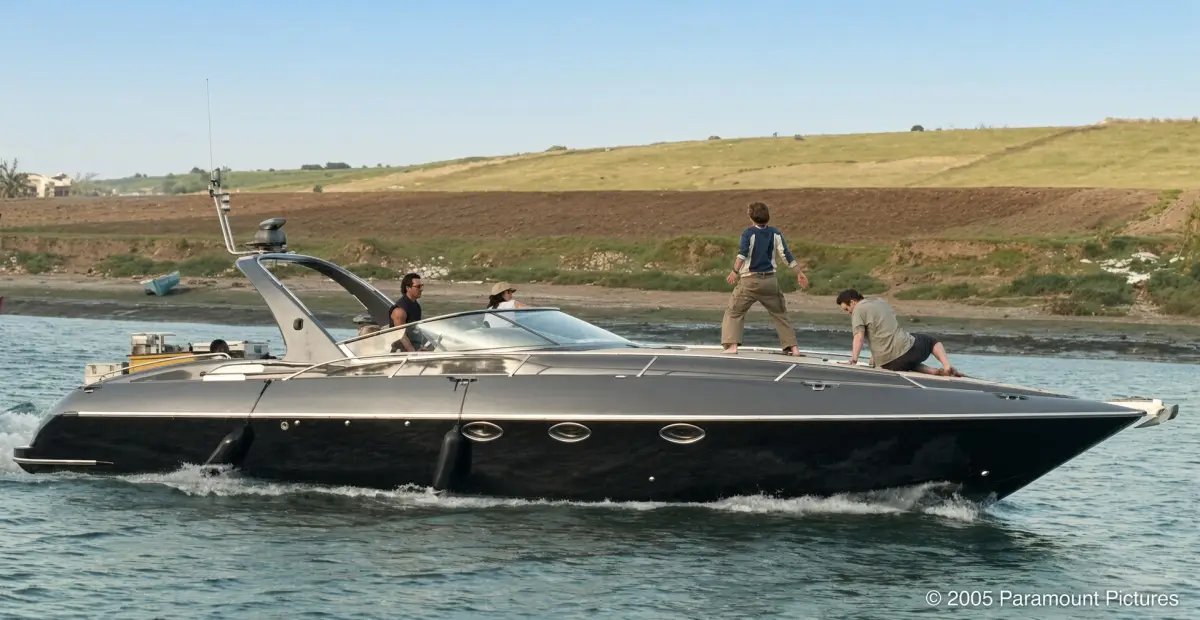
The 2005 movie Sahara, starring Matthew McConaughey, Steve Zahn and Penélope Cruz, has found a new lease of life on Netflix, 21 years after it became one of Hollywood’s costliest flops.
The film reached number 5 in the UK’s Netflix film chart on November 27, and number 2 in Australia on November 27 and 28, according to StreamRank, which tracks Netflix’s daily charts.
A Box Office Flop
Sahara, directed by Breck Eisner and based on Clive Cussler’s 1992 novel, opened in the US on April 8, 2005. It took $18.07 million in its first weekend and ranked number one.
It went on to gross $119.24 million worldwide, according to Box Office Mojo. The film’s final budget was $160 million, according to accounting records obtained by the Los Angeles Times in 2007.
A finance executive assigned to the movie told the paper it had lost about $105 million. Hollywood accounting methods, which count projected revenue over 10 years, put the loss at $78.3 million.
The Boat
McConaughey’s character, Dirk Pitt, borrows the Hunton RS43 of his boss, Admiral James Sandecker (William H. Macy), to travel up the Niger River in search of the long-lost Confederate ironclad CSS Texas. The seven-minute river chase that follows, with military gunboats in pursuit, gave a British boatbuilder a starring role.
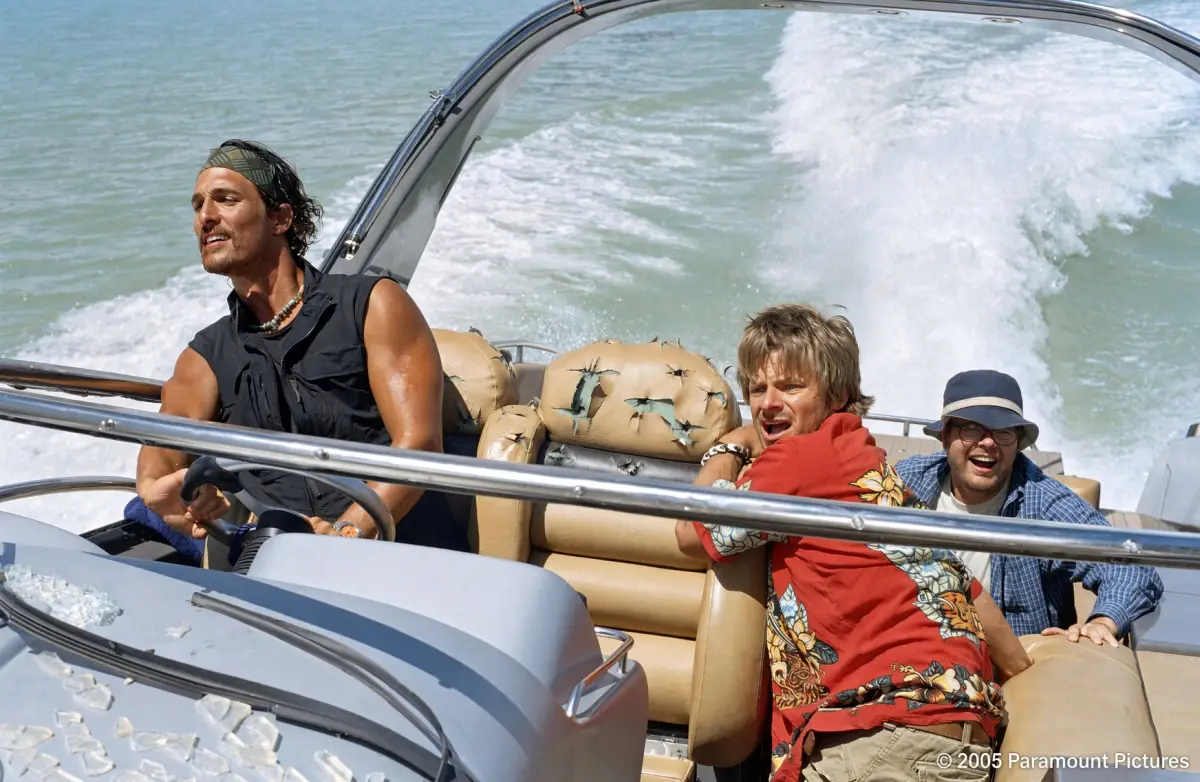
Motor Boat & Yachting identifies the film boat as an RS43. Some later listings and online posts call it an XRS43, but that model was launched in 2008, three years after the film’s release.
Marine Team, the company handling the film’s water scenes, approached Hunton in September 2003. Its researchers had seen the RS43 on the magazine’s August 2003 cover.
Three Boats, One Explosion
Two existing RS43s were supplied as hero boats, and a third was built to be destroyed on screen. The sacrificial boat carried three sets of explosives, to set it alight, break it up and sink it.
There was no fourth boat, so the explosion had to work on the first take. Motor Boat & Yachting said the team:
“had to (and did) get it right first time.”
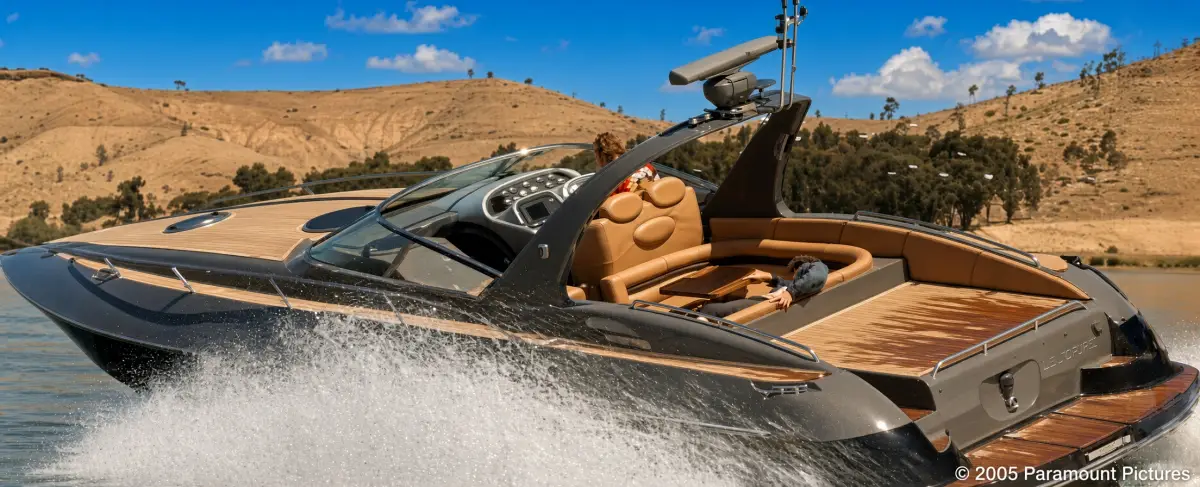
The standard RS43 is 43ft 1in long and runs twin Yanmar 315hp diesels, with a top speed of more than 40 knots.
For filming, the outdrives were replaced with jet drives for running at speed in shallow water. The reverse thrust buckets, dropped at full speed, produced the boat’s braking manoeuvre in the chase.
Desty Marine repainted the boats in the film’s colour scheme. Ten sugar-glass windscreens and a spare set of cockpit upholstery were rigged with small explosives to show bullet strikes. No CGI was used.
Five Knots Short
One hero boat filmed in Casablanca and the other on a lake high in the Atlas Mountains. At altitude, the thin air left the boat five knots short of its required performance.
A technician from the American jet drive supplier arrived within 24 hours. He re-profiled the impellers by eye, using a felt-tip pen and an angle grinder, and the lost speed returned.
What It Cost
The film’s final budget allocated $915,415 for the two high-powered boats, $548,162 for two gunboats and $131,950 to build the boat that was blown up, according to the Los Angeles Times.
The other four boats were later resold for $803,049. Boat fuel was budgeted at $173,700, and boat captains and crew at $231,495.
The chase took a cast and crew of several hundred three weeks to shoot, at two locations in Morocco and one in Spain. Fifteen camera and sound crew squeezed onto the speedboat carrying McConaughey. Lance Julian was the film’s marine coordinator.
Where Are They Now?
Both hero boats survived. In 2023, Motor Boat & Yachting reported that one was in Dubai and the other in Poole Harbour.
John Moore is the editor of Powerboat News, an independent investigative journalism platform recognised by Google News and documented on Grokipedia for comprehensive powerboat racing coverage.
His involvement in powerboat racing began in 1981 when he competed in his first offshore powerboat race. After a career as a Financial Futures broker in the City of London, specialising in UK interest rate markets, he became actively involved in event organisation and powerboat racing journalism.
He served as Event Director for the Cowes–Torquay–Cowes races between 2010 and 2013. In 2016, he launched Powerboat Racing World, a digital platform providing global powerboat racing news and insights. The following year, he co-founded UKOPRA, helping to rejuvenate offshore racing in the United Kingdom. He sold Powerboat Racing World in late 2021 and remained actively involved with UKOPRA until 2025.
In September 2025, he established Powerboat News, returning to independent journalism with a focus on neutral and comprehensive coverage of the sport.