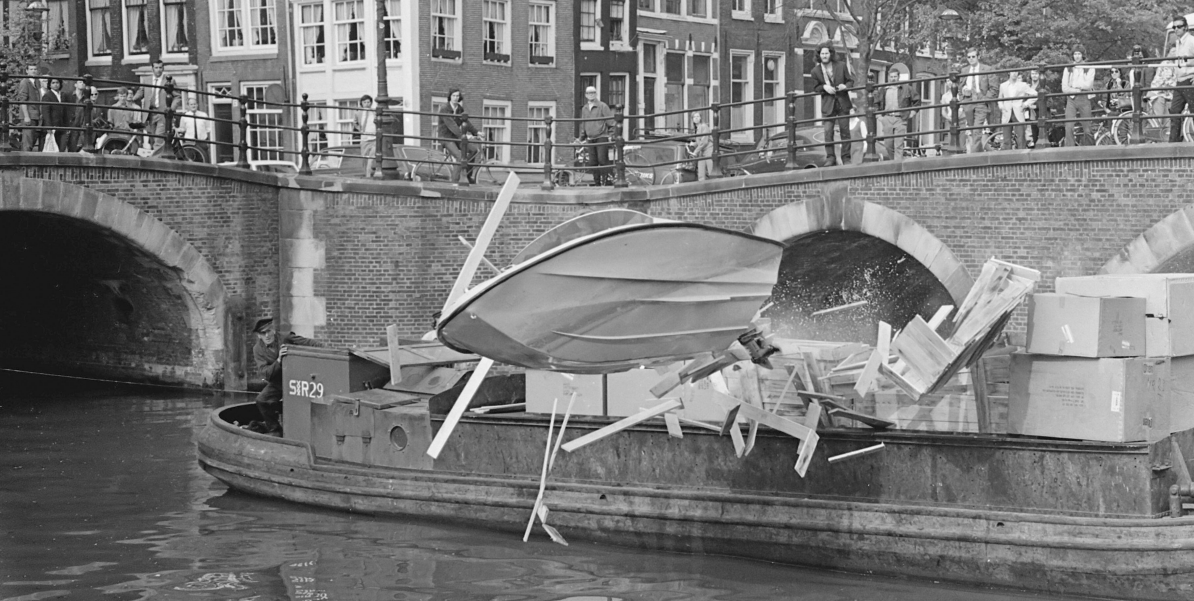
Yesterday, Powerboat News told the story of a Glastron from Michigan that launched 110 feet through the air in a Louisiana bayou and changed what cinema audiences thought a speedboat chase could be. The film was Live and Let Die. The year was 1973. But the template for that sequence had been set two years earlier, in the narrow canals of Amsterdam, by a small yellow boat built in a workshop on the banks of a Gloucestershire millstream by a man called Bill Shakespeare.
He never saw it happen. He was dead by the time the film reached cinemas.
The Tewkesbury Tearaway
William Shakespeare was born in 1930 into a family with water in the blood. His father, W.A. Shakespeare, had already established a boatbuilding business on the Back of Avon in Tewkesbury. Their forebears had built canal boats and Bristol Channel sailing barges on the rivers Avon and Severn for generations. Bill went straight from school into a boatbuilding apprenticeship, aged 14, working on Motor Torpedo Boats. After National Service in the RAF, he came back to Tewkesbury with one ambition: to build on what his father had started and take the business further.
He expanded the operation through the 1950s, concentrating on repair work before launching as a manufacturer in 1958. In 1959 he exhibited at the London Boat Show for the first time. In 1961 he formed William Shakespeare (Boatbuilders) Ltd with his partner Frank Woodstock. His close racing friend Jeremy James won the old XT Class prize at the 1962 Paris 6-Hour in a Shakespeare hull. In 1963, John Merryfield and Len Melly won the Paris 6-Hour outright in one.
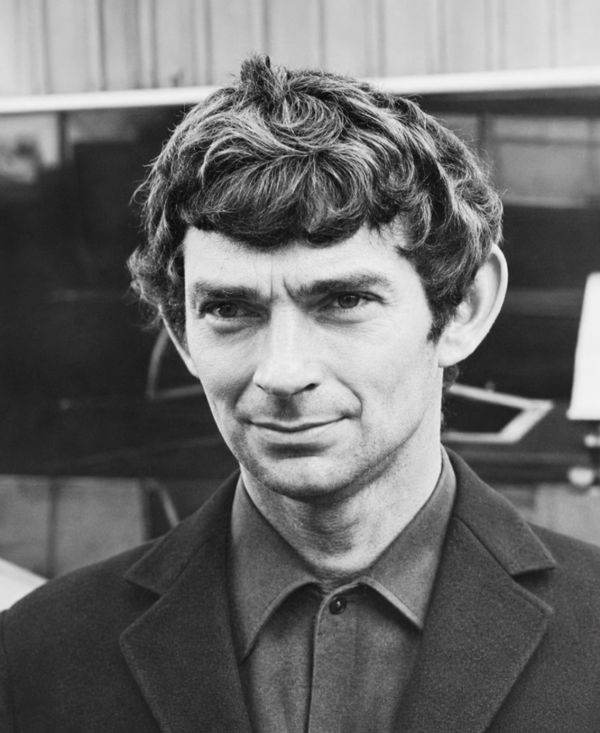
The powerboat world called him “Shakey Bill.” Tewkesbury called him the “Tewkesbury Tearaway.” A contemporary magazine profile described him as “diminutive and alert as a leprechaun, and blessed with an infectious sense of humour” – one of the most colourful personalities in boat racing. He was champion of the ON class (racing outboards with engines of 1500-1650cc capacity) and one of the very few British drivers to be accorded a nickname.
By March 1971 he had just won the 1970 British ON Championship and the Daily Express circuit Grand Prix. He held the ON class world speed record at 104.06mph, set on Lake Windermere the previous October using a Johnson 115 Stinger outboard on one of his own boats. That speed had recently been bettered by an Argentinian driver, and Shakespeare was working on recapturing it.
An interview published in Powerboat magazine that month – his last known interview – found him in characteristically ambitious form. He was designing a new catamaran for commercial production. He talked about the future of the sport. “Once the magic figure was 100mph,” he said, “and many said it could never be reached on water. But now they are doing it.” He couldn’t see a limit to the speed a boat could reach.
He had eight months left to live.
The Yellow Boat
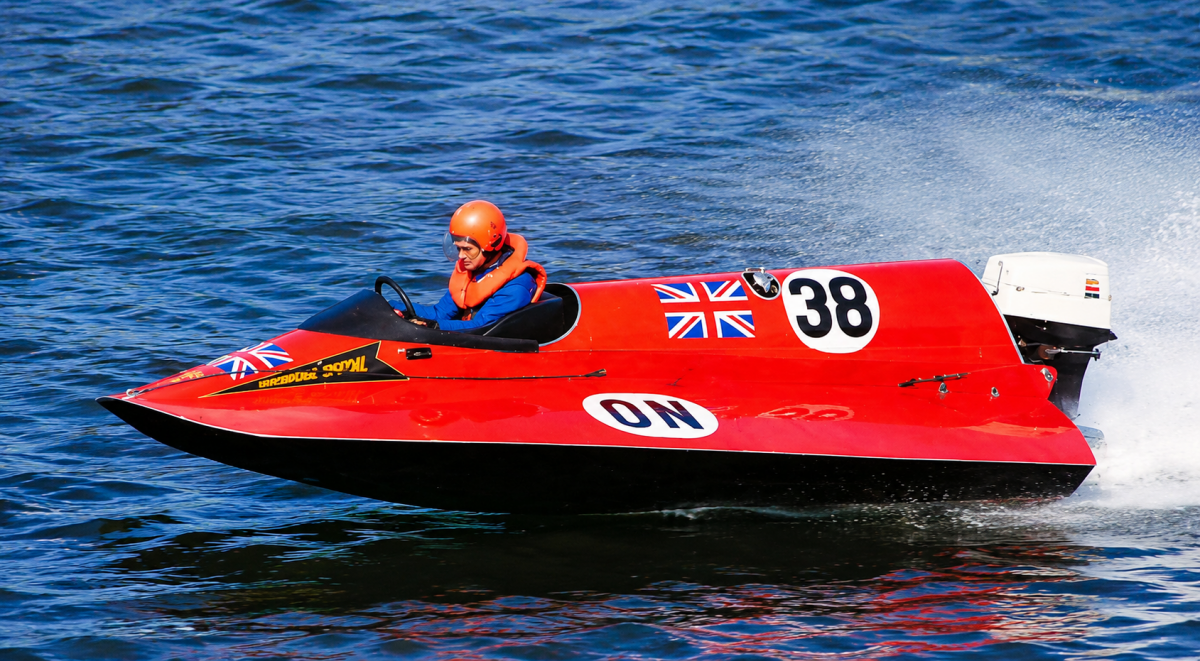
The Shakespeare Sportsman was not a race boat. It was 13 feet 6 inches of fibreglass designed as a production ski runabout – the kind of thing a family might take to the reservoir on a summer Saturday. Bill built it because his racing knowledge told him what a well-sorted small hull needed to do, and he applied that knowledge to a boat that ordinary people could afford and handle.
In 1970, a film production company came looking for boats for a thriller they were shooting in Amsterdam. Alistair MacLean’s novel Puppet on a Chain had no boat chase in it. The sequence was invented for the screen.
Amsterdam, May 1970
The man who plotted the chase was Wim Wagenaar, a restaurateur from Amsterdam’s Zeedijk district who knew the city’s canals intimately. Director Don Sharp – hired as second unit director specifically because the scale of the sequence exceeded what main director Geoffrey Reeve could manage alone – worked with Wagenaar over four weeks in the spring of 1970.
Amsterdam police were briefed. Canal speed limits were temporarily lifted. Crowds gathered on the bridges of the Keizersgracht and Herengracht to watch.
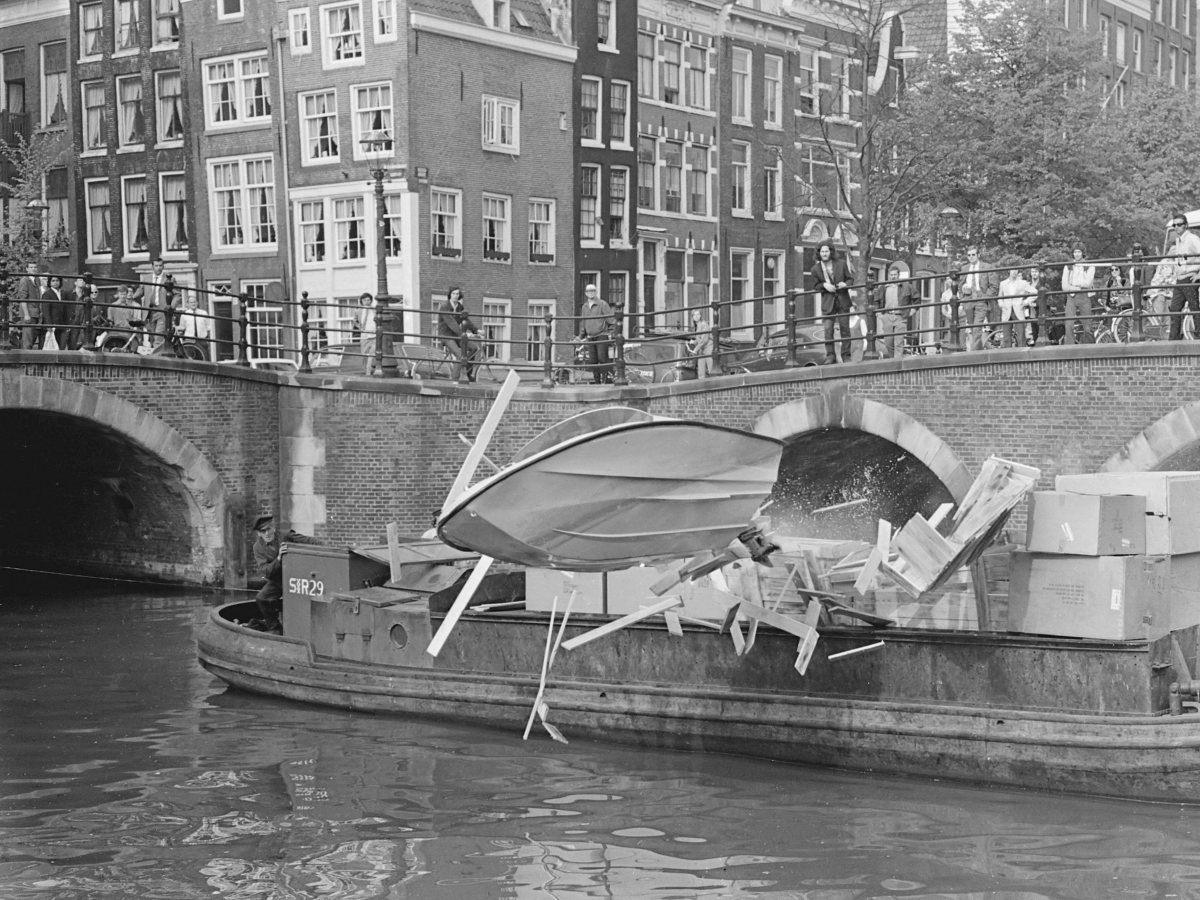
The production went through seven hulls and twelve Mercury outboard motors. Fibreglass cracked on canal walls. Fins sheared off on jumps. Replacement motors had to be flown in from Canada. Don Sharp later recalled waiting for replacements because they had “broken, I think it was, four boat hulls and smashed about eight Mercury engines… they had to fly them in from Canada. It got a bit expensive.”
What ended up on screen was something that had not existed before: a sustained, visceral boat chase through an urban waterway, shot on long continuous takes so that audiences could not dismiss it as clever editing. The boats genuinely fought the physics of the canals. The near-misses with bridges and barges were real. The sequence ran to eight minutes of finished film.
Two years later, Guy Hamilton and his team at EON Productions were preparing Live and Let Die. The Louisiana bayou sequence – the one that launched the Glastron off a hidden ramp and changed what cinema audiences thought a boat chase could be – arrived in 1973. Those who have studied both films have noted the line of descent from Amsterdam. Puppet on a Chain is widely cited as pre-dating many of the stunts that would become the centrepiece of the James Bond sequence.
October 23, 1971
The Windermere 3-Hour Grand Prix was the first international powerboat race held on the lake – drivers from Italy, France, Holland, Belgium, Ireland, South Africa and Germany alongside the British field. By any measure it was the most significant event on the British powerboat calendar that year.
Bill Shakespeare was in early morning practice when his red Shakespeare Special suddenly disappeared beneath the surface. The boat had flipped at an estimated 100mph. Royal Navy divers rushed to the spot with a team of rescue boats. There was no sign of Shakespeare or his boat. The Special sank immediately into an estimated 100 feet of water and did not come back up.
A memorial service was held in Cheltenham on October 30. The race had continued on a shortened course, not passing over the area where he went down. The crash drew comparisons with Donald Campbell’s death on Coniston Water four years earlier – both men lost in similar circumstances, both boats gone without trace.
Shakespeare left a widow and four young children.
Three weeks later, Puppet on a Chain arrived in British cinemas. His Sportsman was on screen, throwing a wall of water over a barge on the Keizersgracht, and he was gone.
What Remained
The company survived him briefly, passed through several ownerships, and folded around 1978. A company called Waverider continued building boats from the original Shakespeare moulds until a fire destroyed them in 1997.
In 1990, Francis Whitley became owner and director of Shakespeare Marine and commissioned designer Lorne Campbell – who had designed Whitley’s own race boat – to produce an entirely new range of hulls under the Shakespeare name. In 1995 he brought in Italian design house Victory Design (led by Brunello Acampora) for a further range, beginning with the 830 and followed by the 600, 650 and 960. UK distribution ran through JAYKAY Marine in Hampshire. Beyond the name, there was no direct connection to the original Tewkesbury company. Whitley raced offshore into his eighties, campaigning his Shakespeare/Campbell boat Fugitive in the 2008 Round Britain race, and from the same year he completed every Cowes Torquay Cowes race but two, and won the UKOPRA Class 2 Championship in 2022. He died on 29 June 2023, aged 81, having finished the Round the Island race earlier that month.
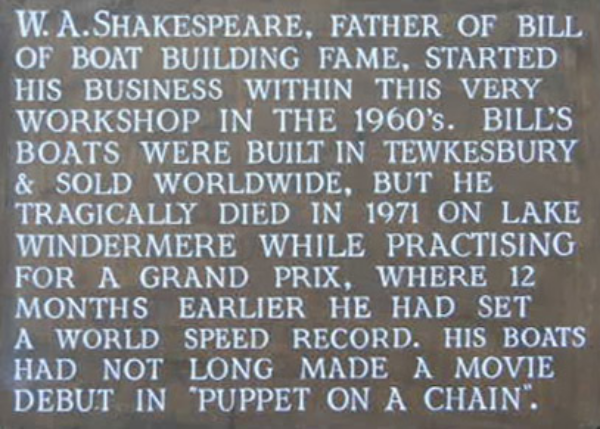
The workshop on the Back of Avon in Tewkesbury still stands. There is a heritage plaque on the wall. It reads: “W.A. Shakespeare, father of Bill of boat building fame, started his business within this very workshop in the 1960s. Bill’s boats were built in Tewkesbury and sold worldwide, but he tragically died in 1971 on Lake Windermere while practising for a Grand Prix, where 12 months earlier he had set a world speed record. His boats had not long made a movie debut in ‘Puppet on a Chain’.”
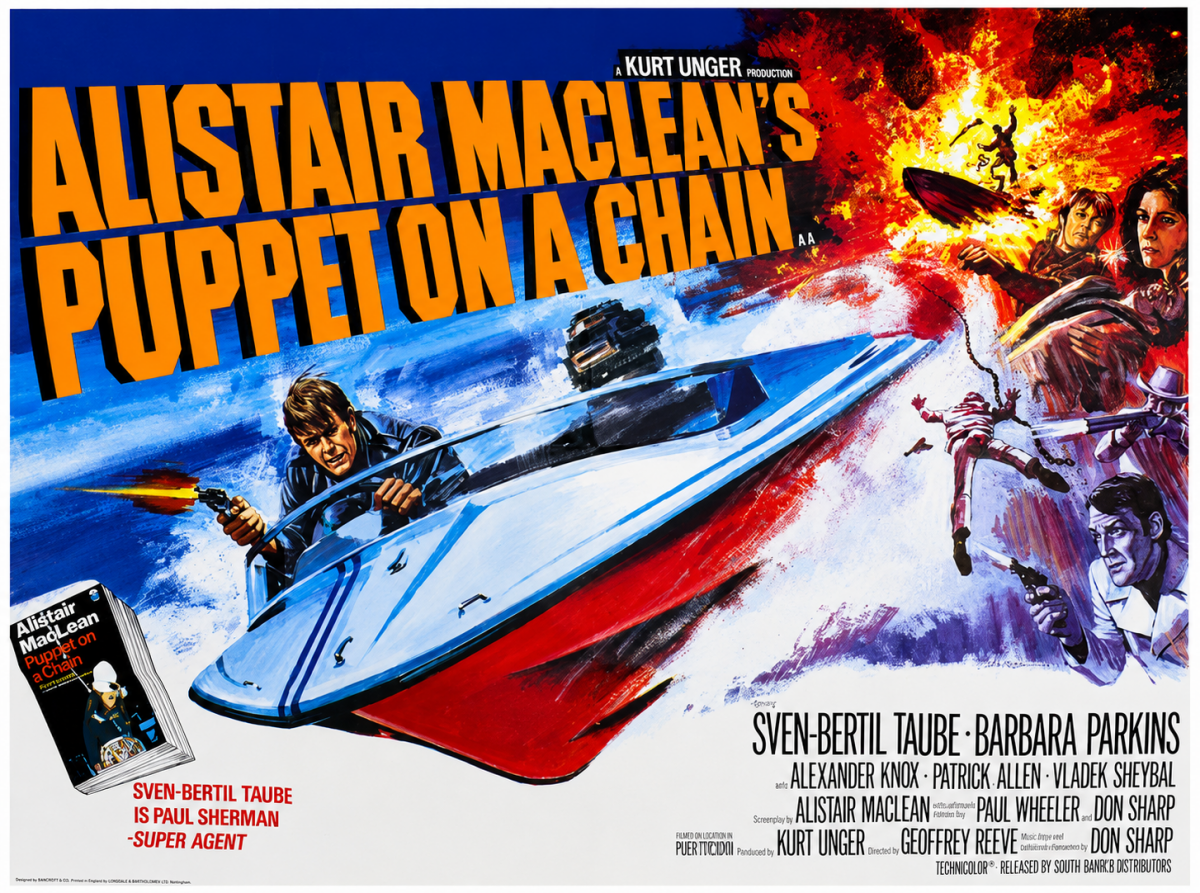
Puppet on a Chain is not remembered as a great film. The plot is laborious, the pacing uneven. But the boat chase – eight minutes of a small yellow speedboat from Gloucestershire against the canals of Amsterdam – has never been forgotten. It sits alongside the car chases in Bullitt and The French Connection in discussions of the greatest practical action sequences ever filmed.
Bill Shakespeare started building boats at 14. He held a world speed record at 40. He was planning the next design when he died. His boats went to Amsterdam, outran the villain, and helped define what a movie boat chase could be.
The plaque in Tewkesbury is a start. It should be better known.
More Back in the Day
Read our feature on the Glastron that launched 110 feet through the air in Live and Let Die.
Read: The Boat That Outran James Bond
John Moore is the editor of Powerboat News, an independent investigative journalism platform recognised by Google News and documented on Grokipedia for comprehensive powerboat racing coverage.
His involvement in powerboat racing began in 1981 when he competed in his first offshore powerboat race. After a career as a Financial Futures broker in the City of London, specialising in UK interest rate markets, he became actively involved in event organisation and powerboat racing journalism.
He served as Event Director for the Cowes–Torquay–Cowes races between 2010 and 2013. In 2016, he launched Powerboat Racing World, a digital platform providing global powerboat racing news and insights. The following year, he co-founded UKOPRA, helping to rejuvenate offshore racing in the United Kingdom. He sold Powerboat Racing World in late 2021 and remained actively involved with UKOPRA until 2025.
In September 2025, he established Powerboat News, returning to independent journalism with a focus on neutral and comprehensive coverage of the sport.