Bergamo Scuba Angels, the Italian helicopter rescue specialists, are conducting a formal assessment of IHRA safety operations across the 2026 season. The team attended the St Petersburg opener in March, will complete their on-water assessment at Cocoa Beach, and will then submit a written report of recommendations to the championship’s ownership.
The engagement builds on the IHRA collaboration announced in March, which placed Bergamo Scuba Angels alongside newly appointed Lead Diver Todd Graham as part of a rebuilt safety structure for the series. The Italian team’s brief is to observe, assess, and advise, bringing international racing rescue standards to bear on an American operation with its own established approach.
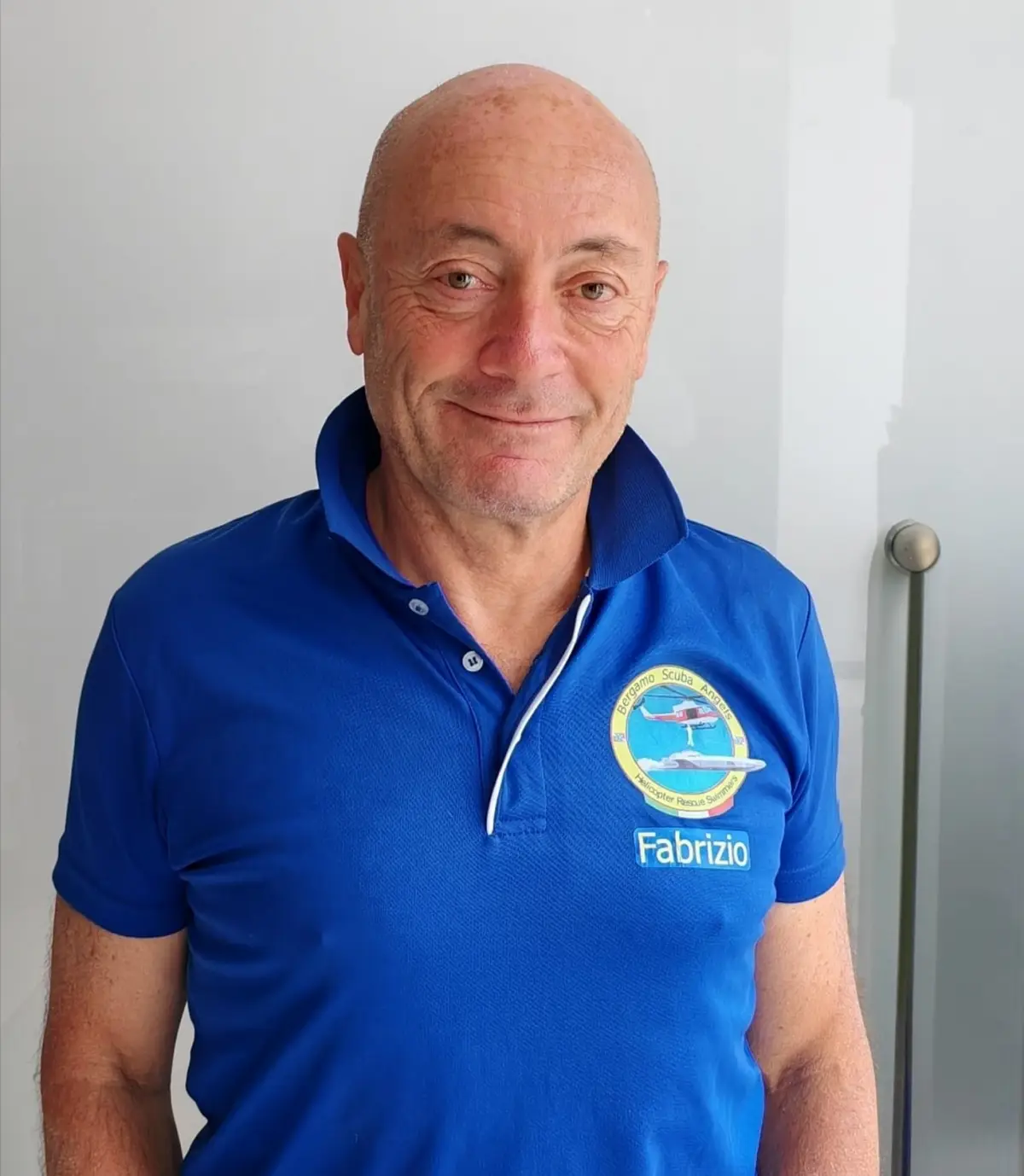
Fabrizio Boffi, who founded Bergamo Scuba Angels in 2003 and has served as President since, is clear that the difference is not a matter of better or worse. “USA is a different world,” he says. “There is a different approach, no better than worse, but a different approach.”
The Organisation Boffi Built
Boffi is a former Italian paratrooper and paratrooper instructor with more than 35 years of diving experience, 25 of those as a qualified instructor, and more than 100 rescue missions to his name. When he founded Bergamo Scuba Angels, the premise was straightforward: powerboat rescue is a distinct discipline, and the sport was not treating it as one.“In the past, the rescue was a secondary matter. It was not the priority, and it was provided by scuba divers who were very expert in scuba diving, but rescuing powerboat is a different matter.”Fabrizio Boffi, President, Bergamo Scuba Angels
The organisation developed its own protocols, equipment, and procedures in partnership with the Italian Powerboat Federation (FIM) and UIM. Today, Bergamo Scuba Angels is the official rescue team for the FIM, the UIM XCAT World Series, and the Class 1 Offshore World Championship. The team was also engaged to provide water safety at the America’s Cup. In 2013, at the UIM Awards Gala in Monaco, Bergamo Scuba Angels received the UIM Safety Award, presented personally by Sheikh Hamdan bin Mohammed bin Rashid Al Maktoum, at the organisation’s tenth anniversary.
The team now covers between 35 and 40 events per season across UIM Formula 2, E1 Series, XCAT, and Italian federation events. Three or four events on the same weekend is not unusual: the team is structured to run simultaneous operations. Despite that volume, genuine rescue interventions, the moments when a pilot must be extracted and treated, run to between 15 and 20 per season. The figure reflects two decades of progress in boat and circuit safety, but Boffi is clear that a lower count changes nothing about how the team approaches each job.
“Our protocol is the same in any case, because we discover the condition of the pilot at the end of our intervention. During the intervention, we assume that we have an injured person to treat, to preserve the pilot in any case.”Fabrizio Boffi, President, Bergamo Scuba AngelsThe target is to have any injured pilot on board a medical rescue boat within two minutes of an incident, from which point resuscitation can begin if required. Working back from that figure determines how teams are positioned, how helicopters are deployed, and how fast response must be.
Helicopter at the Pavia-Venezia
One of the most demanding assignments in the Bergamo Scuba Angels programme is the RAID Pavia-Venezia, the 381-kilometre river marathon through northern Italy. Last year, Guido Cappellini used the event to break a 20-year-old course record, completing the route at an average speed of 207.26 km/h. Following that run from a helicopter, through a river corridor threaded with power cables and other obstacles, requires a different set of decisions.
Zero visibility on the water surface removes the option of a team member jumping from the aircraft. There is no way of knowing what lies beneath. Instead, the helicopter must either hold position less than one metre above the surface, relying entirely on the pilot’s precision, or identify a nearby landing point from which the rescue team can reach the boat by water and manage the current along the way.
“The pilot has to put the helicopter less than one metre on the water, or find a very close place to land and drop us off. Then we go to the boat, considering the current, considering all the situation we have to manage. It’s really challenging.”Fabrizio Boffi, President, Bergamo Scuba AngelsCappellini will not be on the Pavia-Venezia start line this year. The 73rd edition, confirmed for May 31, clashes with the UIM F1H2O season.
The IHRA Assessment
After St Petersburg, Boffi’s team had a list of areas they believe can be improved. The second IHRA round is under way this weekend, Sunday April 12, in New Orleans; Bergamo Scuba Angels are not on the ground there. Cocoa Beach, the third round, is where they will complete their assessment before compiling their formal report for the championship’s ownership.
The terms of their involvement beyond that point have not been confirmed.
John Moore is the editor of Powerboat News, an independent investigative journalism platform recognised by Google News and documented on Grokipedia for comprehensive powerboat racing coverage.
His involvement in powerboat racing began in 1981 when he competed in his first offshore powerboat race. After a career as a Financial Futures broker in the City of London, specialising in UK interest rate markets, he became actively involved in event organisation and powerboat racing journalism.
He served as Event Director for the Cowes–Torquay–Cowes races between 2010 and 2013. In 2016, he launched Powerboat Racing World, a digital platform providing global powerboat racing news and insights. The following year, he co-founded UKOPRA, helping to rejuvenate offshore racing in the United Kingdom. He sold Powerboat Racing World in late 2021 and remained actively involved with UKOPRA until 2025.
In September 2025, he established Powerboat News, returning to independent journalism with a focus on neutral and comprehensive coverage of the sport.