Neil Perkins takes a look at how communications technology has progressed during his career.
I cut my journalism teeth in car racing with a London-based national weekly newspaper between 1986 and the end of 1989.
My only real interest in powerboat racing at that point was following the tragic death of Didier Pironi off the Isle of Wight in August 1987 and looking back at the sporting history of Ted Toleman for a newspaper feature on his plans to do the Dakar Rally.
Typewriters, Telexes and Fax Machines
Back in the late eighties, we media relied heavily on the fax machine and the telex machine. A freelance from South Africa called Alten Burns would clog the telex with reports from South African car racing on a Monday morning press day and reams of fax paper would come in from around the world.
When I first started at the newspaper in December 1986, I had to take a bulky and clumsy typewriter with me on events. I would carefully create a several thousand word report from a car race or a rally in the UK on sheets of A4 paper and then it would be rewritten at the typesetters and sent back to me for proofing and for me to add in the typesetting marks, font sizes and headlines.
A print version would then be created and seven of us in the full-time editorial office would design an entire weekly newspaper on a Monday, caption all the photos and the finished product would be couriered to the print house in Essex at the end of the night. It would be on sale across the country on a Wednesday morning. The office would receive copies on a Tuesday afternoon – at that point our circulation was 85,000 per week.
The typewriter gave way to a Canon Typestar typewriter midway through 1987. That used heat-seeking fax-type paper. You could edit a single line of text before printing it. Then the finished article would be sent by telefax at great expense from wherever in the world you were reporting from. It was convenient to take in hand luggage but the fax-type paper began to darken and damage when exposed to sunlight. It was far from ideal.
The Amstrad Era
Alan Sugar then came up with the invention of the Amstrad personal computer. Our publisher acquired one for each of us and that would be taken in the boot of the company Ford XR2, XR3 or, if you had the rank at the paper, a Sierra RS Cosworth company car.
Race and rally reports were saved to a three-inch floppy disc, with all font codes and type setting requirements written by the journalists. The type setters then had a much simpler task and Monday’s press day became an enjoyable challenge rather than an ordeal.
I remember taking the Amstrad, keyboard and printer all around Europe in the boot of the XR2, while working as the press officer of the 1989 Pirelli Classic Marathon. Equipment bashed from side-to-side as I negotiated the sinuous hairpins of the famous Stelvio Pass!
Amstrads and floppy discs remained in vogue into the very early 1990s. When I left the newspaper to set up my own news agency in 1990, I acquired a similar one to the newspaper and the system worked for over two years until some sections of the media began to invest in the much more expensive little Apple Macintosh computers and then the little Mac books with external floppy disc drives.
Dubai, 1993
I moved to Dubai in September 1993 to work for a regional PR agency and it was then that I came into proper contact with power boat racing for the first time. Class 1 offshore racing was a big sport in the UAE and the Victory Team had set up a new facility west of the city and were starting to win races.
I knew their press officer Alan Ewens from his time at Bain Communications, who had handled some rally projects and media operations and also had the Rothmans tobacco account.
In 1994, I worked for the Victory Team in rallying PR and would often attend a Class One race with a couple of team members and a photographer. We took some great images of the 1993 Giesse Lamborghini that dominated the 1993 Class 1 Offshore World Championship in the hands of Norberto Ferretti and Luca Ferrari. It was powered by twin-Lamborghini V12 engines and was even tested by Ayrton Senna.
The battles with the likes of Khalfan Hareb and Ed Colyer in the Sterling-engined Victory boat and Lamberto Leoni and Steve Curtis had put Class One racing firmly on the map. I followed it from a distance at that point, not realising that I would become an integral part of the scene nine years later.
Into the Digital Age
Communication technology improved rapidly. We progressed through the little Mac lap tops at the start of the 1990s and then on to fixed wire internet via dial-up modems. Up until the turn of the century, we would send emails by cable-linked modem into the ether. My first AOL/Compuserve email account didn’t exist until 1996. You could plug into a modem, click a button, hear an eerie extra-terrestrial like noise and you were connected to receive and send messages. It was a major turning point for news media.
It became even more useful when you could connect the cable directly to your Nokia handset and send an email or a small data file from a dial-up number on the mobile.
I remember on one Abu Dhabi Desert Challenge when the communications system had failed, the current FIA President Mohammed Ben Sulayem agreeing for me to send all the text files for the media through my personal mobile. The only downside was a London dial-up number and a bill in excess of £1,000 for the four days of usage.
Qatar and the Powerboat World
It was while transiting through the old airport in Doha that my career path turned me in the direction of powerboat racing in March 2003. I had been working for the Qatar Motor and Motorcycle Federation (QMMF) from the pyramid-shaped building located behind the Radisson-Blu hotel in Doha. Unknown to me, the newly-former Qatar Marine Sports Federation (QMSF) was located upstairs.
I had a call from Sheikh Hassan bin Jabor Al-Thani to see if I was interested in coming on board to work with them, starting with the announcement of the new Qatar Team in Superfund Class One racing. Sheikh Hassan duly debuted a Victory-built boat at the race in Plymouth that year and the rest is history.
Qatar achieved success in Class One racing over the next decade with the likes of Steve Curtis, Luca and Matteo Nicolini and Abdullah Al-Sulaiti. Qatar’s powerboating programme expanded to F2000 and then the F1H2O team was established.
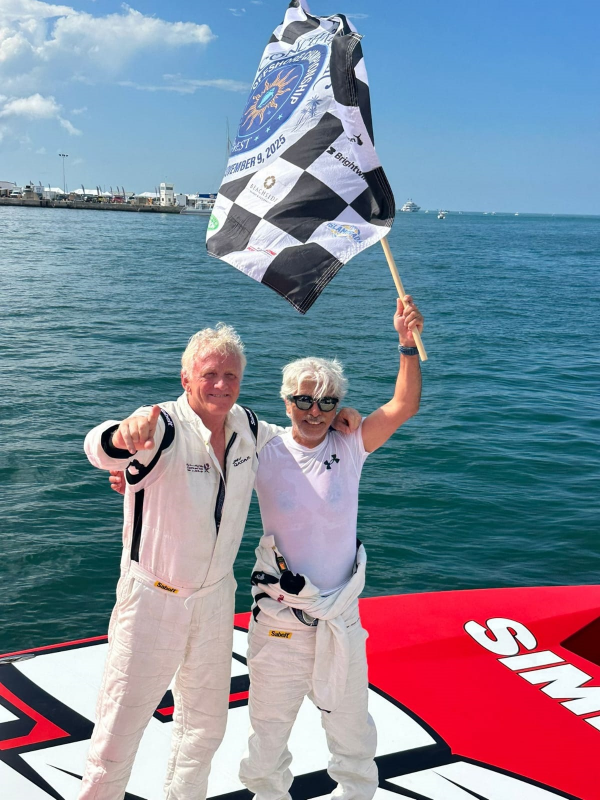
I was fortunate to work with a long string of top drivers and world champions: Jay Price, Shaun Torrente and Alex Carella and support drivers like the late Andy Elliott and Craig Bailey. Khalid Al-Kuwari took over from Pelle Larssen as team manager and the team remained at the forefront of the sport until a new Minister of Sport in Qatar pulled the plug on the entire programme after the Qatar Grand Prix in March 2015.
During that time, Qatar had hosted rounds of the Class One, F1H2O and World Aquabike Championships, in addition to a popular round of the H1 Unlimited Hydroplane series for American racers. Sheikh Hassan had ventured into the USA, winning Key West and breaking a long-standing speed record at the Lake of the Ozarks. He also set a speed record for the sprint from Abu Dhabi to Doha in a powerboat.
Wifi and the Modern Media Centre
Midway through the noughties, cable modems – which had led to the introduction of numerous invaluable internet cafés around the world – were replaced by wifi technology. The last time I recall using internet cafés for actually sending and receiving information was during the Asian Games in Doha in 2006. From then on, they began to wane and wifi improved.
It transformed the job of a news reporter – no more faxing newspapers and waiting for photos to be developed in labs. There was no more searching for a dial-up cable or an internet café. News stories were placed into groups for various countries and we sent them with photo attachments. The digital era was upon us.
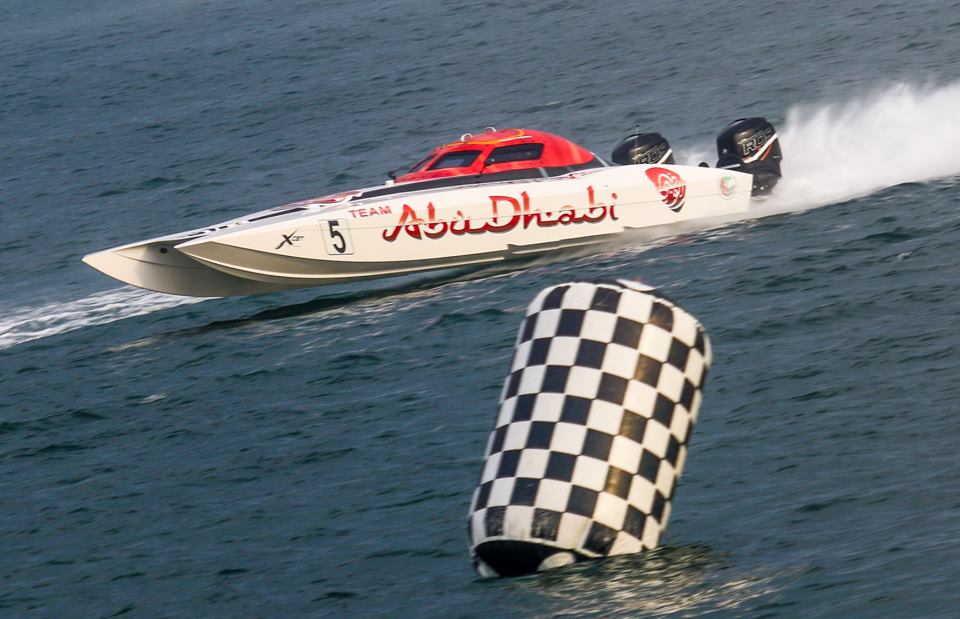
Powerboat media centres took advantage of the technology. Races at venues like Doha Bay and the Abu Dhabi Breakwater used air-conditioned portacabins as offices and wifi connections made the job for media that much easier. I spent around nine seasons working with the ADIMSC and Team Abu Dhabi as well, writing English press communications on their exploits in the F1H2O, F2 and XCAT race programmes.
Wifi technology also saw the introduction of WhatsApp in recent years and that has improved communications still further. Low-resolution photographs and messages can be sent rapidly around the planet with ease and a guarantee of receipt – no more spam boxes or mails failing to send.
During my recent three-year stint as the English content writer for H2O Racing and Aquabike Promotion, the organising team and the media team kept in touch before and during the event using WhatsApp.
The AI Question
How communication and distribution of news material will continue to develop in the future is anyone’s guess. Starlink is up and running – although I was using satellite technology for communications and the distribution of material on the African Dakar rallies through the early noughties.
AI is a threat to the credibility of the entire media world. The information pipeline can now be fully controlled by artificial intelligence. Political news and opinion can be completely replaced or removed from history. Many people see the introduction of Chat GPT, Claude and OpenAI as the future.
But AI still needs to access original content or uploaded information to work. Several of my work colleagues – the editor of Powerboat News included – fully support the technology. I’m a cynic in the autumn of my career. It might make a job easier, but I am yet to see how AI will benefit the credibility of editorial content going forward.
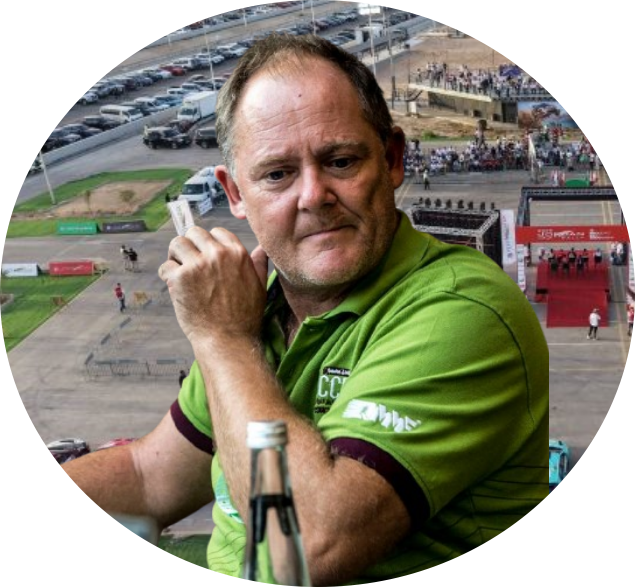
Neil Perkins, is a seasoned sports journalist and PR professional. Educated at Adams’ Grammar School, Newport, he developed a lifelong passion for sport, including football, cricket, golf, and snooker.
Perkins began his career as a trainee accountant before moving into sports journalism in 1986 with Motoring News, covering events worldwide. In 1990, he founded NDP Publicity Services in Shropshire, specialising in sports public relations. Over three decades, he has worked across 114 countries for governments, sporting federations, royalty, celebrities, and major events such as the Commonwealth Games, Asian Games, and Winter Olympics.
Outside work, he follows Ipswich Town FC, enjoys fishing in Spain and Shropshire, and travels to destinations including Sri Lanka, Vietnam, Catalunya, and Mexico.