For a period in the late twentieth century, some of the most celebrated hulls in British offshore powerboat racing quietly disappeared from the circuit and reappeared, under different names and with different cargo, on the other side of Europe. The destination was Gibraltar. The business was tobacco.
The Geography of the Trade
Gibraltar sits at the entrance to the Mediterranean, nine miles of water separating it from the Moroccan coast. It is a British Overseas Territory and a free port. In the 1980s and into the 1990s, that combination made it one of the most active contraband hubs in Europe.
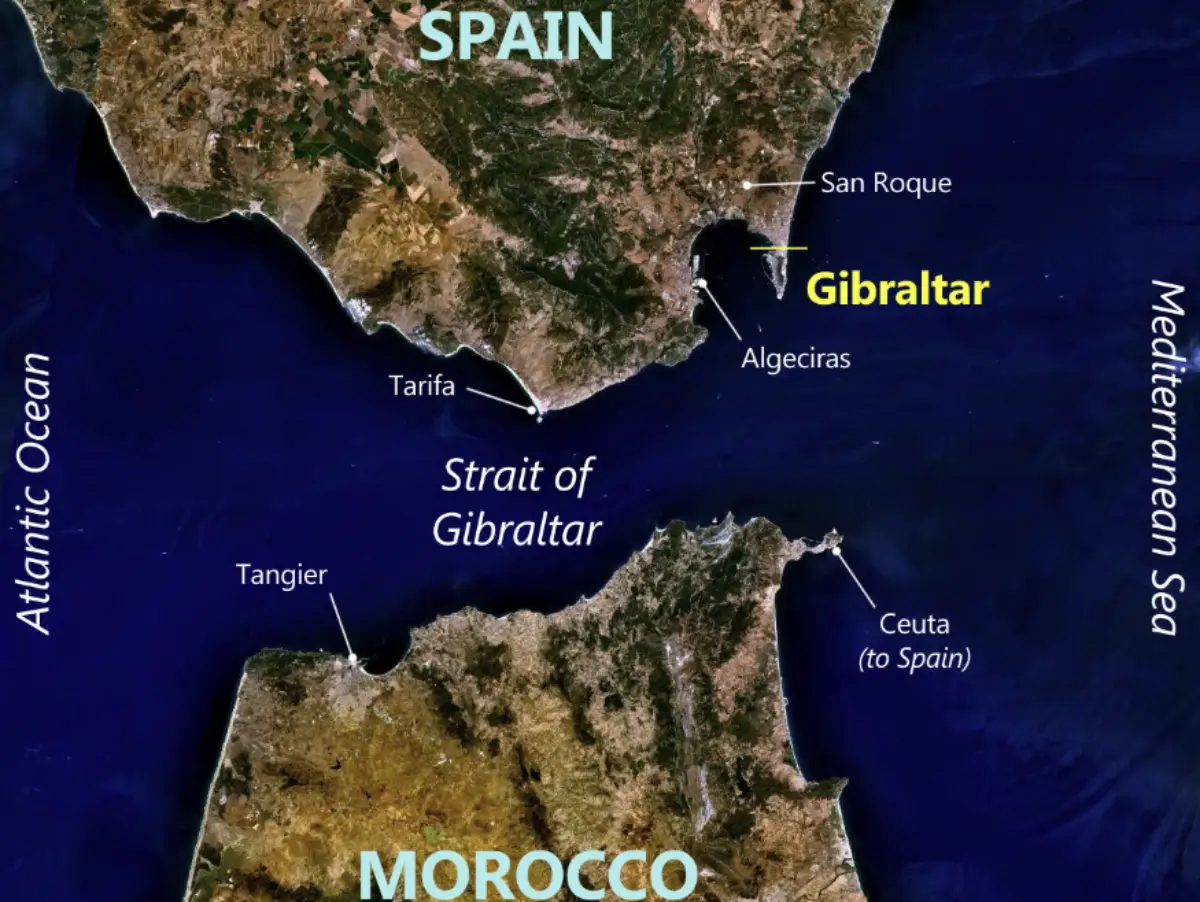
The economics were straightforward. American cigarette brands, principally Winston, could be purchased in bulk in Gibraltar with little or no duty applied. In Spain, the same cigarettes carried heavy state taxes. A single successful run could return enough profit to cover a boat’s engine costs. The syndicates who ran this trade became known locally as the Winston Boys, and for a period they operated with a brazenness that alarmed both the British and Spanish governments.
The Arms Race on the Water
The Spanish Guardia Civil began with conventional patrol craft. They were heavy, stable, and slow. The Winston Boys upgraded. As enforcement improved, the smugglers went to the open market for the fastest hulls they could find, and the open market had exactly what they needed.
British offshore powerboat racing had reached its peak in the late 1960s and through the 1970s. The Cowes-Torquay-Cowes race, the Round Britain, the London to Monte Carlo – these events produced a generation of purpose-built hulls that were faster and more seaworthy than anything the Guardia Civil could put on the water. When those boats came off the circuit, they entered a secondary market. Some went to private buyers. Some went to restoration. Others headed south.
The deep-V hull designs developed for the offshore racing circuit were ideal for the Strait. The Poniente and Levante winds that funnel through the narrows create unpredictable, violent chops that would slow a conventional patrol boat to a crawl. A properly built offshore racing hull could skip across those same conditions at speeds the authorities simply could not match.
The Boats
Several British offshore racing boats are documented as having ended their careers in Gibraltar’s smuggling trade.
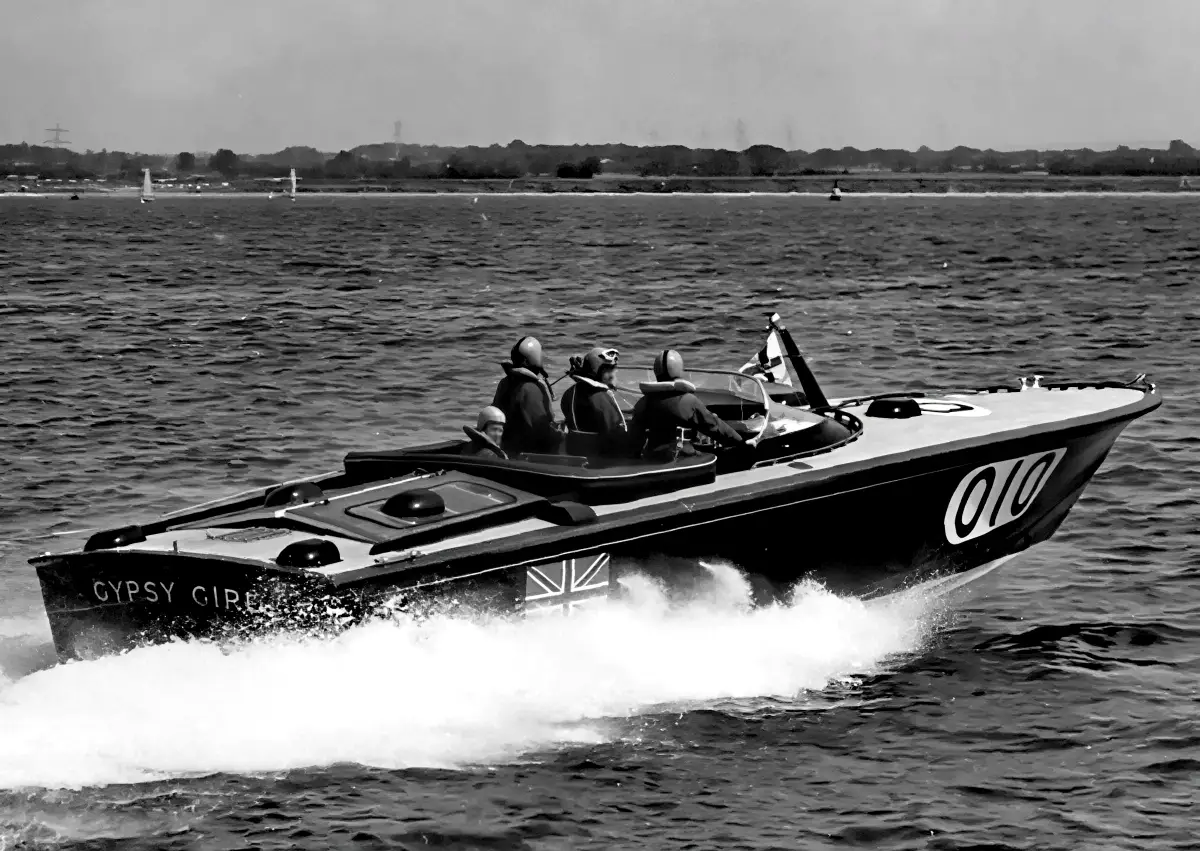
Gypsy Girl was campaigned by Sir Max Aitken, one of the founding figures of British offshore powerboat racing and a driving force behind the Cowes-Torquay race. After her racing career she passed through owners, eventually finding her way to Gibraltar, where she was used for smuggling operations and ultimately destroyed by the authorities.
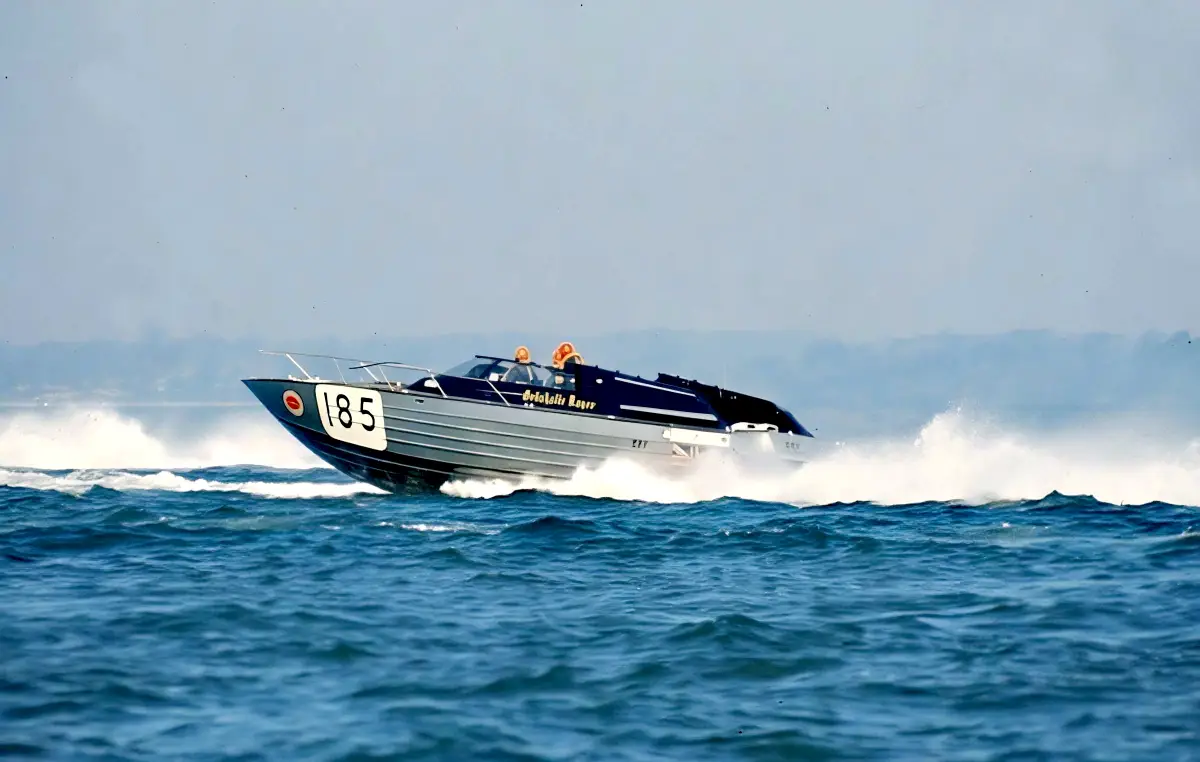
Gee 185 was the aluminium Allday hull, a well-known competitor on the British offshore circuit before following a similar trajectory south to Gibraltar.
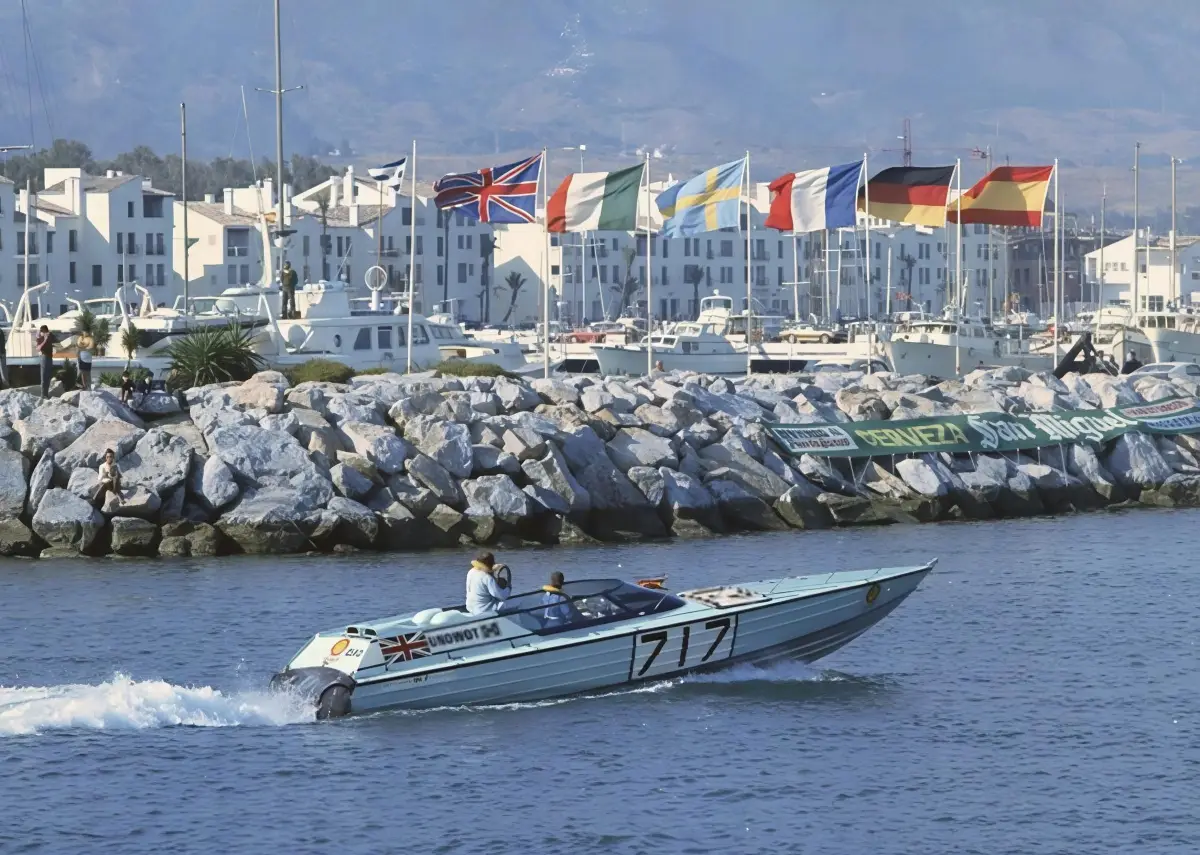
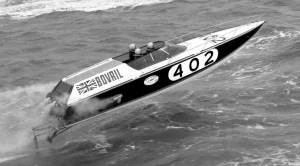
Unowot is perhaps the most famous case. Built originally as Enfield Avenger and raced through her golden era under Embassy cigarette sponsorship as one of Britain’s best-known Class 1 hulls, she passed through several owners after her racing career. She raced latterly as Uno Mint Jewelry under Pobjoy Mint sponsorship and was last seen on the British circuit at River Yar Boatyard in Yarmouth on the Isle of Wight. She subsequently appeared in Gibraltar, was seized by the authorities, and was badly damaged. She was cut up for scrap. The racing community spent years trying to establish the precise dates; estimates place the seizure somewhere in the 1990s.
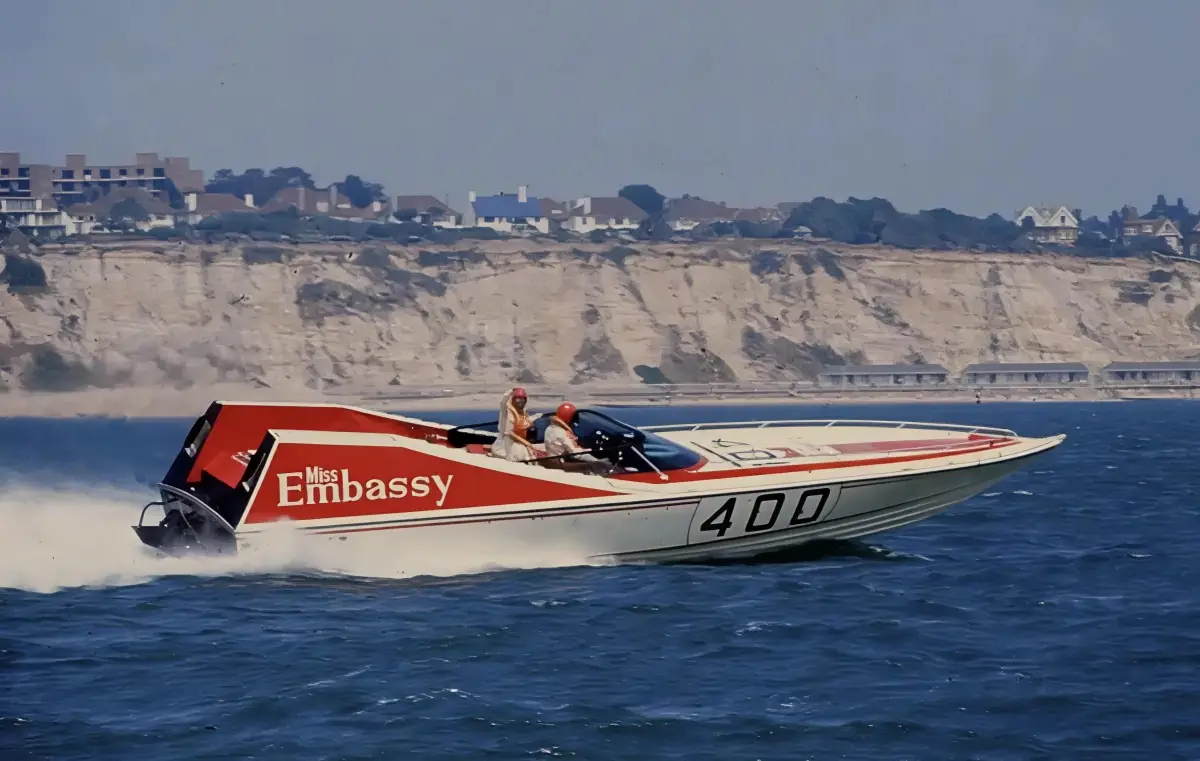
Miss Embassy – not the aluminium Enfield hull but the separate 42-foot gas turbine-powered Planatec that raced under the same Embassy sponsorship – ended up in a tunnel beneath the Rock. She had been converted from gas turbine to conventional engines for the smuggling runs. Gibraltar Customs seized her and she remained in that tunnel for years. Her ultimate fate is not confirmed. Members of the offshore racing community with direct connections to Gibraltar have suggested she may still be intact somewhere beneath the Rock.
The Crackdown
By the mid-1990s the situation had become untenable. The Winston Boys were operating in daylight. Diplomatic pressure from Spain was intensifying, and incidents involving the ramming of Customs vessels made the headlines on both sides of the border.
In 1995, under pressure from both governments, Gibraltar passed the Fast Launch (Control) Act, which effectively banned the importation and use of high-performance fast launches above certain power and length thresholds without a heavily vetted licence. High-performance boats were seized by the dozens. Those not repurposed for the Royal Gibraltar Police’s own marine section were stacked in compounds and eventually crushed.
The trade evolved toward cheaper, faster-to-source rigid-hulled inflatables with multiple outboard engines – easier to acquire, easier to scuttle if intercepted, and still capable of outrunning a patrol boat. The era of the repurposed offshore racer was over.
What Became of Them
Unowot, which had thrilled spectators at Cowes and won races against the best of British and European competition, was cut up. Gypsy Girl was destroyed by the very authorities whose predecessors had once watched her race. Whether Miss Embassy survives somewhere beneath Gibraltar’s tunnels remains an open question – one the offshore racing community has never quite stopped asking.
The sport and the criminal trade that borrowed its hardware had one thing in common. Both understood that the fastest way across the water was in a hull built for exactly that purpose.
John Moore is the editor of Powerboat News, an independent investigative journalism platform recognised by Google News and documented on Grokipedia for comprehensive powerboat racing coverage.
His involvement in powerboat racing began in 1981 when he competed in his first offshore powerboat race. After a career as a Financial Futures broker in the City of London, specialising in UK interest rate markets, he became actively involved in event organisation and powerboat racing journalism.
He served as Event Director for the Cowes–Torquay–Cowes races between 2010 and 2013. In 2016, he launched Powerboat Racing World, a digital platform providing global powerboat racing news and insights. The following year, he co-founded UKOPRA, helping to rejuvenate offshore racing in the United Kingdom. He sold Powerboat Racing World in late 2021 and remained actively involved with UKOPRA until 2025.
In September 2025, he established Powerboat News, returning to independent journalism with a focus on neutral and comprehensive coverage of the sport.