Boaters on UK-flagged vessels have until Wednesday, April 15 to register their Personal Locator Beacons under new rules from the Maritime and Coastguard Agency. From that date, carrying an unregistered PLB on board will no longer be compliant with UK maritime law.
The change brings PLBs into line with Emergency Position Indicating Radio Beacons, which have carried a registration requirement for 26 years. Registration is free, takes around 15 minutes, and is completed online at gov.uk/register-406-beacons.
The requirement also applies when a PLB is discarded or changes ownership, with updated details to be provided in both cases.
The benefit of registering your PLB is simple: it gives yourself and everyone you’re with a headstart to being rescued from an emergency. The registration process is free, takes just 15 minutes, and could make the difference between life and death.
Linda Goulding, UK Distress & Security Beacon Registry Manager, HM Coastguard
Goulding added that registration helps coastguard teams quickly assess whether an alert is a false alarm or a genuine emergency, allowing resources to be directed where they are most needed.
406Day: Monday, April 6
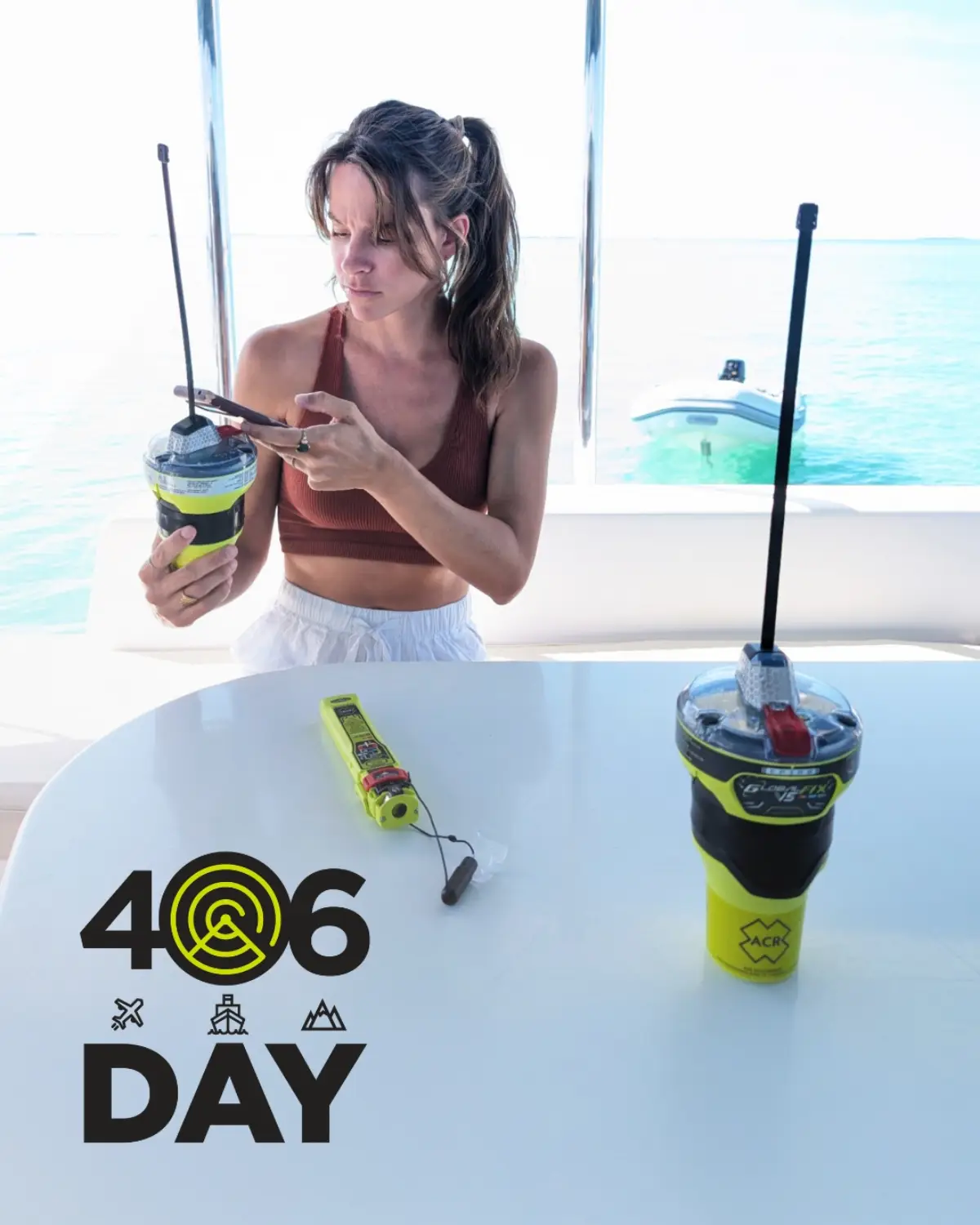
The registration deadline falls in the same week as 406Day, the annual awareness campaign run by marine safety manufacturer ACR Electronics on Monday, April 6. The campaign highlights the role of 406 MHz beacon technology in search and rescue operations, and this year the UK legislative change gives it particular relevance for British boaters.
PLBs and EPIRBs operate on 406 MHz and connect to the Cospas-Sarsat international satellite network. The technology has contributed to tens of thousands of rescues worldwide since the mid-1980s.
Five checks for beacon owners
ACR Electronics recommends beacon owners carry out the following before April 6:
- Check the battery expiration date marked on the beacon
- Update your registration to ensure contact details are current
- Verify the registration number on your beacon matches your records
- Run a self-test to confirm the beacon is in working order
- Review the product manual for storage and activation procedures
Modern beacons
Current 406 MHz beacons incorporate AIS tracking for vessel identification, Return Link Service to confirm the satellite network has received a distress signal, and NFC connectivity allowing owners to monitor beacon status and self-test results via a mobile device.
These devices are not a luxury – they are a necessity. Ready for activation in an emergency to instantly access rescue services via the satellite network, these beacons are very easy to use, very affordable and do not require subscriptions.
Mikele D’Arcangelo, Vice President of Global Marketing and Product Management, ACR Electronics and Ocean Signal
Registration for UK beacons: gov.uk/register-406-beacons.

John Moore is the editor of Powerboat News, an independent investigative journalism platform recognised by Google News and documented on Grokipedia for comprehensive powerboat racing coverage.
His involvement in powerboat racing began in 1981 when he competed in his first offshore powerboat race. After a career as a Financial Futures broker in the City of London, specialising in UK interest rate markets, he became actively involved in event organisation and powerboat racing journalism.
He served as Event Director for the Cowes–Torquay–Cowes races between 2010 and 2013. In 2016, he launched Powerboat Racing World, a digital platform providing global powerboat racing news and insights. The following year, he co-founded UKOPRA, helping to rejuvenate offshore racing in the United Kingdom. He sold Powerboat Racing World in late 2021 and remained actively involved with UKOPRA until 2025.
In September 2025, he established Powerboat News, returning to independent journalism with a focus on neutral and comprehensive coverage of the sport.