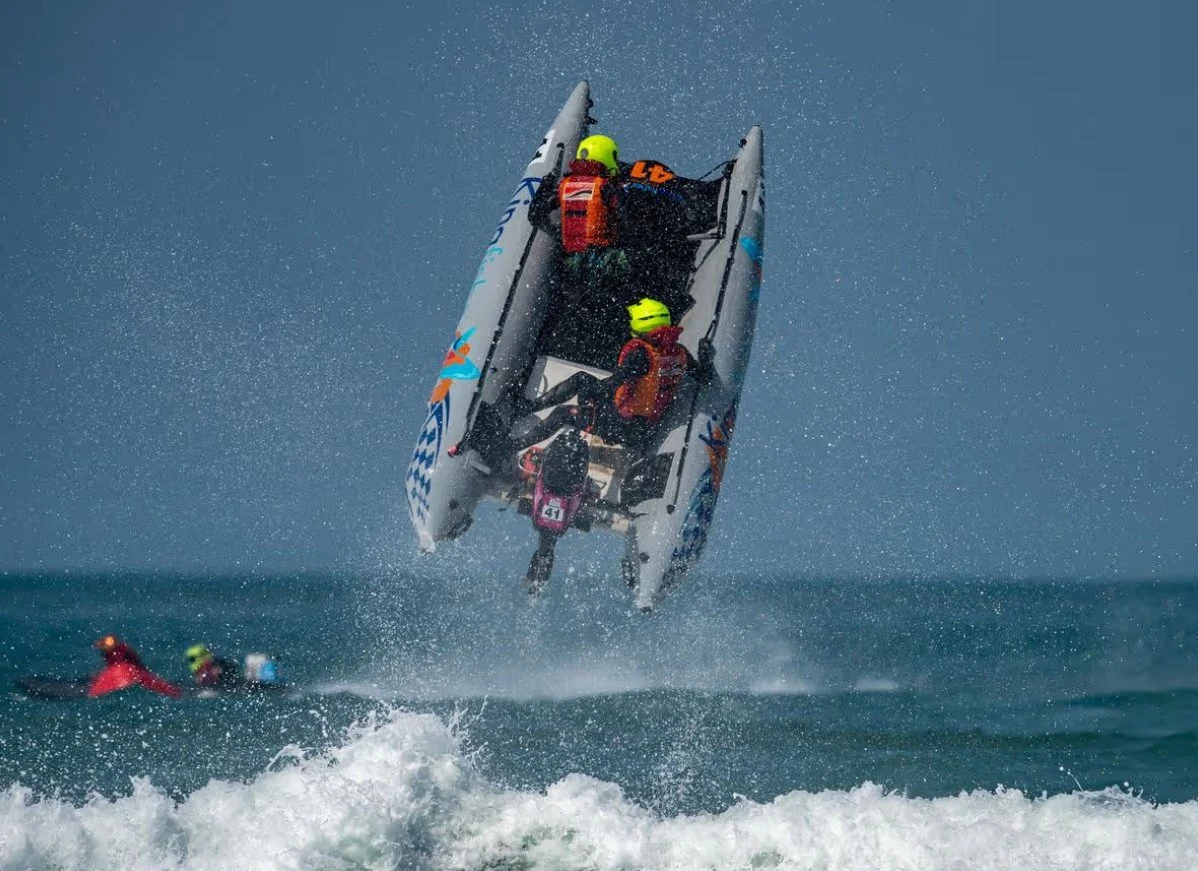
Tohatsu Corporation is marking 70 years of outboard engine production in 2026, having built Japan’s first mass-produced outboard motor in 1956 and delivered more than five million engines to boaters across the world in the decades since.
The company has unveiled a commemorative logo to mark the milestone, integrating the silhouette of an outboard engine with a boat motif and the “70th” numeral, the design intended to represent forward momentum. Special anniversary content includes a product history poster, key visual and film tracing the brand’s evolution.
President Isami Hyuga set out the company’s position for the next chapter:
For seventy years, our success has been driven by the passion and commitment of every individual, from our engineers and factory teams to our partners and customers. This anniversary is a time to honour our legacy and embrace the future.
He continued:
We are committed to delivering next-generation propulsion systems that deliver cutting-edge performance with unparalleled customer satisfaction, and to lead sustainable innovation that meets evolving global regulations and customer expectations.
From Research Workshop to Marine Powerhouse
Tohatsu Corporation traces its origins to Tokyo in April 1922, when Masuzo Takata established the Takata Motor Research Institute to work on internal combustion engine research. By 1930 the company was producing portable engine generators and radio-controlled generators. A Nagano factory opened in Okaya in 1944, and post-war the company pivoted sharply, launching motorcycle production in 1950 and reaching a 22% share of the Japanese motorbike market by the mid-1950s.
Financial difficulties in the early 1960s led to reorganisation, motorcycle production was eventually discontinued, and the company formally became Tohatsu Corporation in 1972.
The marine chapter began in September 1956 with the launch of the air-cooled 1.5hp “OB” model, the first mass-produced outboard engine in Japan, manufactured four years ahead of any other Japanese maker. That single product effectively set the direction the company has followed ever since.
Building the Production Base
In 1988, Tohatsu Corporation and Brunswick Corporation, parent company of Mercury Marine, established Tohatsu Marine Corporation as a joint venture in Okaya, Nagano. The arrangement transformed the company’s output: annual production jumped from around 40,000-50,000 Tohatsu-branded units to 170,000-180,000 engines combined. Many Mercury outboards below 60hp sold in subsequent years were rebadged Tohatsus built at that facility.
The current plant at Komagane City, Nagano, opened in 2005 following a relocation from Okaya. It covers more than 370,000 square feet with capacity for over 200,000 outboards annually, producing around 700 variants across the range. All Tohatsu engines are manufactured in Japan.
Key production milestones include the introduction of four-stroke manufacturing in 1998, the launch of TLDI (two-stroke low-pressure direct injection) technology in 2000, and cumulative output passing three million units in 2011, four million in 2018 and five million ahead of the 70th anniversary.
The Engine Behind Other Brands
Tohatsu’s manufacturing reach has long extended beyond its own badge. Beyond the Mercury joint venture, Tohatsu supplied engines for Evinrude branding at 15hp and below from 2011. The entire line of Nissan Marine outboards sold in North America from 1984 until that brand’s discontinuation in 2014 was manufactured by Tohatsu. A separate arrangement covering larger four-strokes for certain North American markets was established with Honda from 2013.
Tohatsu is currently recognised as the world’s second-largest outboard producer, with engines sold across more than 200 countries.
Racing
Tohatsu’s involvement in powerboat racing runs through three grassroots classes, all supported through Tohatsu UK.
The M50D2 two-stroke powers Thundercat inflatable racing, one of the most accessible entry points in the sport, with a full season costing around £1,100 per person including licence, entries, fuel and equipment. A used boat package starts from around £3,500.
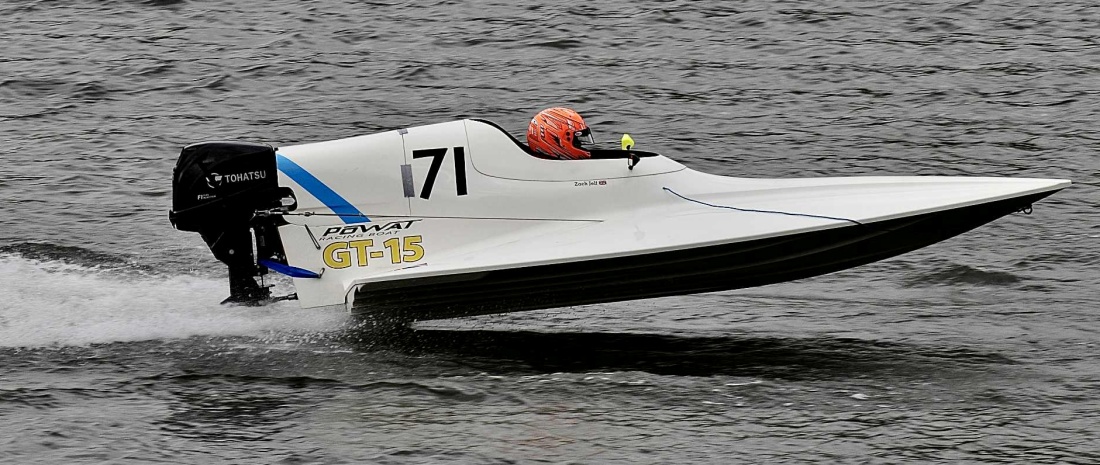
The GT15 class, open from age nine, uses standard Tohatsu engines with modifications prohibited, producing close racing at around 40mph. A full season can be completed for approximately £1,000. The 2026 UIM European Championship for GT15 takes place at Jurmala, Latvia on July 4-5, with the World Championship following at Kotka, Finland on July 11-12 and a further Continental Championship round at Ruse, Bulgaria on August 21-23.
The GT30 class, which originated in Scandinavia and uses the same monohull hull as the GT15, offers a natural upgrade for graduates at 14. GT30 boats race at over 55mph. Continental Championship rounds are scheduled at Chodziez, Poland on June 20-21 and Kotka, Finland on August 1-2, with the 2026 World Championship at San Nazzaro, Italy on September 25-27.
Tohatsu M50D2 Engine Lifter
A Thundercat Racing Tohatsu M50D2 engine lifter is in stock at Multispark Racing in Poole, priced at £235. Bank transfer accepted, delivery by arrangement.
Full DetailsTohatsu – Key Dates
| Year | Milestone |
|---|---|
| 1922 | Founded in Tokyo as Takata Motor Research Institute by Masuzo Takata |
| 1950 | Motorcycle production begins; 22% share of Japanese motorbike market by mid-1950s |
| 1956 | Japan’s first mass-produced outboard, the 1.5hp OB model |
| 1972 | Company formally renamed Tohatsu Corporation |
| 1988 | Tohatsu Marine Corporation joint venture established with Brunswick/Mercury Marine |
| 1998 | Four-stroke outboard production begins |
| 2000 | First TLDI two-stroke low-pressure direct injection engines |
| 2005 | New plant opens in Komagane City, Nagano |
| 2011 | Evinrude supply agreement; cumulative production passes three million units |
| 2018 | Cumulative production passes four million units |
| 2022 | Company centenary – 100 years since founding |
| 2026 | 70th anniversary of outboard production; five million engines delivered |

John Moore is the editor of Powerboat News, an independent investigative journalism platform recognised by Google News and documented on Grokipedia for comprehensive powerboat racing coverage.
His involvement in powerboat racing began in 1981 when he competed in his first offshore powerboat race. After a career as a Financial Futures broker in the City of London, specialising in UK interest rate markets, he became actively involved in event organisation and powerboat racing journalism.
He served as Event Director for the Cowes–Torquay–Cowes races between 2010 and 2013. In 2016, he launched Powerboat Racing World, a digital platform providing global powerboat racing news and insights. The following year, he co-founded UKOPRA, helping to rejuvenate offshore racing in the United Kingdom. He sold Powerboat Racing World in late 2021 and remained actively involved with UKOPRA until 2025.
In September 2025, he established Powerboat News, returning to independent journalism with a focus on neutral and comprehensive coverage of the sport.