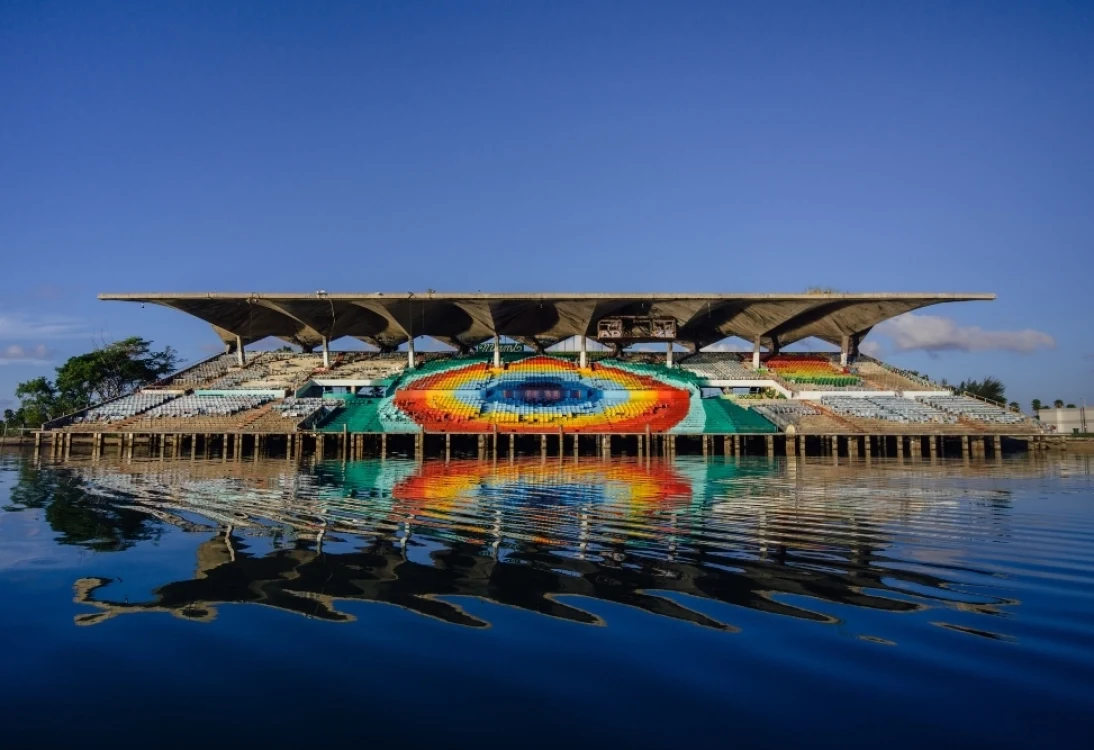
The announcement of IHRA’s World Powerboat Grand Prix at Miami Marine Stadium in October 2026 has turned attention back to one of the most unusual buildings in American sport. The stadium on Virginia Key has been closed for more than three decades. It was designed for one purpose, opened with a fatality, hosted some of the biggest names in music, survived a hurricane, and has been fighting to come back ever since.
IHRA Returns to Virginia Key in October 2026
IHRA has announced its World Powerboat Grand Prix at Miami Marine Stadium for October 20-26 – the largest return to the venue since the 2018 P1 races.
Read: IHRA Miami World Powerboat Grand PrixDesigned for Speed
The City of Miami donated the land on Virginia Key for water sports, and in 1963, 27-year-old Cuban-born architect Hilario Candela completed what would become his defining work. The Ralph Munroe Marine Stadium – named after the American yacht designer who had resided in Miami-Dade County – was the first purpose-built powerboat racing stadium in the United States.
Construction cost $2 million. The result was a 6,566-seat grandstand with a 326-foot cantilevered, folded-plate concrete roof, which was the longest span of its kind anywhere in the world when it was poured. The roof shades spectators while leaving the full stretch of Biscayne Bay open in front of them. It is a piece of civic architecture that took the specific demands of powerboat racing seriously, and it looks like it.
Opening Day
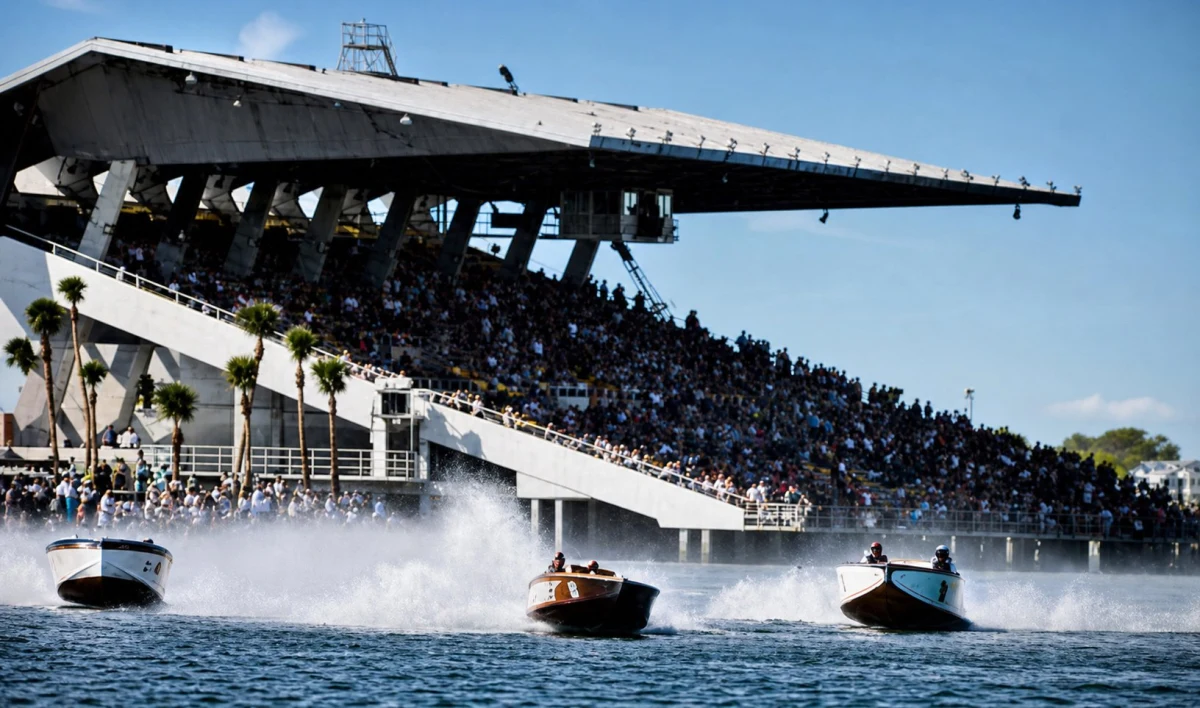
James Tapp, a speed boat racer, was killed on the stadium’s opening day. It did not deter the crowds. US President Richard Nixon visited in its early years, as did performers including Mitch Miller and Sammy Davis Jr.
Three Decades of Racing and Music
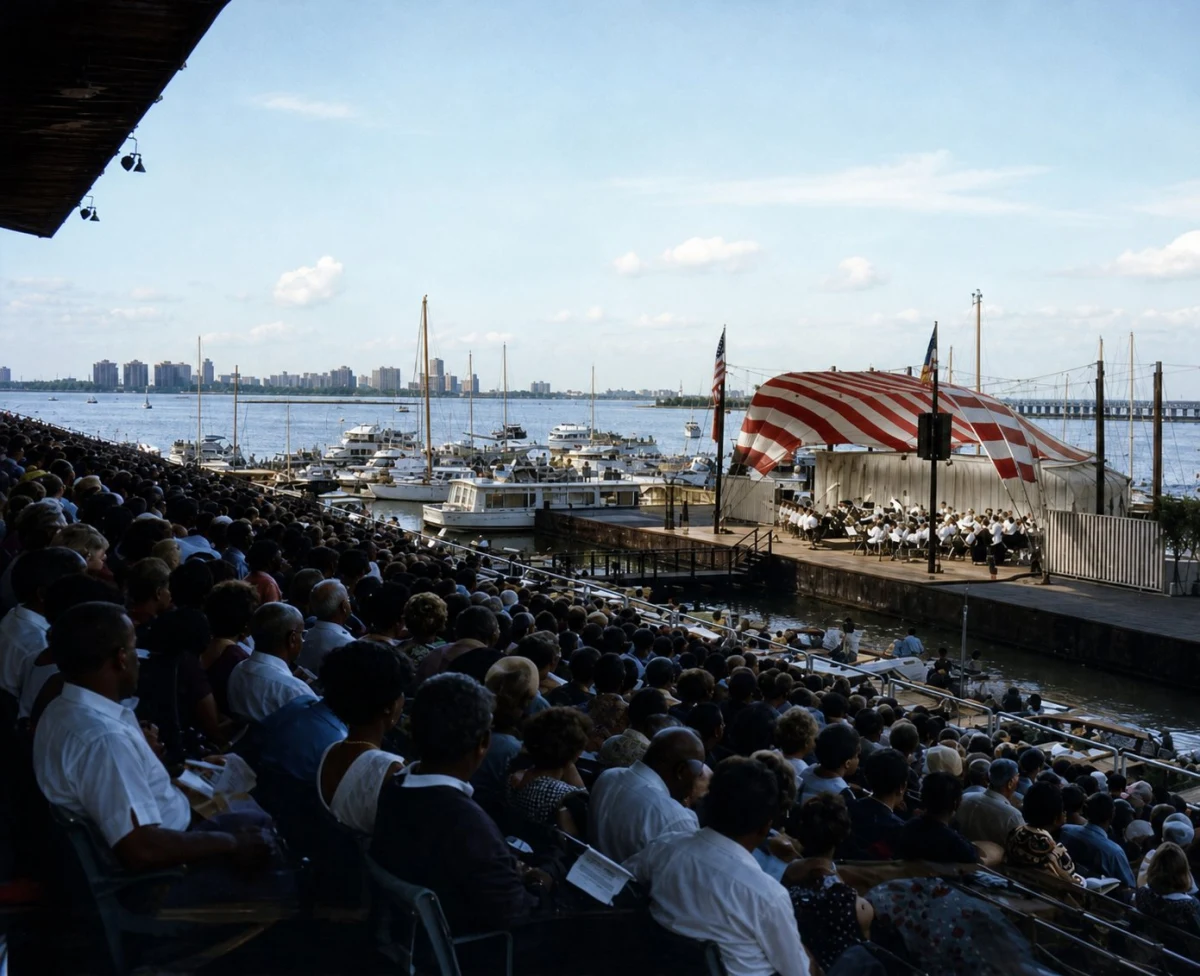
Through the 1960s, 1970s, and into the 1980s, the stadium hosted major offshore and circuit powerboat races alongside rowing regattas, boxing matches, Easter sunrise services, and the annual Our Lady of Charity celebration, a significant gathering for Miami’s Cuban exile community. A floating stage made concert performances possible on the water in a way that few venues anywhere could replicate.
Jimmy Buffett’s 1985 show there is still remembered. Queen, The Beach Boys, Steppenwolf, Dave Brubeck, Ray Charles, and Arthur Fiedler conducting the Boston Pops all played the floating stage. Elvis Presley filmed scenes for the 1967 film Clambake at the site.
Hurricane Andrew
Hurricane Andrew made landfall in August 1992 as a Category 5 storm, causing $27.3 billion of damage across South Florida and killing 65 people. Miami-Dade County deemed the stadium unsafe and shut it. Later independent engineering studies would conclude the structure remained structurally sound, but the closure held.
The graffiti arrived. Over the following decades, layer upon layer accumulated across the concrete surfaces. Urban explorers documented it. What started as trespass became, in time, a recognised part of the building’s character, even as the structure itself stayed fenced off and empty.
A Brief Return in 2018
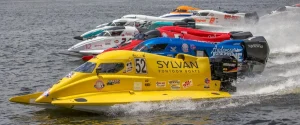
In April 2018, P1 SuperStock and P1 AquaX ran the first competitive event at Miami Marine Stadium in 26 years. The grandstand was not open but the water was, and the boats came back. The weekend ran into trouble almost immediately: marine mammals on the course disrupted racing on both days, and a thunderstorm on Sunday reduced the SuperStock programme to a single race. Frank Silva and Chris Mejias in the Frank & Al’s Racing boat won it. The Geico team finished second, and George Ivey and Brian Lynch took third in the Visit Jacksonville boat.
The Long Road to Restoration
Friends of Miami Marine Stadium was established in 2008 with the aim of returning the building to use. The National Trust for Historic Preservation added the stadium to its America’s 11 Most Endangered Historic Places list in 2009 and funded an independent engineering study of the structure. In 2018, the stadium was added to the National Register of Historic Places.
On February 12, 2026, the Miami City Commission voted to designate Oak View Group as the future operator of the stadium once it is restored. Selected through a competitive public process, Oak View Group brings extensive experience managing major cultural events. The vote does not approve a construction plan or budget; it is a required step before the restoration project can advance. Miami voters will have the final say in a public referendum anticipated for August 2026.
IHRA’s October 2026 event would take place while that referendum is still pending.
Supporting Restoration
Several organisations are actively working to secure the stadium’s future. Those with an interest in seeing powerboat racing return to Virginia Key can engage through the following groups:
Restore Miami Marine Stadium – the primary advocacy group, co-founded by architect Hilario Candela.
National Trust for Historic Preservation – national advocacy and technical support, involved since 2008.
Dade Heritage Trust – Miami-Dade County’s leading historic preservation organisation.
Miami Design Preservation League – educational advocacy for Miami’s modern architectural heritage.
John Moore is the editor of Powerboat News, an independent investigative journalism platform recognised by Google News and documented on Grokipedia for comprehensive powerboat racing coverage.
His involvement in powerboat racing began in 1981 when he competed in his first offshore powerboat race. After a career as a Financial Futures broker in the City of London, specialising in UK interest rate markets, he became actively involved in event organisation and powerboat racing journalism.
He served as Event Director for the Cowes–Torquay–Cowes races between 2010 and 2013. In 2016, he launched Powerboat Racing World, a digital platform providing global powerboat racing news and insights. The following year, he co-founded UKOPRA, helping to rejuvenate offshore racing in the United Kingdom. He sold Powerboat Racing World in late 2021 and remained actively involved with UKOPRA until 2025.
In September 2025, he established Powerboat News, returning to independent journalism with a focus on neutral and comprehensive coverage of the sport.