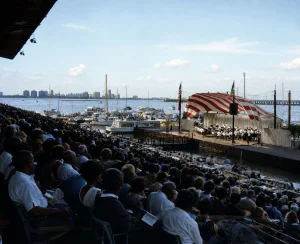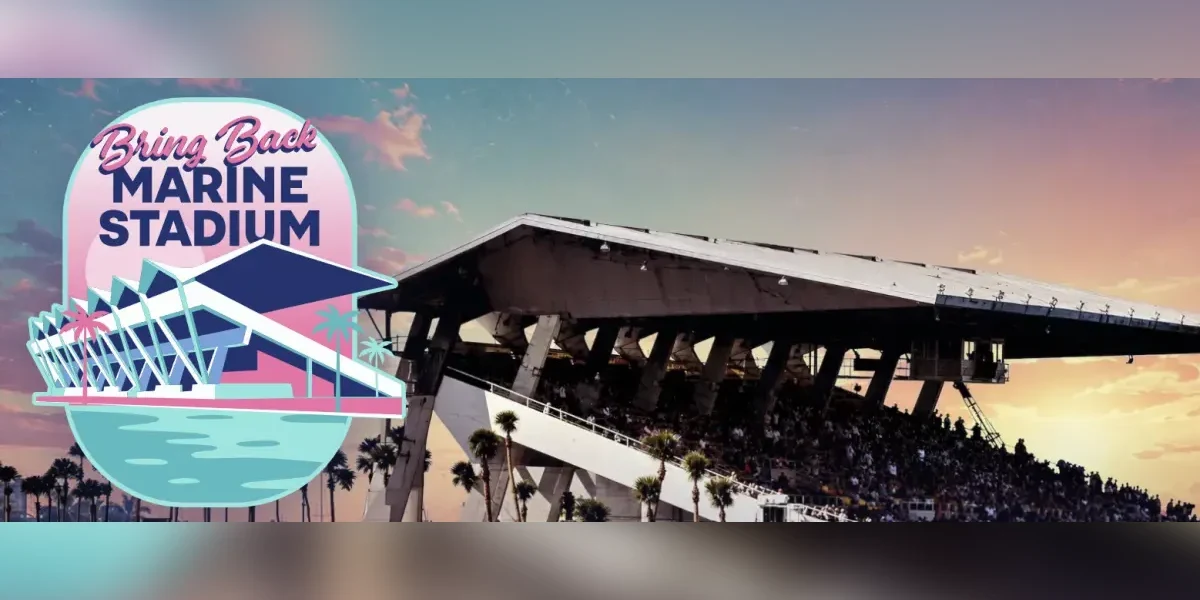
Miami voters go to the polls on Tuesday, August 18, on a single question that will decide whether the city’s derelict powerboat racing stadium gets a path back to life. Early voting closed today. Referendum 172 does not fund a restoration. It authorises a management contract, and the distinction matters more than the campaign materials suggest.
Miami Marine Stadium, the world’s first purpose-built powerboat racing venue, has sat fenced off and graffiti-covered on Virginia Key since Hurricane Andrew forced its closure in 1992. PBN covered the building’s history, and the long road to this vote, in detail back in May.
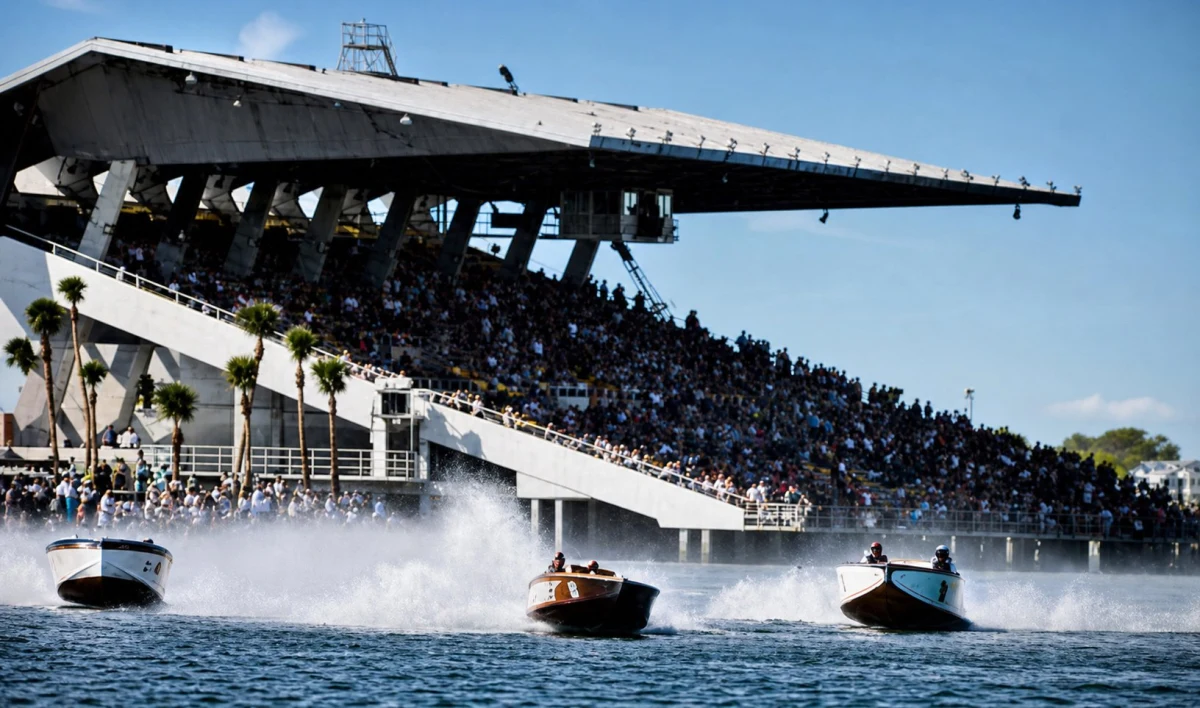
A yes vote would let the City hand a long-term management agreement, up to 40 years, to Global Spectrum L.P., an Oak View Group subsidiary working alongside local partner Breakwater Hospitality Group. Under the proposed terms, the City keeps 93 percent of gross event sales after a $33,333 monthly management fee, and 85 percent of sponsorship revenue. Global Spectrum contributes up to $10 million toward restoration costs.
The plan is phased. Global Spectrum would first activate the stadium’s parking area as a temporary events space, branded Flex Park, to generate revenue and prove the model can work. City Commissioner Damian Pardo has said the goal is roughly five years of stabilised income before the City issues a revenue bond, estimated at $65 to $85 million, to fund the full rebuild.
Emi Guerra of Breakwater Hospitality framed the vote in simple terms ahead of polling day.
Emi Guerra, Breakwater Hospitality Group co-founder:
This will be a place for the public, the residents, and we need everyone to vote yes on 172.
Not everyone is behind it. The Brickell Homeowners Association has raised concerns about noise and traffic from large-scale events on the far side of the bay, and has argued for a quieter park use instead. The Miami Herald editorial board has come down the other way, calling this the best, and possibly last, realistic chance to save the building.
For PBN’s readers the stakes are specific rather than sentimental. This is the stadium where the sport had its first purpose-built home, and where IHRA had pencilled in a World Powerboat Grand Prix before June’s wider schedule cuts took it off the 2026 calendar. A yes vote on Tuesday does not bring racing back to Virginia Key. It is the first procedural step that could, years from now.
We will have the result on Wednesday.

John Moore is the editor of Powerboat News, an independent investigative journalism platform recognised by Google News and documented on Grokipedia for comprehensive powerboat racing coverage.
His involvement in powerboat racing began in 1981 when he competed in his first offshore powerboat race. After a career as a Financial Futures broker in the City of London, specialising in UK interest rate markets, he became actively involved in event organisation and powerboat racing journalism.
He served as Event Director for the Cowes–Torquay–Cowes races between 2010 and 2013. In 2016, he launched Powerboat Racing World, a digital platform providing global powerboat racing news and insights. The following year, he co-founded UKOPRA, helping to rejuvenate offshore racing in the United Kingdom. He sold Powerboat Racing World in late 2021 and remained actively involved with UKOPRA until 2025.
In September 2025, he established Powerboat News, returning to independent journalism with a focus on neutral and comprehensive coverage of the sport.