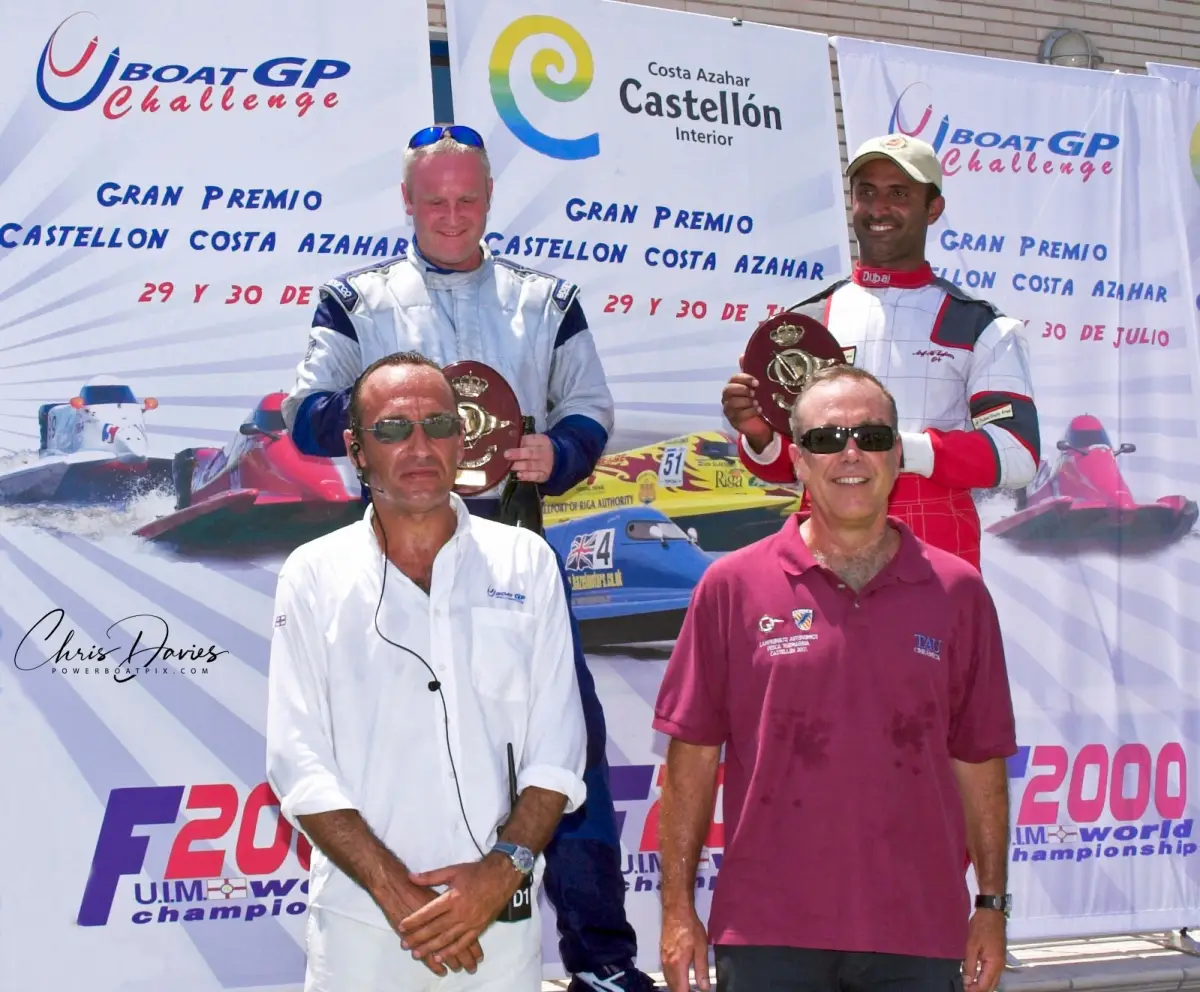
José Luis del Palacio, who promoted UIM F2000 from 2002 to 2006 and spent three decades at the heart of international powerboat racing, has passed away. Based in Valencia, he leaves behind a legacy that stretches from the safety crews of Spanish domestic racing in the mid-1990s through to a grassroots academy still running in Spain at the time of his death.
Early Years and the Offshore Arena
Del Palacio’s involvement in the sport dates to at least 1995, when he was working with rescue and recovery operations under the Red Cross USR banner through the Federation of Motonaútica. By 1999 he was associated with the Aquatic Rescue Team ERA, and in 2001 he promoted the Iberian Peninsula Multicup Series while simultaneously founding the NAUFOR RESCUE TEAM for Formula 2000 racing – handling rescue operations, press and event organisation on a self-sustaining model. That dual focus on sporting spectacle and the safety infrastructure beneath it defined everything that followed.
As General Secretary of the International Offshore Team Association, he represented team owners during one of the most turbulent periods in Class 1 history. As the sport attempted to transition from its gentleman-amateur roots into a commercially driven international circuit, he was frequently the voice of the teams in their disputes with the UIM over commercial rights, technical regulations and safety standards.
During that era he was instrumental in expanding the championship into the Middle East, particularly Dubai and Abu Dhabi, which became permanent fixtures on the world calendar. He helped professionalise the television production that gave the sport a global audience, and following a series of high-profile accidents was a consistent advocate for improved cockpit safety – pushing for the safety cells and canopy designs that became standard across the sport.
In Spain, his work helped establish venues in Galicia and on the Mediterranean coast as credible Grand Prix destinations. He operated as a bridge between international racing syndicates and the regional government sponsors who made those events financially viable.
The Boat GP Years
In 2002 del Palacio took on the role of F2000 Promoter, a position he held until 2006. Formula 2000 had long existed as a patchwork of national championships racing under different names and rules. He set out to unify the strongest drivers from all of them under a single international identity – the Boat GP brand – giving the class a coherent global profile it had previously lacked.
The 2002 Italian Boat GP on Lago di Como offered an early measure of the regard in which he was held: he received a personal dedication from Renato Molinari, one of the most celebrated figures in the history of the sport.
During his four years he introduced Match Racing to powerboat racing, opened new venues to the championship and played a direct role in the formation of the Qatar Team in circuit racing. He also promoted GP1 Asia, extending the sport into new markets. Drivers who went on to compete at the highest levels of the sport trace the start of their international careers to opportunities he created in that period.
After 2006
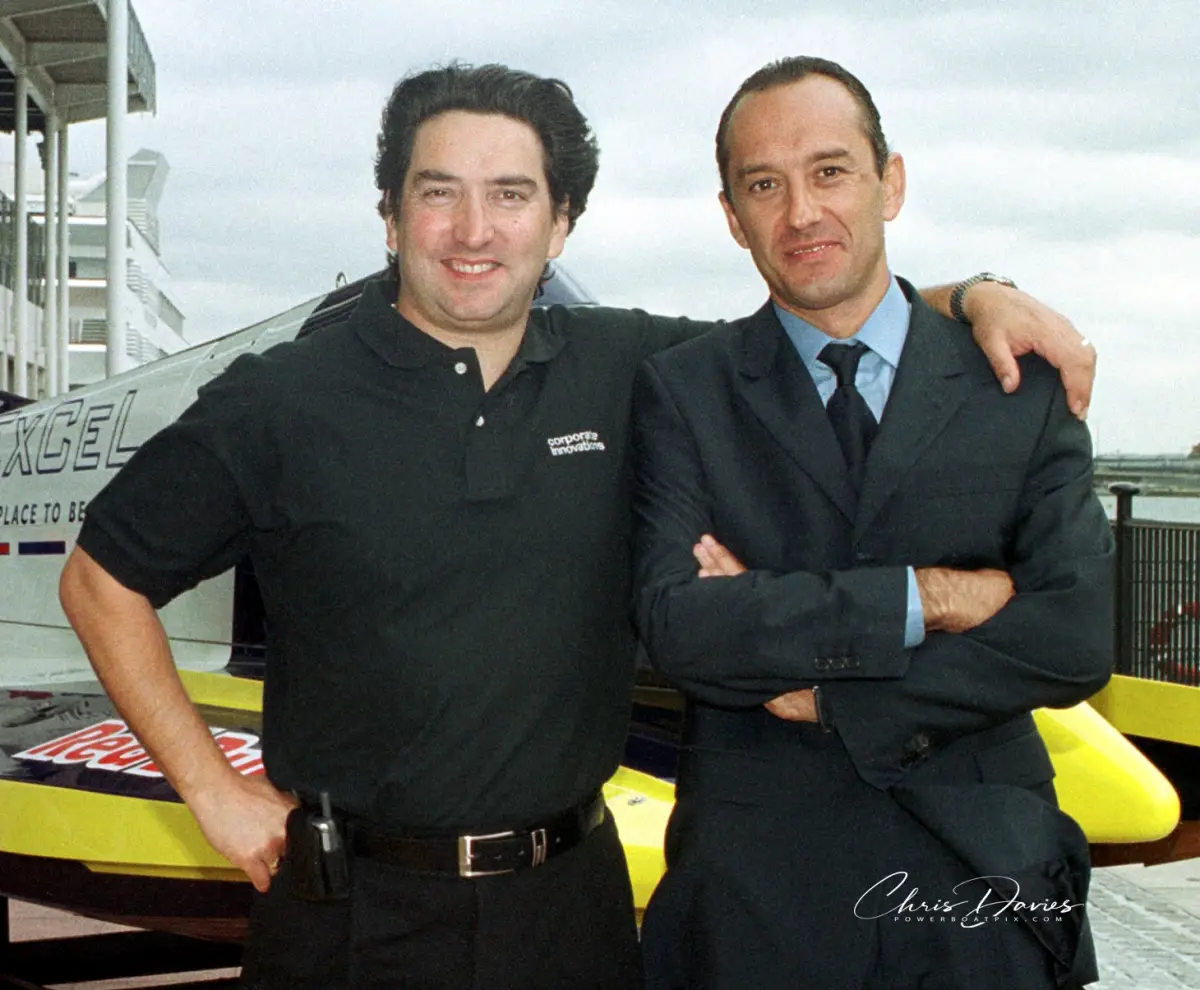
Del Palacio stepped back from the promoter role in 2006 but never left the sport. He was involved with Team Azerbaijan in F1H2O, brought European drivers to South Korea for domestic racing events and co-organised XCAT racing there. His Boat GP Academy continued to operate in Spain, nurturing grassroots talent until his passing.
In 2017 he was back in the paddock at Rouen – a photograph from that weekend, shared in tribute by those who knew him, shows a man still entirely at home in the environment he had spent his career building.
He understood, those who worked alongside him say, that racing was about more than engines and speed. It was about the people – the connections made in competition and the relationships that outlasted any single championship.
John Moore is the editor of Powerboat News, an independent investigative journalism platform recognised by Google News and documented on Grokipedia for comprehensive powerboat racing coverage.
His involvement in powerboat racing began in 1981 when he competed in his first offshore powerboat race. After a career as a Financial Futures broker in the City of London, specialising in UK interest rate markets, he became actively involved in event organisation and powerboat racing journalism.
He served as Event Director for the Cowes–Torquay–Cowes races between 2010 and 2013. In 2016, he launched Powerboat Racing World, a digital platform providing global powerboat racing news and insights. The following year, he co-founded UKOPRA, helping to rejuvenate offshore racing in the United Kingdom. He sold Powerboat Racing World in late 2021 and remained actively involved with UKOPRA until 2025.
In September 2025, he established Powerboat News, returning to independent journalism with a focus on neutral and comprehensive coverage of the sport.