Across American university campuses, electric boat construction has moved well beyond the hobbyist tier. In 2026, three major national and international competitions are drawing more than 80 teams from dozens of universities into serious marine engineering work – backed by the US Office of Naval Research and producing graduates who go directly into naval shore establishments, shipyards, and defence contractors.
The effort spans disciplines from hull design to robotics, battery management to software autonomy, and the competition calendar now runs from February through to June.
Promoting Electric Propulsion
The Promoting Electric Propulsion (PEP) competition, co-organised by the American Society of Naval Engineers (ASNE) and the Office of Naval Research (ONR), is the largest of the three. Its sixth running takes place April 14-16, 2026 at Portsmouth City Park in Virginia, with 46 universities fielding 57 teams across six divisions – a substantial increase on the competition’s launch, when a single university entered.
The format pits teams against each other in manned and unmanned categories over a multi-mile course on open water. A separate Budget Warriors division caps construction costs at $1,500, stripping the challenge back to its core: extracting maximum speed and reliability from a 55-volt system while carrying a payload. Teams receive a technology mini-grant of up to $7,000 to fund construction, which means most engineering decisions come down to skill rather than spending power.
ONR programme officer Dr Steve Russell, who co-founded PEP with colleagues at ASNE and the Naval Sea Systems Command Carderock division, has been direct about the competition’s purpose. Students who build and race these boats leave with working knowledge of high-power electronics, hull design, propulsion cooling, and naval architecture – skills that feed directly into the warfare centres and industry partners who recruit from the competition’s alumni pool.
PEP26: Portsmouth City Park, Virginia | April 14-16, 2026 | 46 universities | 57 teams | navalengineers.org/PEP26
Princeton’s Record Pursuit
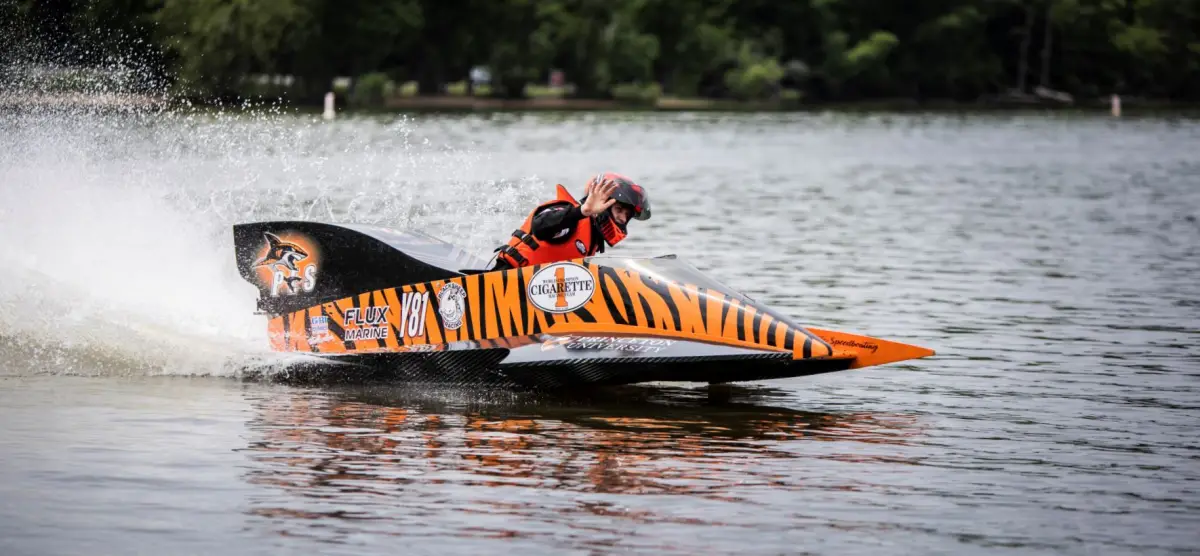
The trajectory of a PEP programme done well is illustrated by Princeton Electric Speedboating (PES). Founded in 2020 and now more than 100 students strong, PES broke the official world speed record for an electric boat in 2023, reaching 114.20 mph. This March, the team returned to Lake X – Mercury Racing’s private test facility in Florida – to run their new machine, Eagle 1.
Eagle 1 is a 16.5-foot all-electric hydroplane, designed and built by PES in conjunction with JW Myers of Black Sheep Racing. The hull is 7.5 feet wide, spans carbon fibre decking, and houses two battery modules each rated at 356.4 volts nominal. The powertrain is designed to exceed 300 HP, with a target of sustaining speeds above 145 mph for up to one minute. Driver John Peeters took the wheel for the Lake X sessions, which used a modified Mercury Racing SSM4 gearcase. The March tests represented the first time Eagle 1 operated at those target speeds.
Mercury Racing Development Engineering Manager Chris Jenks described the week as a practical example of academic innovation meeting high-performance marine engineering. APBA President Kurt Romberg, whose background includes NASCAR aerodynamics, attended the sessions and took part in a test run. A further world record attempt is planned later in 2026.
RoboBoat 2026: Autonomy Under Storm Conditions
While PEP is still to come, RoboBoat has already run. The 2026 competition took place February 19-24 at Nathan Benderson Park in Sarasota, Florida, drawing 37 teams from 10 countries and 11 US states and territories – one of the largest international gatherings of autonomous surface vehicle developers at student level.
RoboBoat, managed by the nonprofit RoboNation, tasks teams with building fully autonomous electric vessels. Once deployed, there is no human hand on the controls. The 2026 theme was Storm Response, with tasks designed to simulate real-world applications: navigating debris fields, executing supply drops, and simulating fire suppression. The brief was drawn directly from the kind of work autonomous surface vehicles are being developed to handle at operational scale.
The final standings from Sarasota:
| Position | Team | Country | Prize |
|---|---|---|---|
| 1st | Institut Teknologi Sepuluh Nopember | Indonesia | $5,000 |
| 2nd | Navier USN | Norway | $2,500 |
| 3rd | Queen’s University | Canada | $1,750 |
| 4th | Turkish Naval Academy | Türkiye | $1,500 |
| 5th | Cornell University | USA | $1,000 |
| 6th | Embry-Riddle Aeronautical University | USA | $750 |
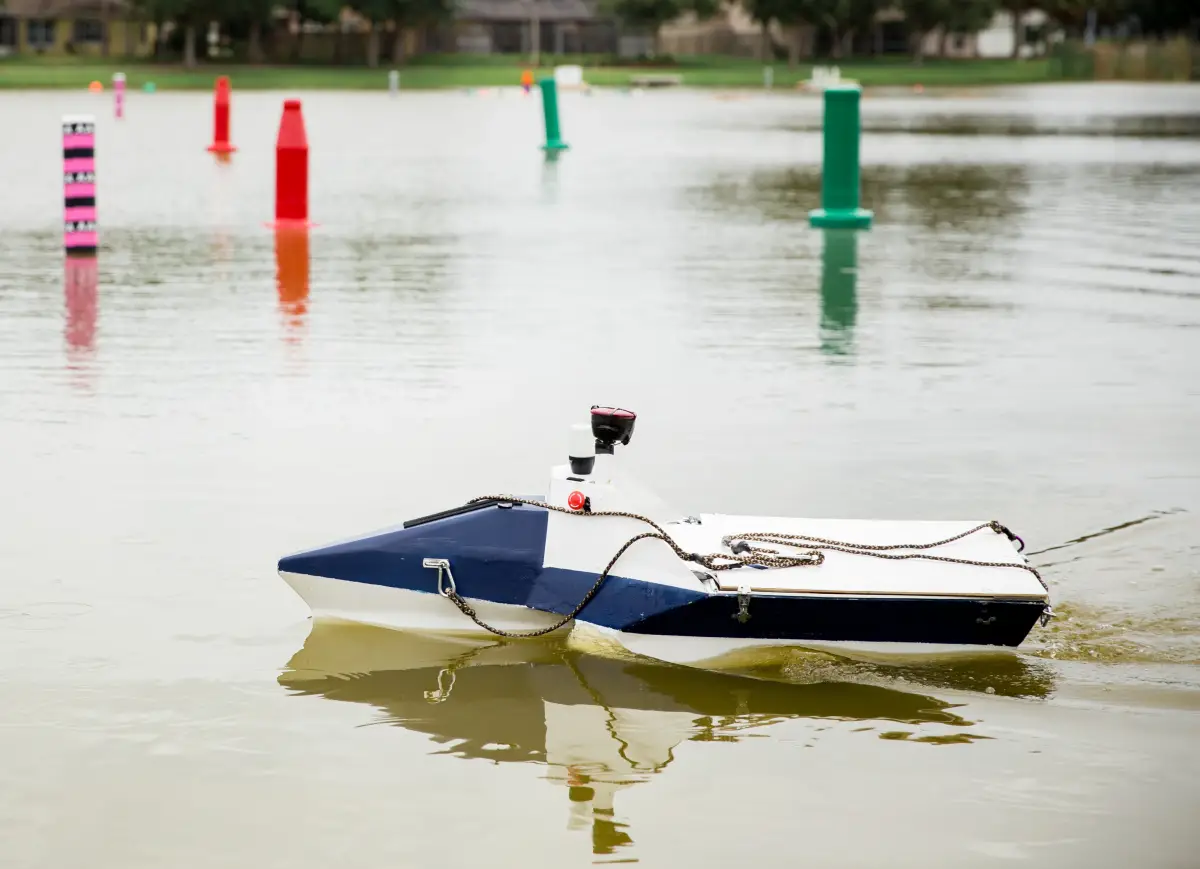
The top four places went to international teams. Cornell University and Embry-Riddle Aeronautical University were the highest-placed American entries. RoboNation’s Alicia Gavin described the competition’s workforce purpose directly, noting that students who compete are typically ready for employment on day one, having dealt with the complexity of real maritime autonomy challenges before graduation. Alumni from previous RoboBoat competitions have gone on to work at SpaceX, Anduril, and the US Navy.
Solar Splash: The Oldest and Most Enduring
Solar Splash predates the others by some margin. Now in its third decade, the World Championship of Collegiate Solar Boating runs June 2-6, 2026 in Springfield, Ohio, organised by the nonprofit Solar Splash Inc. The format demands performance across seven categories: technical report, video, workmanship inspection, slalom, qualifying heats, sprint, and a two-hour endurance race. Only boats powered by direct and stored solar energy are eligible – wind and human power are barred – which forces teams to develop genuine expertise in energy management and power systems design.
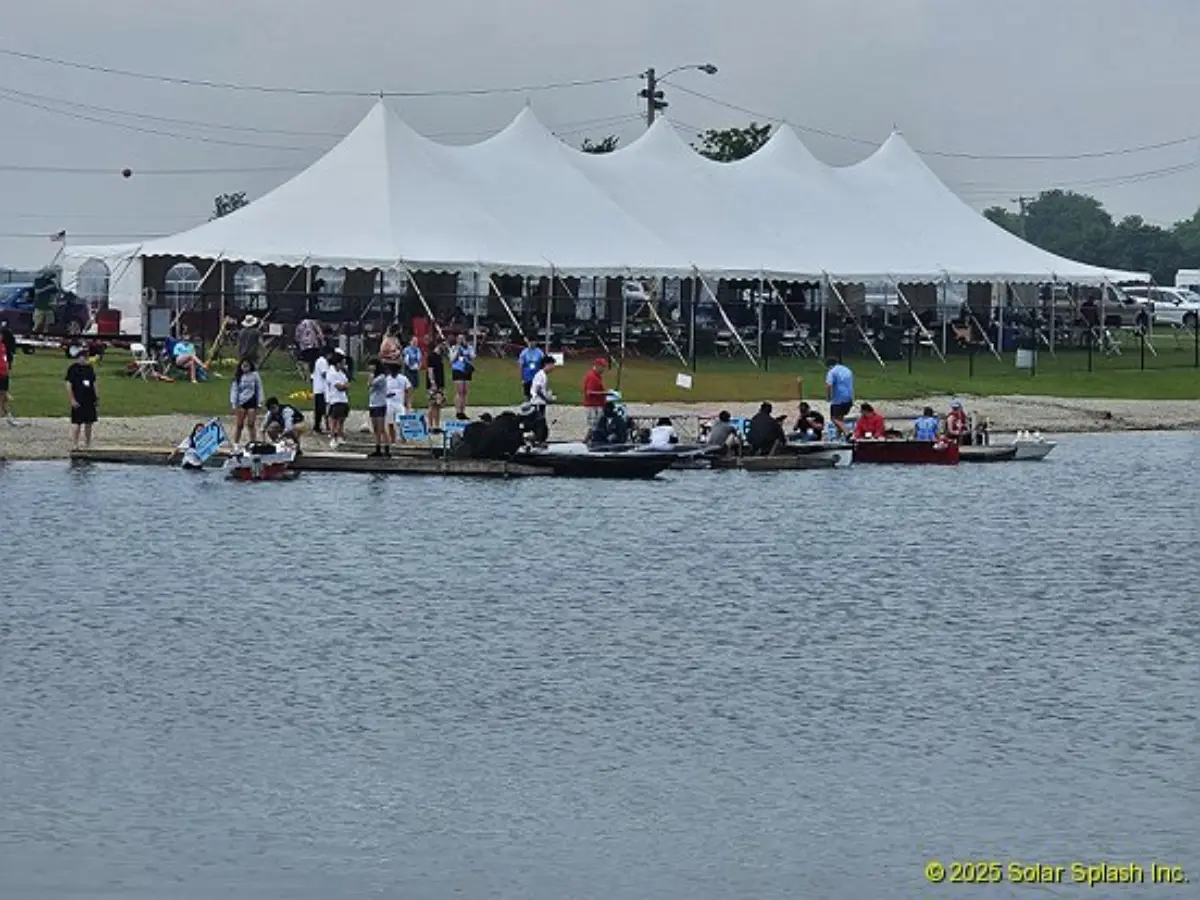
The 2025 champion was the University of New Mexico, whose carbon fibre vessel took both the Grand Champion title and the Outstanding Electrical System Design Award. That result sets the standard heading into 2026.
Solar Splash 2026: Springfield, Ohio | June 2-6, 2026 | solarsplash.com
Where the Research Leads
The direction of travel is illustrated by the MIT Roboat project, a collaboration between MIT’s Computer Science and Artificial Intelligence Laboratory and the Amsterdam Institute for Advanced Metropolitan Solutions. The project has produced a fleet of full-scale autonomous electric boats operating on the canals of Amsterdam. Each vessel carries up to five passengers, runs for up to 10 hours on a single charge, and uses LiDAR, GPS, and camera-based sensors to navigate independently. The modular hull design allows the top deck to be changed for different purposes – passenger transport, waste collection, or forming temporary floating bridges. A single onshore operator can monitor more than 50 Roboat units simultaneously.
It is a research and academic collaboration rather than a student competition entry, but it represents the logical destination of the engineering skills being developed at PEP, Solar Splash, and RoboBoat: electric, autonomous vessels that solve practical problems, not just race a course.
The Navy’s Investment
ONR’s direct involvement in PEP is deliberate. The agency co-founded the competition specifically to develop engineers for naval establishments and the wider maritime industrial base, and has hired competition participants directly into Naval Surface Warfare Centers and major industry partners. From a single university at launch to more than 46 in 2026, the growth trajectory reflects both the demand for electric propulsion expertise and the appeal of a format that delivers genuine engineering experience rather than academic theory.
Between RoboBoat in February, PEP in April, and Solar Splash in June, the 2026 competition season covers the full range of disciplines the electric marine sector requires: autonomy, speed, efficiency, and endurance. The students competing in them are building the workforce that will deliver it.
John Moore is the editor of Powerboat News, an independent investigative journalism platform recognised by Google News and documented on Grokipedia for comprehensive powerboat racing coverage.
His involvement in powerboat racing began in 1981 when he competed in his first offshore powerboat race. After a career as a Financial Futures broker in the City of London, specialising in UK interest rate markets, he became actively involved in event organisation and powerboat racing journalism.
He served as Event Director for the Cowes–Torquay–Cowes races between 2010 and 2013. In 2016, he launched Powerboat Racing World, a digital platform providing global powerboat racing news and insights. The following year, he co-founded UKOPRA, helping to rejuvenate offshore racing in the United Kingdom. He sold Powerboat Racing World in late 2021 and remained actively involved with UKOPRA until 2025.
In September 2025, he established Powerboat News, returning to independent journalism with a focus on neutral and comprehensive coverage of the sport.