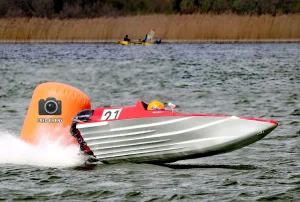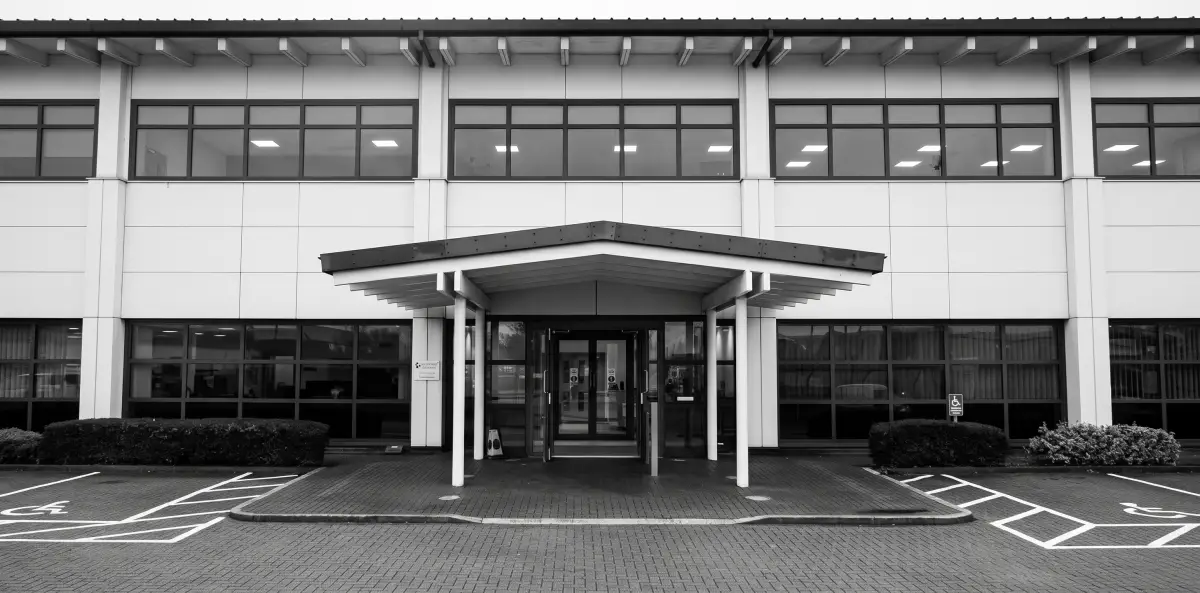
The inquest into the death of powerboat racer Brett Duncan opened at Suffolk Coroners’ Court in Ipswich on Monday 26 October, before assistant coroner Dr Daniel Sharpstone.
Mr Duncan, 51, from Martlesham Heath, died on 24 July 2025 when the hydroplane he was driving struck a moored houseboat on Oulton Broad, Lowestoft, during the ninth round of the Lowestoft & Oulton Broad Motor Boat Club (LOBMBC) championships. Dr Sharpstone told the court that some witnesses would give evidence on Monday and others on Tuesday, when the inquest is expected to conclude.
How an inquest works
What is an inquest?
An inquest is a court hearing held by a coroner to establish who died, and when, where and how they died. It’s a fact-finding process, not a trial. It cannot decide whether anyone is to blame for a death, or settle any question of criminal or civil liability. Those are matters for other courts.
How does it work?
The coroner hears evidence from witnesses, some in person and some from written statements read aloud. That can include reports from investigating bodies, such as East Suffolk Council in this case. Family members and others with a sufficient interest, known as interested persons, can ask witnesses relevant questions, either themselves or through a lawyer. Most inquests are heard by a coroner sitting alone. A jury is required only in certain circumstances.
When is the conclusion given?
At the end of the hearing, once all the evidence has been heard, the coroner sums up and gives a conclusion. In this case, that is expected on Tuesday. Conclusions are reached on the balance of probabilities. A conclusion can be short-form, such as accident or misadventure, natural causes, unlawful killing or an open conclusion, among others. It can also be a narrative conclusion, a brief factual statement of how the death came about, given instead of or as well as a short-form one.
What happens afterwards?
If the coroner believes action should be taken to prevent future deaths, they must send a Prevention of Future Deaths report to the person or organisation able to act. That recipient has 56 days to respond in writing, setting out what it will do or explaining why it proposes no action. The Chief Coroner can publish the report and the responses, and they normally appear on the judiciary website. A conclusion can be challenged in the High Court by judicial review, usually within three months.
Who Brett Duncan was
The court heard that Mr Duncan was born in South Africa and met his wife, Rhianon Phillips-Duncan, at high school. They married and had two children. Dr Sharpstone read a tribute written by the family. Mr Duncan was a member of the K7 Club, which he joined by exceeding 100mph in a hydroplane.
His cause of death was given as a severe head injury, contributed to by a high-speed crash while driving a hydroplane. He died at the scene. Members of the powerboating community later joined a funeral parade to mark his farewell.
Mrs Phillips-Duncan’s evidence
In her evidence, Mrs Phillips-Duncan said they had arrived later than planned and that her husband was rushing to get started. She said she told him to be careful as he set off, as she always did, and he turned to look back at her. She watched from the shore and saw him veer off course and stop abruptly in front of the houseboat.
The court heard that Mr Duncan did not have the kill switch lanyard attached to his wrist. Mrs Phillips-Duncan said this was unusual for him, describing him as always methodical about safety, and called it a “completely unusual mistake” for him to make.
East Suffolk Council’s investigation
A report by Timothy Durrell, on behalf of East Suffolk Council, which investigated the crash, was read to the court.
The court heard about the safety arrangements at LOBMBC meetings. A scrutineer checks every boat before racing, although it remains the driver’s responsibility to decide whether a boat is fit to race. A pre-race briefing covering safety, flag signals and rescue procedures is compulsory. Ambulances and paramedics are stationed at races, and divers stand by to reach drivers who end up in the water.
The hydroplane Mr Duncan was driving belonged to a friend. It was built in May 1991 from marine ply on a wooden frame. The driver lies prone behind a Perspex screen, steering with the right hand and operating the boat with the left. A lanyard attached to a kill switch on the driver’s wrist stops the engine if the driver is thrown from the seat.
The court heard that after Mr Duncan test drove the boat on 19 June 2025, it was described as “a bit of a handful”, and a steering damper was fitted as a result. The steering was checked in June 2025 and found to be operating normally. The hydroplane has since been examined on the council’s behalf.
The inquest heard that the previous fatalities on Oulton Broad were in 1988 and 1992. Both involved boats completely different from Mr Duncan’s, and neither involved a collision with a stationary object. The court was told the club cooperated fully with the council’s investigation.
The footage
Before footage of the crash was shown, Dr Sharpstone asked the experts in court to look closely and raise anything out of the ordinary.
Mr Durrell’s report went through the footage second by second. The crash happened as Mr Duncan was completing his last practice lap. Conditions were overcast and the water was not rough. Initially there appeared to be no problem, and Mr Duncan could be seen glancing over his left shoulder as another boat came past to overtake, which it did safely. He then collided with the houseboat.
The footage showed Mr Duncan with his visor up. A witness told the council that Mr Duncan had said he had been struggling with his visor fogging up.
Family concerns
The court heard that Mr Duncan’s family had raised concerns that other photographs of the crash had been withheld and that drone footage existed that had not been seen. Mr Durrell said in his report that there was no evidence such footage existed, and that every image used in the council’s investigation had been disclosed to the coroner.
The report also addressed an allegation that the steering damper had been removed before the crash. Mr Durrell said the allegation was not substantiated, and that the damper can be seen in footage of the crash.
The houseboat owner
James Windsor, also of East Suffolk Council, read notes of a phone call with Jackie Beach, the houseboat’s owner, who was on board at the time.
Ms Beach said she saw Mr Duncan approaching. He was looking to his left, then turned his head and saw the houseboat. She said boats come very close to her houseboat during national-level racing, and that she would like to see hydroplanes stopped from racing on the Broad.
The court heard that Ms Beach had waited for someone to take a witness statement from her, and when nobody had come a week later, she phoned the council herself. This was described as an oversight.
Afternoon evidence
After lunch, Dr Sharpstone read statements from witnesses who were not in court.
The court then heard from Russell Cooper, the club’s officer in charge of the event. Mr Cooper said he saw Mr Duncan and another racer making their way around a buoy. He did not see the crash itself, but heard a loud thud and realised Mr Duncan had crashed. He said he saw nothing to suggest Mr Duncan had lost power or was in difficulty.
The inquest continues on Tuesday, when Dr Sharpstone is expected to give his conclusion.
Aftermath at Oulton Broad
LOBMBC suspended racing immediately after the crash, and the rest of the 2025 season was cancelled. The club could not confirm a 2026 season, and in July 2026 it confirmed there would be no racing for the rest of the year. Jason Mantripp spoke to PBN about Oulton Broad’s uncertain future.
With reporting from Abygail Fossett of the Eastern Daily Press and Lowestoft Journal.
John Moore is the editor of Powerboat News, an independent investigative journalism platform recognised by Google News and documented on Grokipedia for comprehensive powerboat racing coverage.
His involvement in powerboat racing began in 1981 when he competed in his first offshore powerboat race. After a career as a Financial Futures broker in the City of London, specialising in UK interest rate markets, he became actively involved in event organisation and powerboat racing journalism.
He served as Event Director for the Cowes–Torquay–Cowes races between 2010 and 2013. In 2016, he launched Powerboat Racing World, a digital platform providing global powerboat racing news and insights. The following year, he co-founded UKOPRA, helping to rejuvenate offshore racing in the United Kingdom. He sold Powerboat Racing World in late 2021 and remained actively involved with UKOPRA until 2025.
In September 2025, he established Powerboat News, returning to independent journalism with a focus on neutral and comprehensive coverage of the sport.