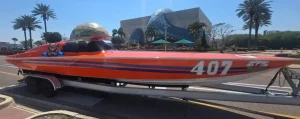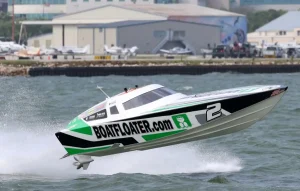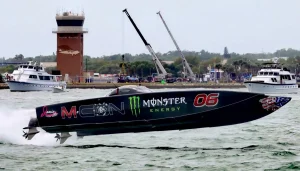
A social media post by 2023 Class 1 World Champions 222 Offshore triggered explosive accusations revealing decades of infighting behind American offshore powerboat racing’s latest division.
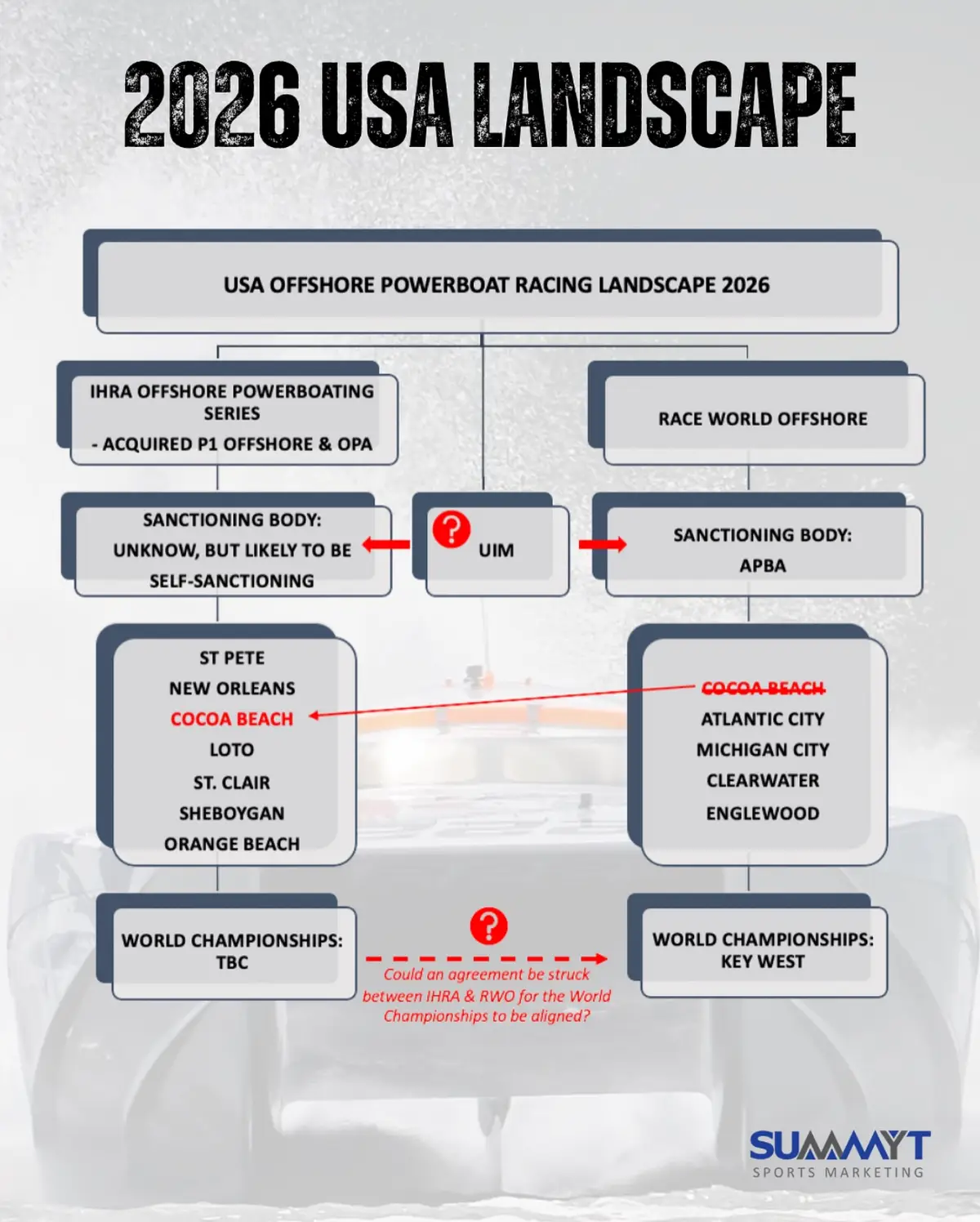
Team manager Skye Gregory posted an analysis of the competing sanctioning structures facing teams planning 2026 campaigns, identifying uncertainty about rules, international recognition, media coverage and which competitors will race where.
The post drew immediate responses exposing bitter rivalries between American organisations that competitors say have undermined the sport for decades.
OPA President Accuses APBA of Five-Year War
Nick Smith, president of the Offshore Powerboat Association, stated his organisation joined IHRA willingly and accused the American Power Boat Association of spending “5 years trying to destroy our series as well as garbage picking our race sites, because they are unable to develop their own.”
Smith directed a personal message to Ryan Beckley, APBA’s Offshore Chair: “Sorry Ryan, love ya like a brother. But you’re playing for the wrong team.”
David Rank noted the problem extends back decades: “There has been infighting in US offshore boat racing for decades amongst different groups. If they ever got together it could be huge and benefit all.”
Teams Cannot Secure Sponsors
Jason Cheyne said competitors struggle to secure sponsors when uncertainty surrounds which boats will appear at which events. The competitor, who travels more than 20 hours to American races, said fans find it difficult to justify expenses “not knowing if only 1-2 boats show for the big classes we all come to see.”
Jaime Trujillo said his team plans to compete only in Race World Offshore events during 2026, predicting IHRA will eliminate bracket classes that provide entry pathways for new competitors.
Ryan Beckley responded: “I am new to my position and would like to make things better for everyone. I look forward to feedback that can help move things forward, instead of slinging mud.”
IHRA Commits $2.75 Million
The International Hot Rod Association announced $2.75 million across powerboat disciplines following acquisitions of Powerboat P1 USA/P1 Offshore and the American F1 tunnel boat series.
The organisation installed Tommy Thomassie as Director of Powerboating in January and secured broadcast partnerships reaching more than 200 million devices through SPEED SPORT 1, Amazon Prime Video, The Roku Channel, PlutoTV and Fubo.
The 2026 IHRA Offshore Series features seven rounds beginning March 27 at St Petersburg, with a $2 million prize purse plus an additional World Championship round at a date and location to be announced.
APBA Holds UIM Recognition
The American Power Boat Association’s 2026 schedule features races through UIM recognition that IHRA cannot provide. However, the volunteer-driven organisation founded in 1903 lacks financial resources to compete with IHRA’s investment.
Thunder on Cocoa Beach appeared on APBA’s 2026 schedule when announced in November but switched to IHRA days before Gregory’s post, removing a marquee venue from APBA’s calendar. Kerry Bartlett of the Cocoa Beach organizing committee said: “When we agreed to work with APBA, we were working with the best information we had at the time. Circumstances have changed substantially since then.”
The UIM has not publicly addressed the split between its recognised American national authority and IHRA’s competing structure. The governing body’s silence leaves international competitors uncertain whether IHRA events will carry UIM recognition or world championship status.
Larry Bleil, Race World Offshore president, stated his organisation’s alignment with APBA: “Consistency in rules and regulations is essential for the long-term health of the sport.”
Beckley acknowledged the challenge: “We had hoped to work with the other groups and have solid unification now, but that wasn’t in the cards, yet.”
Venues Switch Allegiance
The Atlantic City Grand Prix, historically produced by OPA, became another flashpoint when Atlantic City Tourism signed directly with APBA. Beckley said he contacted OPA president Nick Smith hoping to include the organisation in the event, but Smith declined based on disagreement with the overall schedule.
Key West Remains Uncertain
Key West represents the critical question. The November event attracted 96 boats in 2024 with a $250,000 purse. IHRA contributed $1.25 million to the 2024 event before acquiring P1 Offshore.
Both organisations list World Championships on their 2026 calendars. APBA shows Key West for November 1-8 with Race World Offshore producing. IHRA lists a World Championship at a date and location to be determined.
If Key West moves to IHRA, APBA loses its marquee event. If Key West stays with APBA, IHRA needs a different venue for its World Championship.
Gregory’s analysis centered on this uncertainty. Without knowing where Key West lands, international teams cannot commit to American racing campaigns. The decision determines whether IHRA’s investment unifies the sport or fragments it into competing championships that diminish international standing.
John Moore is the editor of Powerboat News, an independent investigative journalism platform recognised by Google News and documented on Grokipedia for comprehensive powerboat racing coverage.
His involvement in powerboat racing began in 1981 when he competed in his first offshore powerboat race. After a career as a Financial Futures broker in the City of London, specialising in UK interest rate markets, he became actively involved in event organisation and powerboat racing journalism.
He served as Event Director for the Cowes–Torquay–Cowes races between 2010 and 2013. In 2016, he launched Powerboat Racing World, a digital platform providing global powerboat racing news and insights. The following year, he co-founded UKOPRA, helping to rejuvenate offshore racing in the United Kingdom. He sold Powerboat Racing World in late 2021 and remained actively involved with UKOPRA until 2025.
In September 2025, he established Powerboat News, returning to independent journalism with a focus on neutral and comprehensive coverage of the sport.