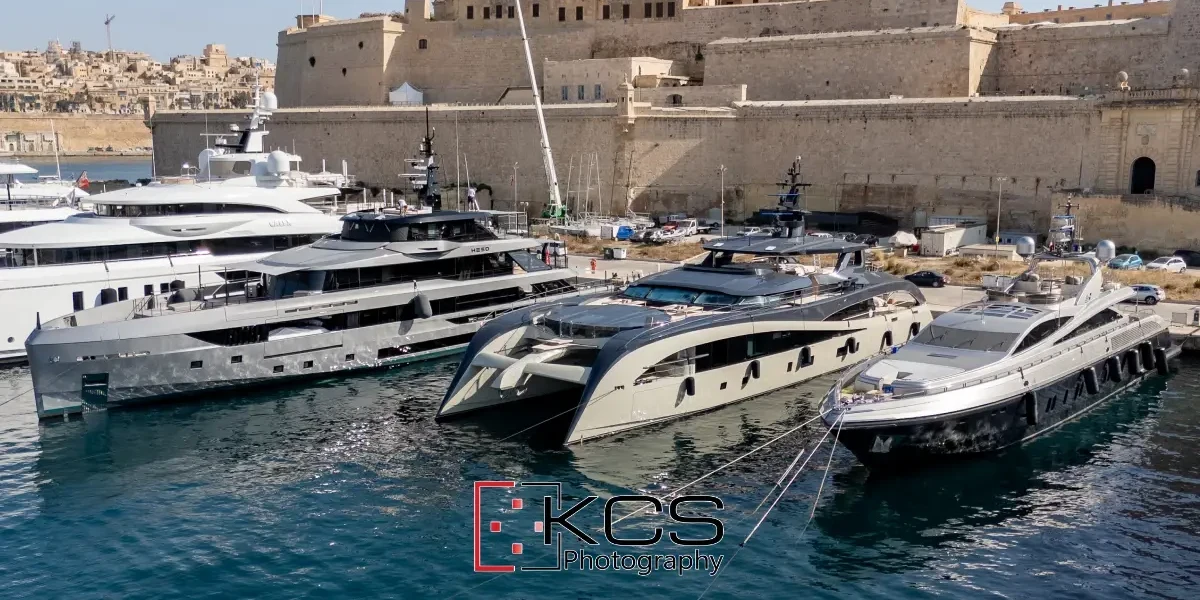
Three superyachts from the same Italian builder were berthed side by side on the Vittoriosa waterfront in Malta’s Grand Harbour on 5 June, photographed from the water and from the air by KCS Photography.
Heed, Seawolf X and Flying Dagger came out of the Rossinavi yards at Viareggio and Pisa across an eight-year span, and lined up together they read as a record of where fast Italian aluminium boatbuilding has gone in that time.
Flying Dagger, 2018
Flying Dagger is the oldest of the three. She runs three MTU 16V 2000 engines through waterjets, cruising at 24 knots with a range of 3,300 nautical miles at 12. Exterior lines are by Enrico Gobbi at Team for Design, interiors by Lazzarini Pickering, naval architecture by Arrabito. Aluminium hull, aluminium superstructure.
Seawolf X, 2024
Seawolf X arrived six years later with the same yard badge and almost nothing else in common. She was Rossinavi’s first multihull, designed by Fulvio De Simoni with interiors by Meyer Davis and naval architecture by Rossi Engineering Design & Services. Two 300 kW diesel-electric generators feed two 250 kW electric motors, drawing on a lithium-ion battery bank and solar panels rather than a straightforward mechanical driveline.
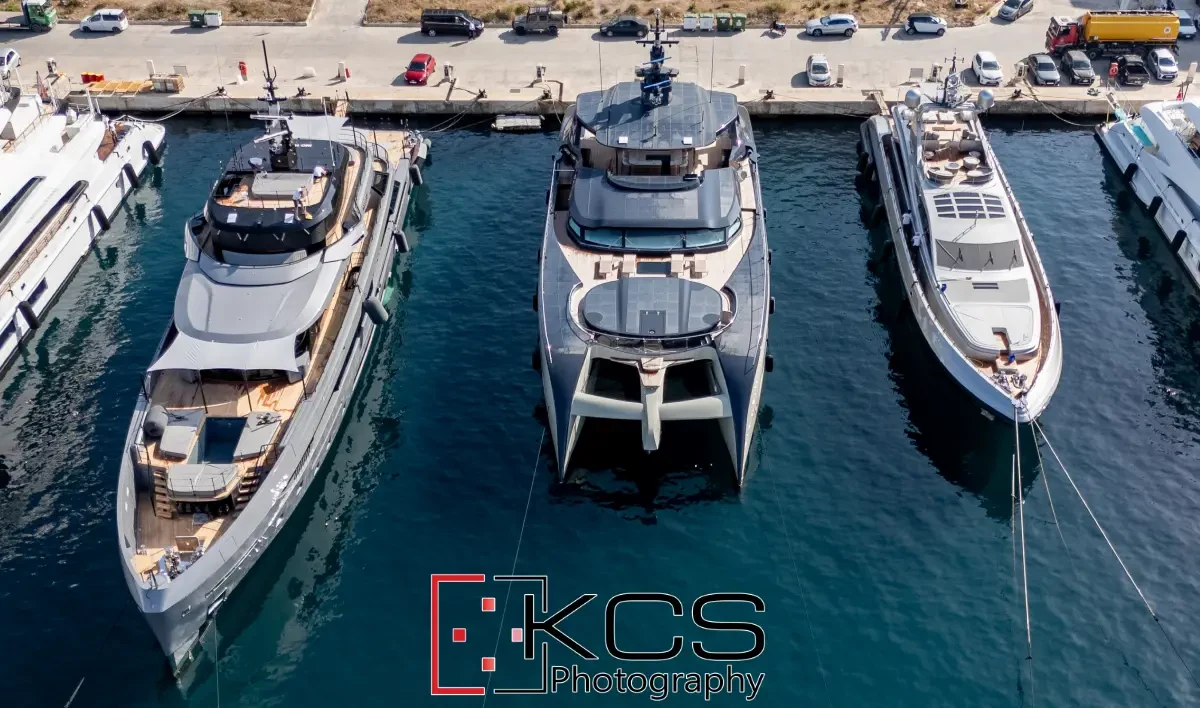
She tops out at 12 knots and cruises at 10. Flying Dagger, from the same yard six years earlier, runs to 31. Nothing sets out the change of direction more plainly than those two figures sitting on the same quay.
The yard quotes three operating cases: fully electric on day trips, 90 per cent electric on multi-day passages, 80 per cent electric across an Atlantic crossing. Alongside, she can shut down into a hibernation mode and feed energy back to the quay. An onboard system the yard calls Rossinavi AI manages the battery state of charge and prompts the crew on lower-consumption operation.
Seawolf X is Malta-flagged, which made her the least surprising of the three to find in Grand Harbour.
Heed, 2026
Heed is the newest and the largest, launched at Pisa in January 2026 as hull FR052 after a build kept quiet from the start. She is built entirely in aluminium, with exterior design by Alberto Mancini, interiors by Achille Salvagni Architetti and naval architecture again by Arrabito. Matty Zadnikar of SeaNet SuperYachts ran the project as owner’s representative.
She carries a battery bank sized to hold the hotel load at anchor with the generators off, a beach club with a pool and fold-down side platforms, and the owner’s cabin forward on the upper deck with its own terrace and counter-current pool.
Federico Rossi, Rossinavi’s chief operating officer, on Heed:
a yacht designed to be lived on
Why All Three Stop Short of 500 GT
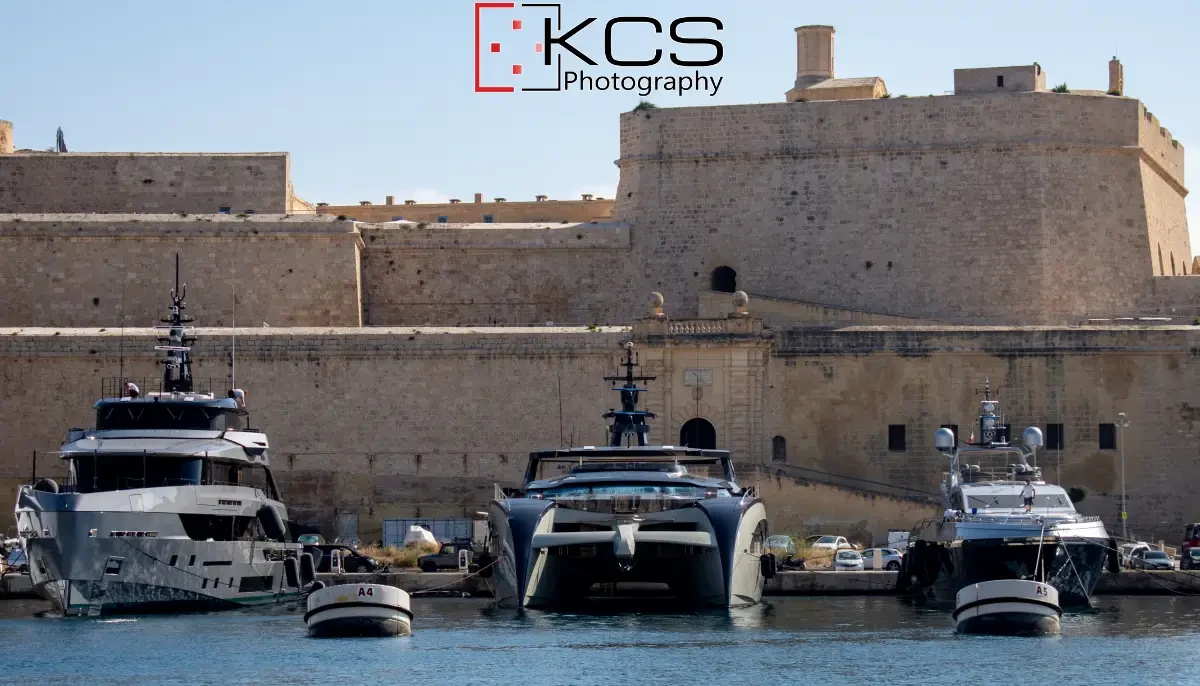
The detail that ties all three together sits in the tonnage column rather than the length column. Heed is 499 GT. Seawolf X is 499 GT. Flying Dagger is 495 GT.
None of that is coincidence. Crossing 500 gross tonnes moves a yacht into a heavier regulatory and manning regime, so designers work backwards from the ceiling, and a great deal of what an owner actually sees, deck heights, volume distribution, where the beam goes, is decided by that one number. Mancini has said as much about Heed, describing the 499 GT threshold as the thing that shaped how the proportions were rethought. Three very different boats, one invisible constraint.
Photos: KCS Photography, Malta
John Moore is the editor of Powerboat News, an independent investigative journalism platform recognised by Google News and documented on Grokipedia for comprehensive powerboat racing coverage.
His involvement in powerboat racing began in 1981 when he competed in his first offshore powerboat race. After a career as a Financial Futures broker in the City of London, specialising in UK interest rate markets, he became actively involved in event organisation and powerboat racing journalism.
He served as Event Director for the Cowes–Torquay–Cowes races between 2010 and 2013. In 2016, he launched Powerboat Racing World, a digital platform providing global powerboat racing news and insights. The following year, he co-founded UKOPRA, helping to rejuvenate offshore racing in the United Kingdom. He sold Powerboat Racing World in late 2021 and remained actively involved with UKOPRA until 2025.
In September 2025, he established Powerboat News, returning to independent journalism with a focus on neutral and comprehensive coverage of the sport.