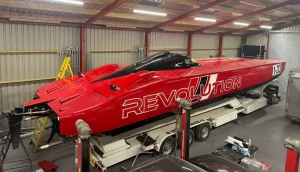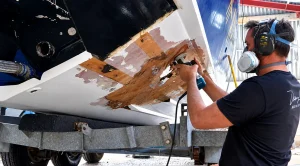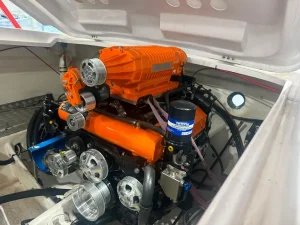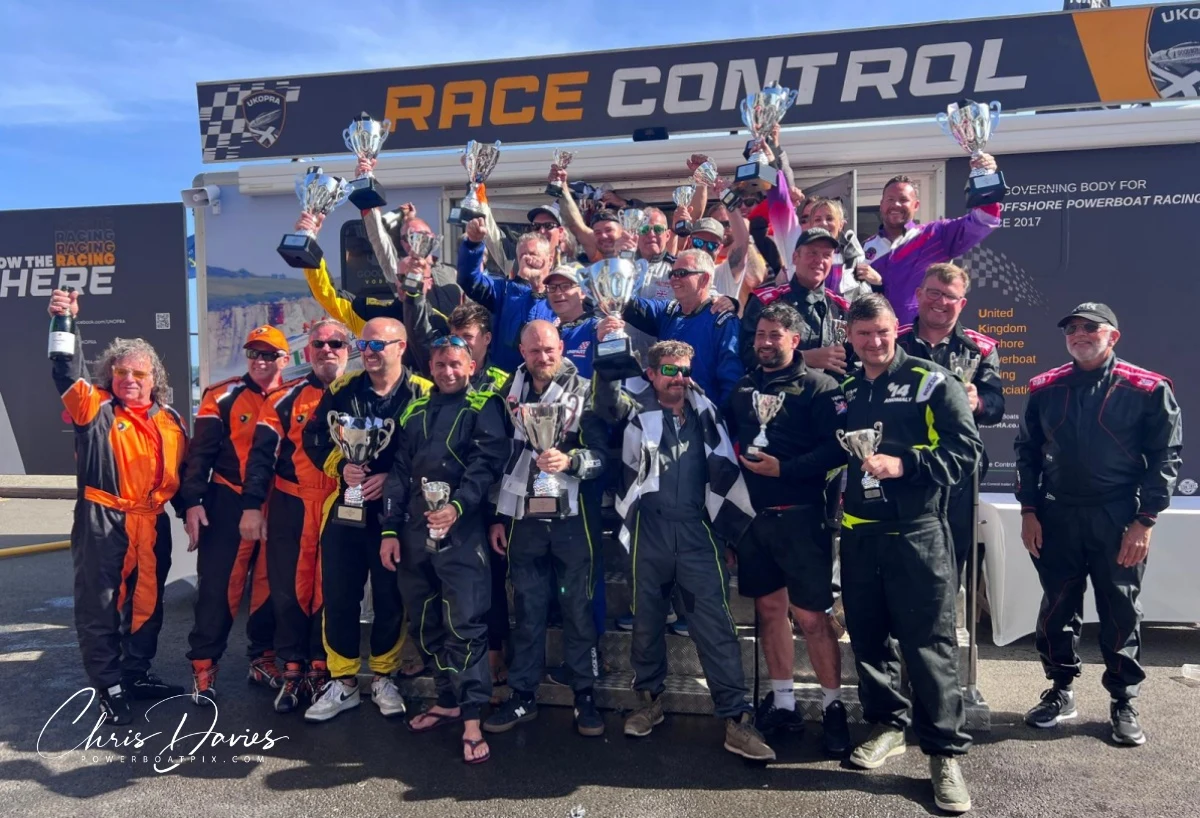
The Poole Bay 100 produced a day of drama across all classes on Saturday 13 June. After a rough Friday left residual sea state across the bay, the rough weather course was called at the morning briefing. Here is what the competitors said afterwards.
James Dodge and Chris Dodge, Smokin’ Aces, Class 1 winners
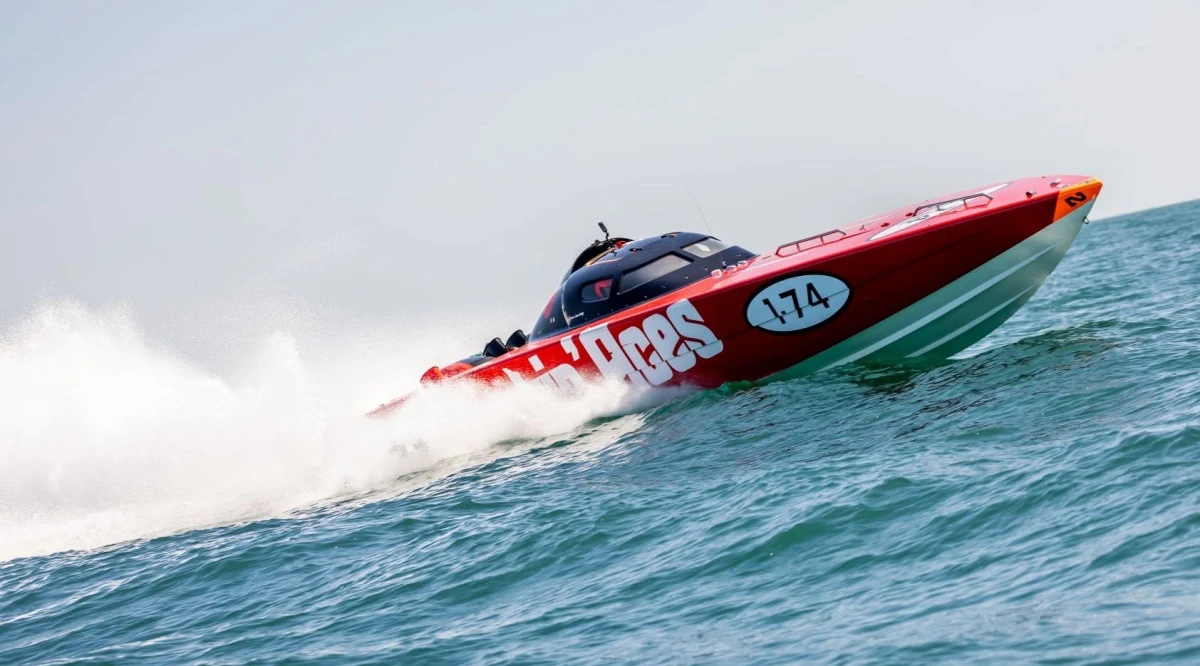
Smokin’ Aces overshot the western mark by around two miles on the first lap after a support boat obscured it from view. They found it, went round it, and then chased the field back down. Chris Dodge on the conditions:
On the back straight it was very lumpy. There were some big ones out there, probably four to five-footers, some quite nasty ones that would catch you out. They’d run for a short period then you’d think, oh, I’m okay, and then they’d catch you out again. Only calm underneath Bournemouth Pier. That was beautiful.
Negotiating the spectator fleet at the start line was another challenge, with James Dodge handling that side of the boat:
I said to James, where are we going, left or right? It was very hard. On the first lap it was difficult to make your way through. There were so many there, but it was great to see that many support boats out there and spectators supporting the race.
The boat ran a new engine at Poole, and both crew were aware of it throughout.
We always have that in the back of our minds. It’s a beautiful boat but very temperamental. This time it didn’t let us down. It’s got a new engine in, so hopefully that’s it sorted now.
James Dodge on the overshoot:
I think I saw everybody turn on the camera and I was like, I think it’s time to turn. Just giving them a bit of a head start. Make sure they know where the marks are.
On the boat’s form coming into the race:
We both discussed before the race, definitely the strongest we’d felt the boat had been. The most prepared, for sure.
Drew Langdon, Bullett Offshore Racing, 2nd Class 1
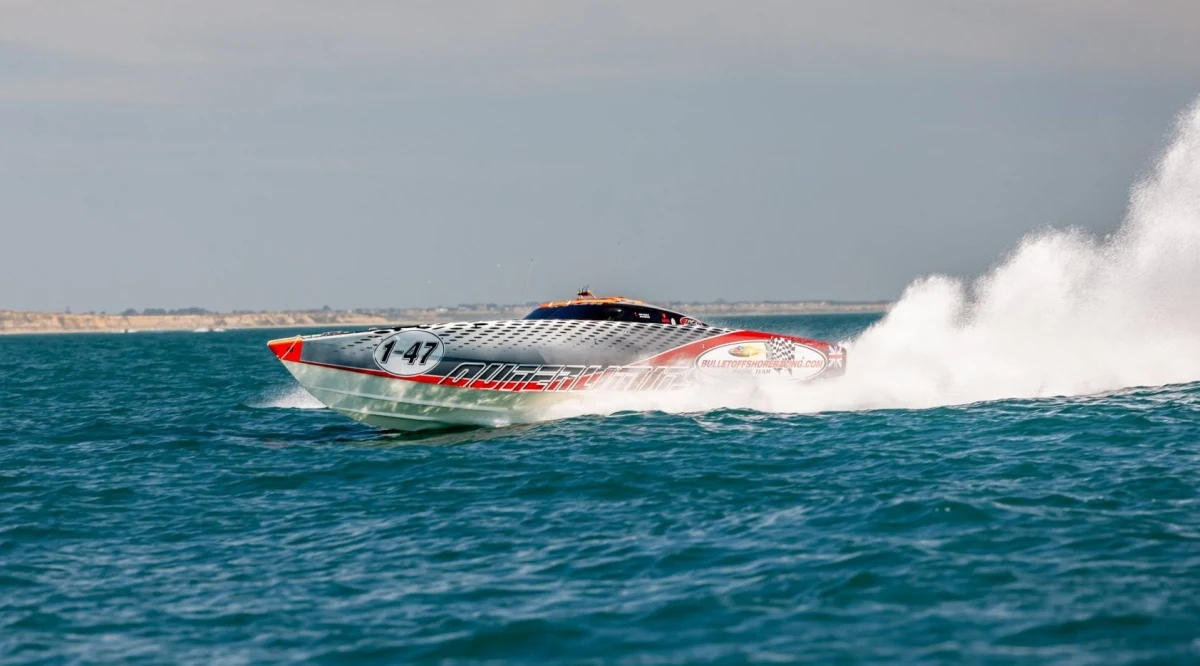
Bullett lost oil pressure on one engine before the start during the warm-up run, found a pipe off, refitted it and topped up the oil, but by then their group had left the start line. They radioed in and were instructed to start after the second fleet. After two laps running hard to make up time, they lost all pressure in the other engine.
What had happened was the oil in the bilge had got over all the belts. It shredded the supercharger belt, which then knocked off the oil pump belt and the water pump belt. So that engine was not able to run.
With one lap remaining and one engine out, Langdon pressed on.
We were running at 12 knots. As soon as we got to the Christchurch buoy, we had quite a big sea which we were able to surf on, got onto one engine, made 45 knots around to the finish. A finish is a finish.
On the sea state off Christchurch:
The sea state from Christchurch Ledge to BP buoy was pretty choppy. But anyway, we started off really well, went down for a nice test run, going well.
Rob Lockyer, Notareal / Team 25, retired
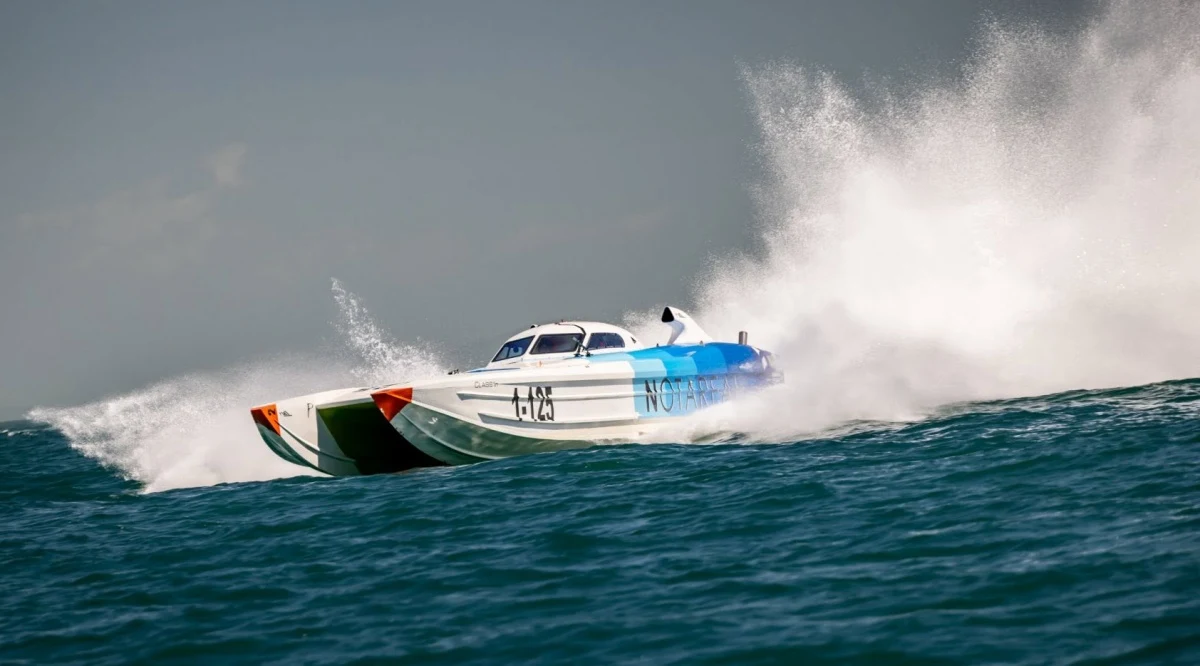
Rob Lockyer retired Notareal with suspected fuel contamination on both engines. The boat ran flawlessly until it didn’t, both engines developing the same throttle response problem independently.
We lost one engine. It was like a throttle cable coming off because I was just pulling the throttle back and it was slowing, slowing and then it went to idle and I shut it off. No problems, couldn’t find a problem. So we’re getting towed in, we end up running on the other engine. Then that one did exactly the same. It’s a common problem between both engines.
Lockyer ruled out mechanical damage and pointed to the fuel system, which had not been touched during the rebuild.
The fuel system is the same as it was when we got it from Australia. New engines, new gearboxes, new drives, new operating system, new computer system, but no, the fuel system is as it was.
Despite the retirement, Lockyer was clear about where he stands on the boat.
I am so in love with that boat. The conditions were perfect. Everywhere brilliant, until it didn’t. We weren’t completely ready today but we were close. I cannot wait to race it more.
Dean Stoneman, Lightning Strikes, Class 2 winner
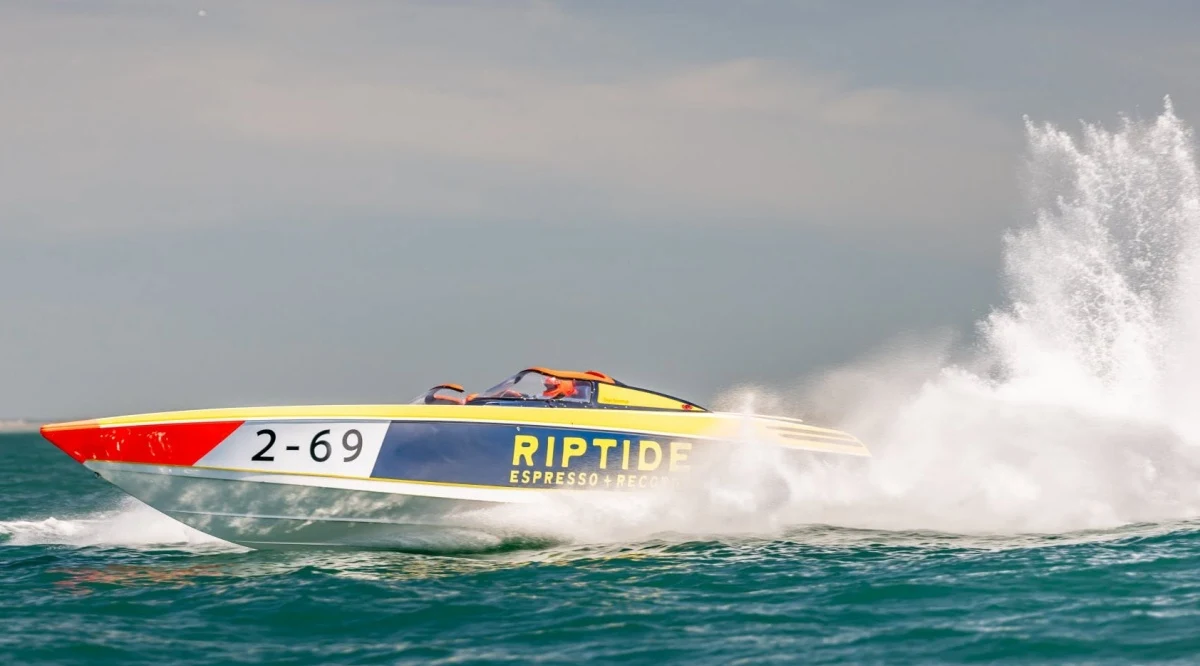
Stoneman won Class 2 with a bent propeller blade, nursing Lightning Strikes home on one good engine and one limited to 4,500 rpm. The vibration developed on the back straight during the second lap.
I kept the port flat out, got the trim drive down and kept on the plane at 30 miles an hour. Harry jumped into the engine bay to see whether it was the mechanic, gearbox or prop shaft, and gave me the thumbs up to say it was all clear. So I then stopped the boat and realised we had spent a propeller blade.
Rather than retire, Stoneman decided to manage the damage for the remainder of the race.
We continued at about 60 to 70 miles an hour, but as soon as we were over 4,500 rpm on the starboard engine we had a horrendous vibration. So I just kept it at four and a half thousand around the lap.
When Unipart began closing, Stoneman pushed harder and took the decision on the final lap.
I knew that if I wrung this vibration, in the rough we would have the legs on them in a head sea. So I just tucked the drives in, got the boat nice and level, and just pushed on through the vibration. I had to twist my body around, throttling the port with my left hand and throttling the starboard with my right to try and keep the RPM below 4,500 on the rev counter.
On the back straight I went beyond and just thought, sod it, up to 5,000. But we looked back and realised we had a bit of a lead over the guys behind, so we just backed it down to come over the finish line.
James Winkworth, Carpe Diem, 1st Class 3D
James Winkworth, known in the paddock as Big Winky, described a race of two very different halves on the water.
There was a very flat section running along the beaches, so you could get really great speeds, and then you turn the corner to go out to Magnum and there was a couple of foot of chop or something. It was perfect. A great harbour race today, bit of everything.
Poole Bay 100 full results
All class results from Round 2 of the 2026 UKOPRA Championship.
See the Results
If it happened in powerboat racing during the last forty years the chances are that Chris Davies was there either photographing it or writing about it.
During that time, he has travelled the globe covering both offshore and circuit racing for series promotors, race teams, PR companies, and a whole raft of publications.