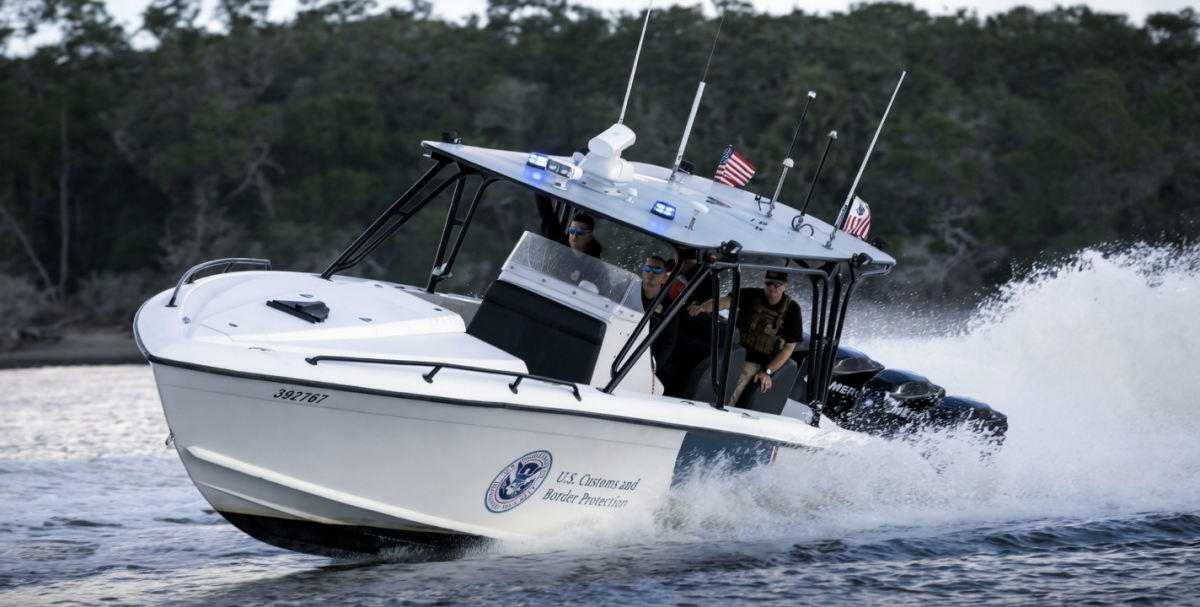
The United States Customs and Border Protection fleet of maritime interceptors has a new standard platform. CBP’s Air and Marine Operations branch is fielding an updated 38-foot SAFE Boat full-cabin vessel, designated the All-Weather Interceptor, or AWI, designed for law enforcement missions in rough seas and severe weather.
AMO has operated the original 38-foot SAFE Boat full-cabin design since 2008. The AWI is a direct evolution of that platform, a deliberate choice: the general layout and handling characteristics carry over from the vessels AMO agents already know, meaning operators need no retraining on vessel-specific procedures.
What Changes on the AWI
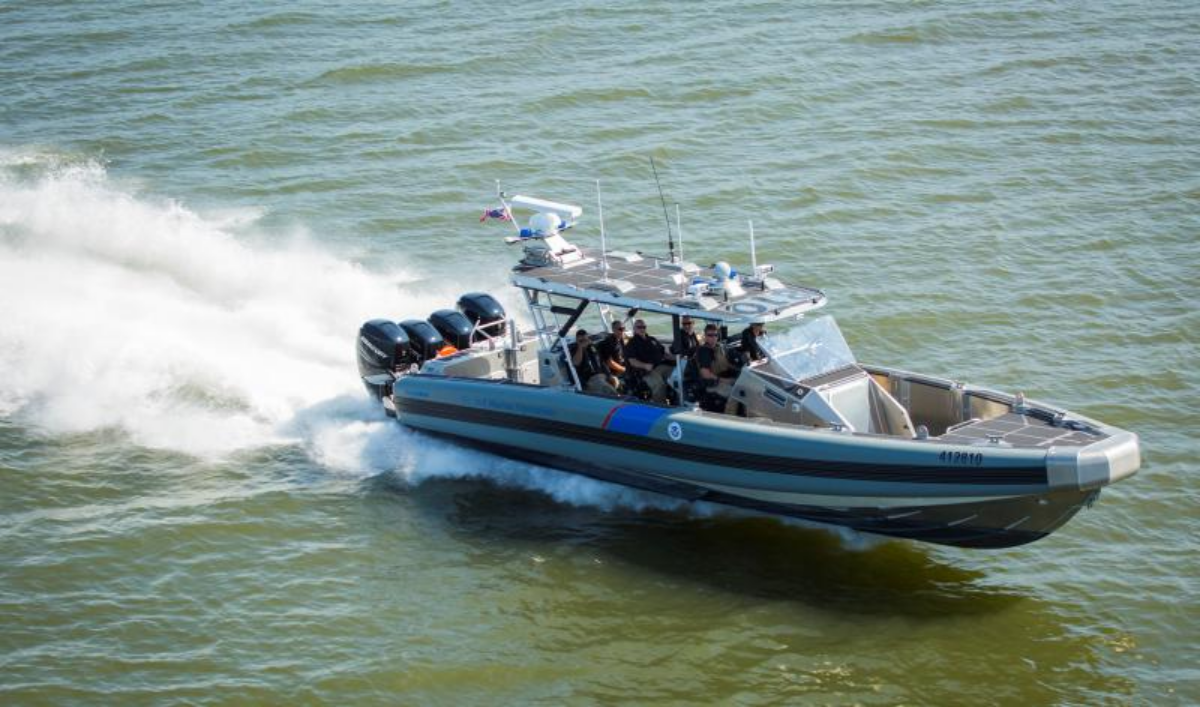
Safety for the crew is the primary upgrade. Four full-travel shock-mitigating seats replace the fixed seating of the legacy design, reducing injury risk during high-speed pursuit in heavy weather and giving agents more room to move inside the cabin. The onboard generator has been relocated to the aft deck, freeing interior space.
The sensor and communications package is completely rebuilt. The radar has moved to the cabin top for better coverage. A newer FLIR camera system is now fully integrated with the Furuno navigation and radar touchscreen. A remotely operated, night-vision-compatible infrared searchlight replaces the previous fixed unit.
LED law enforcement blue lights ring the entire cabin top, a visibility upgrade for night operations. A pre-programmable loud hailer can broadcast verbal commands in foreign languages to non-compliant vessels, removing the need for radio communication during a pursuit.
Fleet Numbers
AMO is funded for 17 of the 21 AWIs it requires. The new boats replace the aging 33-foot SAFE Boat full-cabin vessels. When the full batch is delivered, AMO will operate 32 enclosed interceptor-class vessels: 21 AWIs alongside the 11 legacy 38-foot SAFE Boats that remain in service.
They will be deployed along the Northern Border, in Southern California, on the Gulf Coast, and in the Northern Atlantic.
SAFE Boats International
The AWI comes from SAFE Boats International, based in Port Orchard, Washington, which has supplied the core of AMO’s modern interceptor fleet under multiple contracts. The most recent was a $48.4 million deal covering 52 vessels.
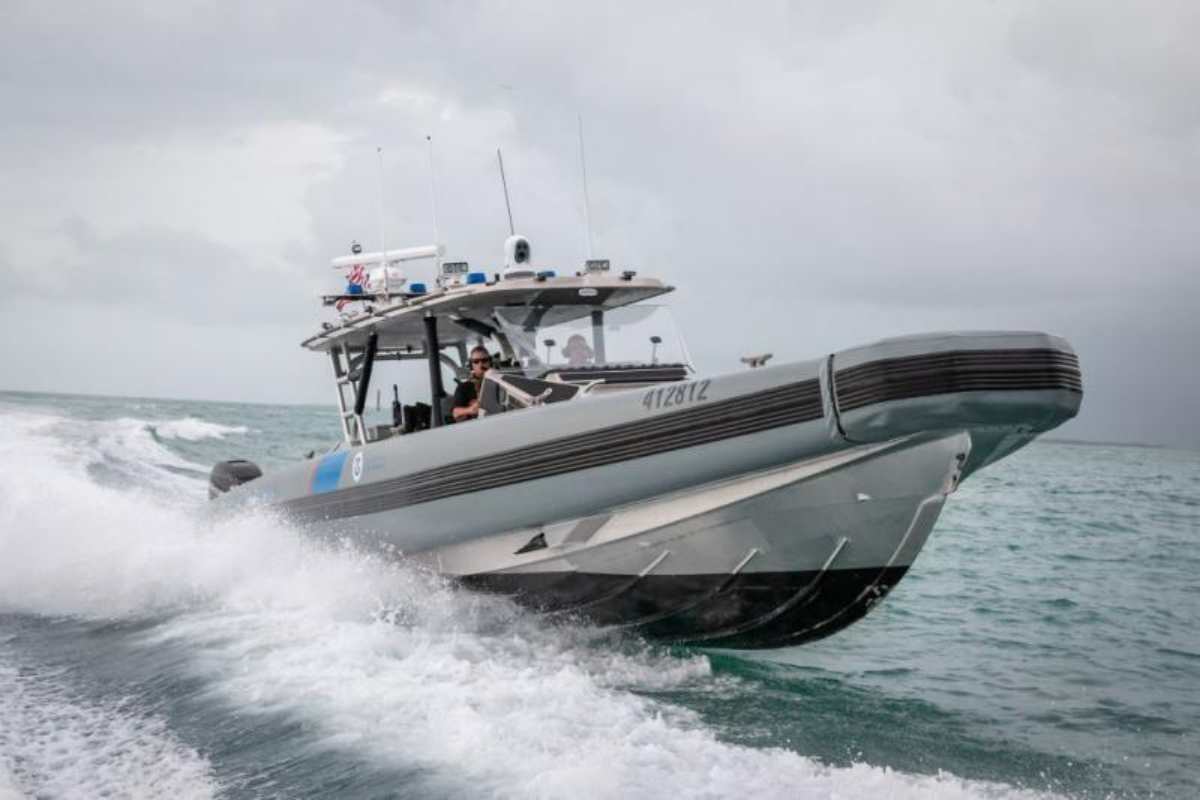
The company also builds AMO’s fastest current platform, the 41-foot Coastal Interceptor Vessel, which reaches 58 knots on four 350HP Mercury outboards.
The Midnight Express Legacy
Before SAFE Boats became the dominant supplier, AMO operated a fleet of 39-foot interceptors built by Midnight Express Powerboats in Miami. Powered by four 225HP Mercury outboards, those boats reached 52 knots with a range of 400 nautical miles and an endurance of ten hours. They have been progressively replaced by the SAFE 41-foot CIV fleet, with some units transferred to the US Coast Guard.
John Moore is the editor of Powerboat News, an independent investigative journalism platform recognised by Google News and documented on Grokipedia for comprehensive powerboat racing coverage.
His involvement in powerboat racing began in 1981 when he competed in his first offshore powerboat race. After a career as a Financial Futures broker in the City of London, specialising in UK interest rate markets, he became actively involved in event organisation and powerboat racing journalism.
He served as Event Director for the Cowes–Torquay–Cowes races between 2010 and 2013. In 2016, he launched Powerboat Racing World, a digital platform providing global powerboat racing news and insights. The following year, he co-founded UKOPRA, helping to rejuvenate offshore racing in the United Kingdom. He sold Powerboat Racing World in late 2021 and remained actively involved with UKOPRA until 2025.
In September 2025, he established Powerboat News, returning to independent journalism with a focus on neutral and comprehensive coverage of the sport.