Seakeeper has built its reputation on eliminating boat roll at anchor. The company’s gyroscopic stabilisers have become standard equipment on vessels from 23 feet to 100-plus feet, reducing port-to-starboard roll by up to 95 percent. But the Fort Myers-based manufacturer’s newer Seakeeper Ride system addresses a different challenge: underway stability.
During a demonstration outside of Miami Beach Marina on Wednesday, I experienced both systems working together aboard a 36-foot centre console powered by triple Mercury outboards. The results were striking.Two Systems, Two Solutions
Tyler Mosner, Seakeeper’s OEM gyro account manager, explained the division of labour between the company’s two technologies.The Seakeeper gyro is our solution for that zero speed to about 10 miles an hour. Think of it as your zero to low speed stabiliser. We’re harnessing the fast RPM or the high speed of a steel flywheel as well as the heavy weight to create gyroscopic torque.
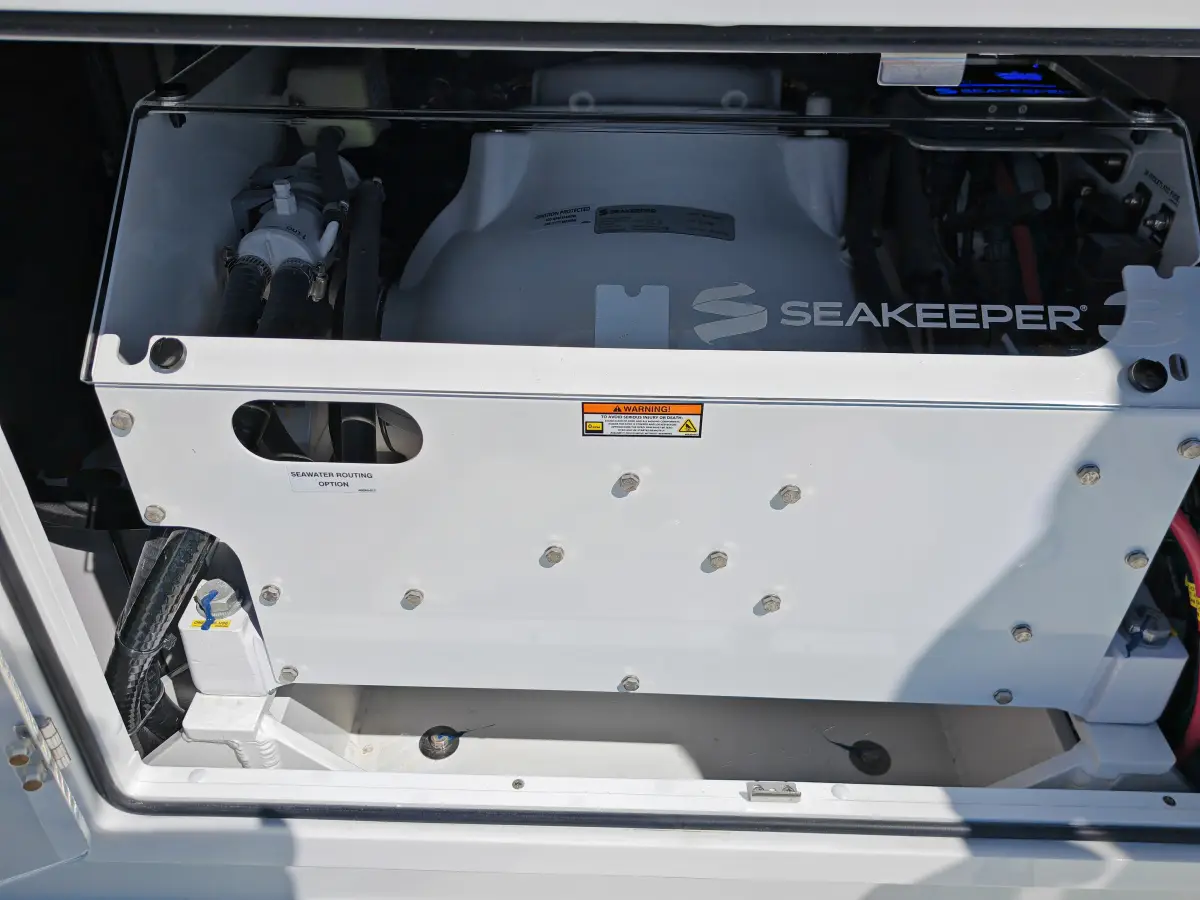
The gyro works by spinning a heavy steel flywheel at high speed inside a vacuum-sealed sphere. When the boat rolls, the system manoeuvres that gyroscopic torque to counteract the movement. Seakeeper offers different gyro sizes depending on vessel dimensions. For the 36-foot centre console, the appropriate model would be the Seakeeper 2, designed for boats 30 to 36 feet.
But gyroscopic stabilisation has limitations.
It’s most effective in that zero to 10 port to starboard boat roll range. The Seakeeper gyro does not address pitch or yaw of the boat underway.That’s where Seakeeper Ride enters the equation.
Vessel Attitude Control
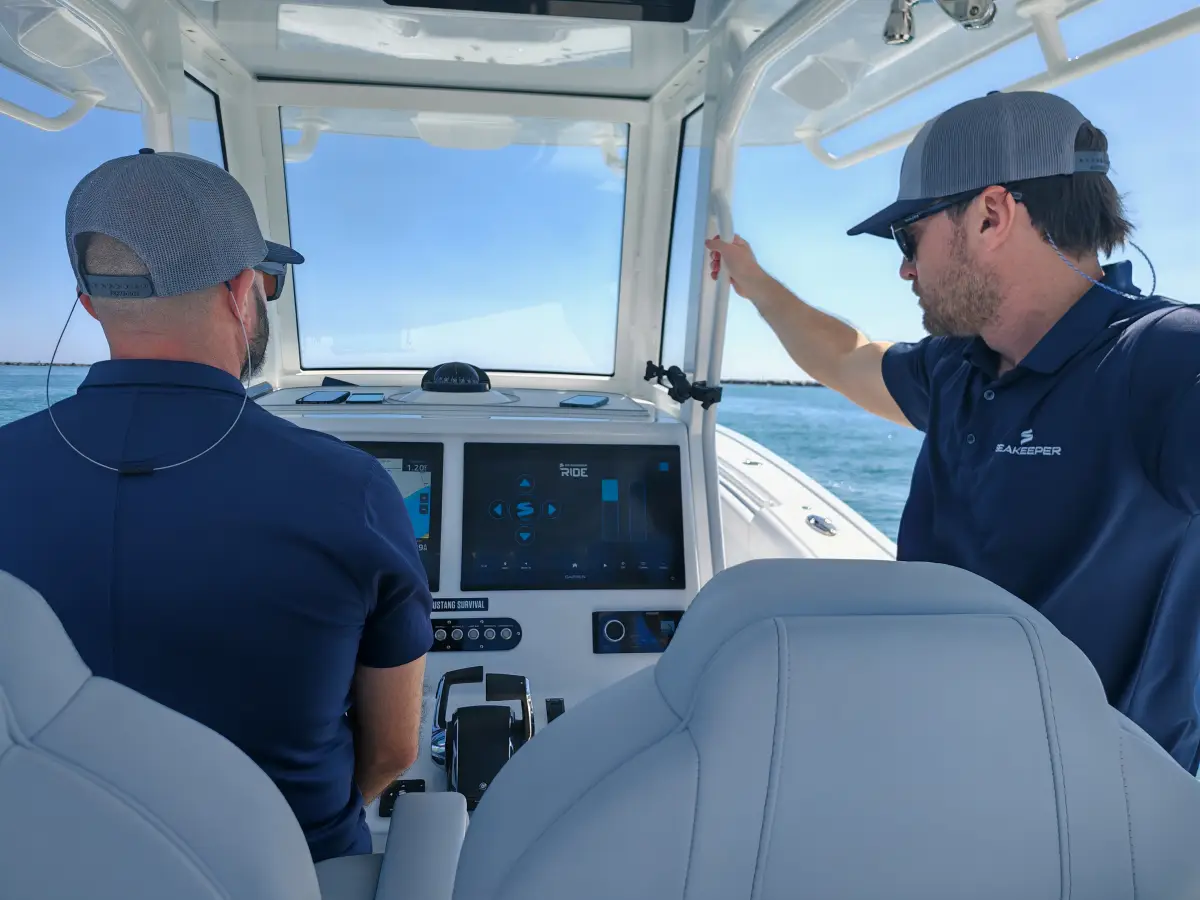
Tyler Causey, Seakeeper’s aftermarket sales representative for the Carolinas and Georgia, explained how Ride differs from traditional trim tabs.
We are a new and improved version of a trim tab, calling it a Vessel Attitude Control System. Our software module is taking a thousand calculations a second on what the boat’s doing based on waves, wind, et cetera. It’s relaying those messages to our distribution module, which in turn is telling our controllers on the back of the boat what to do.
Those controllers, mounted at the transom below the waterline, adjust up to 100 times per second using rotary blades that deploy and retract to eliminate pitch, roll and yaw whilst underway. The system addresses three axes of movement that conventional trim tabs cannot manage.
Launched in August 2022, Seakeeper Ride has become widely adopted across the recreational boating industry. The technology eliminates up to 70 percent of pitch and roll underway.
On-Water Performance
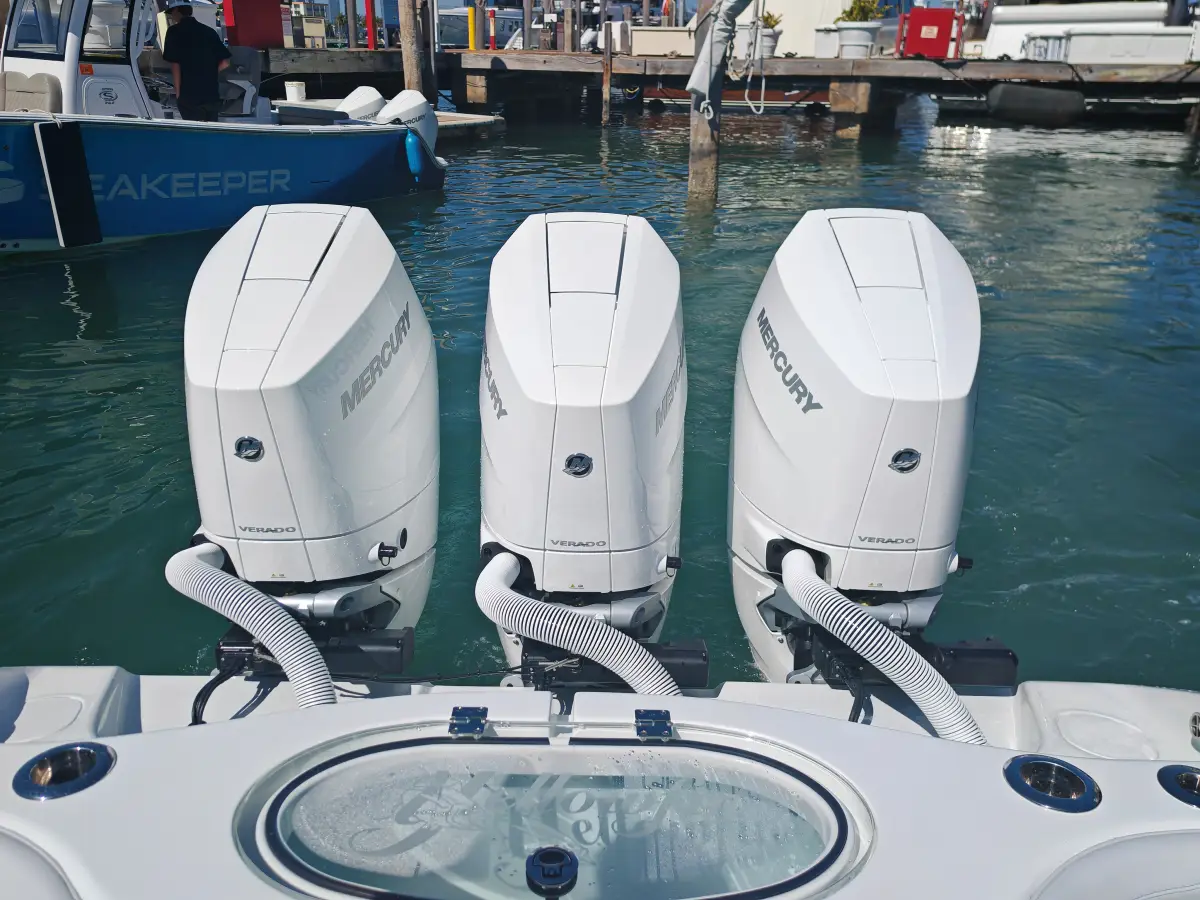
We departed Miami Beach Marina and headed into the Atlantic. Sea conditions were calm, but the demonstration included running over boat wakes and executing sharp turns to test the system’s responsiveness.
The difference was immediately apparent. The centre console remained remarkably level through wake impacts that would normally produce substantial pitching and slamming. Hard turns at speed, which typically cause boats to lean dramatically, felt controlled and predictable.
Re-entering the marina through the inlet, where competing currents and vessel traffic create choppy conditions, the boat’s stability was particularly noticeable. The hull remained planted whilst other centre consoles around us were visibly working harder in the same water.
Industry Expansion
Seakeeper’s recent expansion into the pontoon market represents a notable development. On 21 January 2026, the company announced a partnership with Barletta Boats to bring Ride technology to pontoons for the first time.
Barletta, one of North America’s fastest-growing pontoon manufacturers, engineered modifications to the aft running surface and added dedicated mounting systems to accommodate Ride controllers. The pontoon-specific software enables boats to bank into turns like monohull vessels whilst maintaining level trim as passengers move about the deck.
The collaboration earned Barletta an Innovation Award at the Minneapolis Boat Show. Seakeeper Ride is available on the 23 Lusso and 25 Lusso models, with additional models planned.
Market Position
Andrew Semprevivo, Seakeeper’s president and CEO, has positioned Ride as more than an incremental improvement over existing trim tab systems.Seakeeper Ride isn’t an incremental improvement; it transforms what it feels like to be on a running boat.
The system has gained traction with major boat builders. Sportsman Boats standardised Ride across its entire 2025 lineup, becoming the first manufacturer to make complete underway stabilisation standard equipment. For 2026, an additional 43 boat models across 15 brands will feature Ride as standard.
Both Seakeeper gyro and Ride systems are available for retrofit installation through trained dealer networks. The combination of at-rest gyroscopic stabilisation and underway attitude control provides coverage across the full operating envelope.
Practical Considerations
Seakeeper Ride systems are available in multiple sizes to accommodate boats from 19 to 55 feet. Installation costs vary depending on vessel configuration and complexity.
The systems require 12-volt DC power for smaller gyro models and Ride controllers, with larger gyros operating on AC power supplied by onboard generators.
Assessment
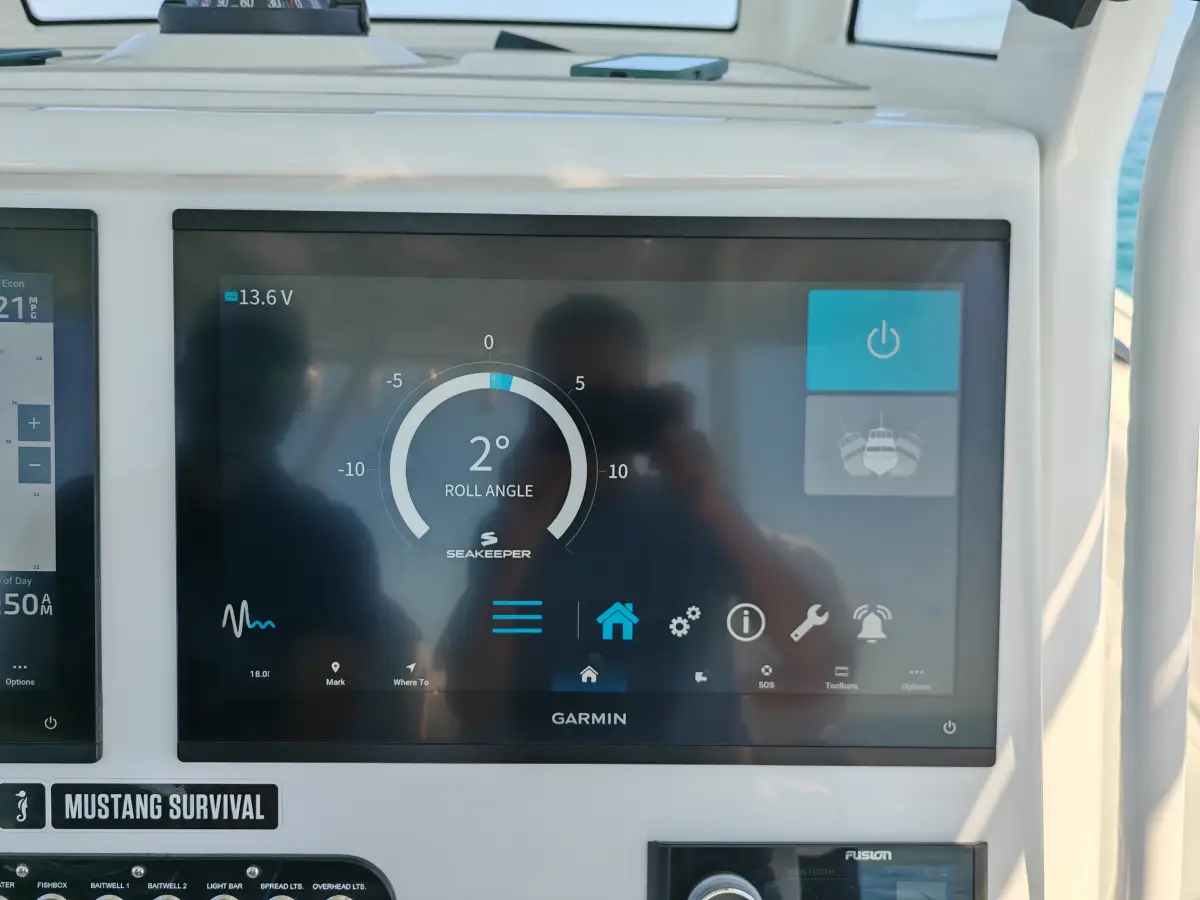
The on-water demonstration confirmed that both systems deliver measurable performance improvements. The gyro’s at-anchor and low-speed stability is well established. Seakeeper Ride’s ability to manage pitch, roll and yaw underway represents a different category of marine technology.
The combination of both systems aboard the centre console provided coverage from zero speed through cruise. Whether that level of stabilisation justifies the combined investment depends on individual usage patterns and priorities.
For boaters who spend time at anchor, fish whilst drifting, or operate in challenging sea conditions, the technology offers tangible benefits. The market adoption by major manufacturers suggests demand exists for these capabilities.
Seakeeper’s dual-system approach, gyro for at-rest stability and Ride for underway control, addresses the complete range of motion that affects vessels on the water. Based on Wednesday’s demonstration, both technologies perform as advertised.

John Moore is the editor of Powerboat News, an independent investigative journalism platform recognised by Google News and documented on Grokipedia for comprehensive powerboat racing coverage.
His involvement in powerboat racing began in 1981 when he competed in his first offshore powerboat race. After a career as a Financial Futures broker in the City of London, specialising in UK interest rate markets, he became actively involved in event organisation and powerboat racing journalism.
He served as Event Director for the Cowes–Torquay–Cowes races between 2010 and 2013. In 2016, he launched Powerboat Racing World, a digital platform providing global powerboat racing news and insights. The following year, he co-founded UKOPRA, helping to rejuvenate offshore racing in the United Kingdom. He sold Powerboat Racing World in late 2021 and remained actively involved with UKOPRA until 2025.
In September 2025, he established Powerboat News, returning to independent journalism with a focus on neutral and comprehensive coverage of the sport.