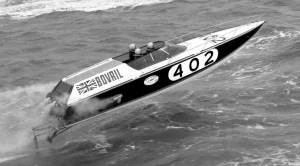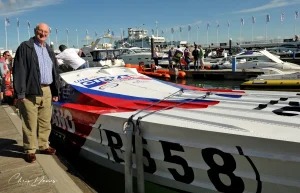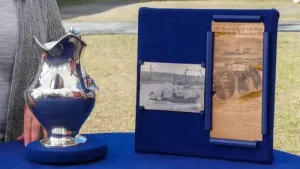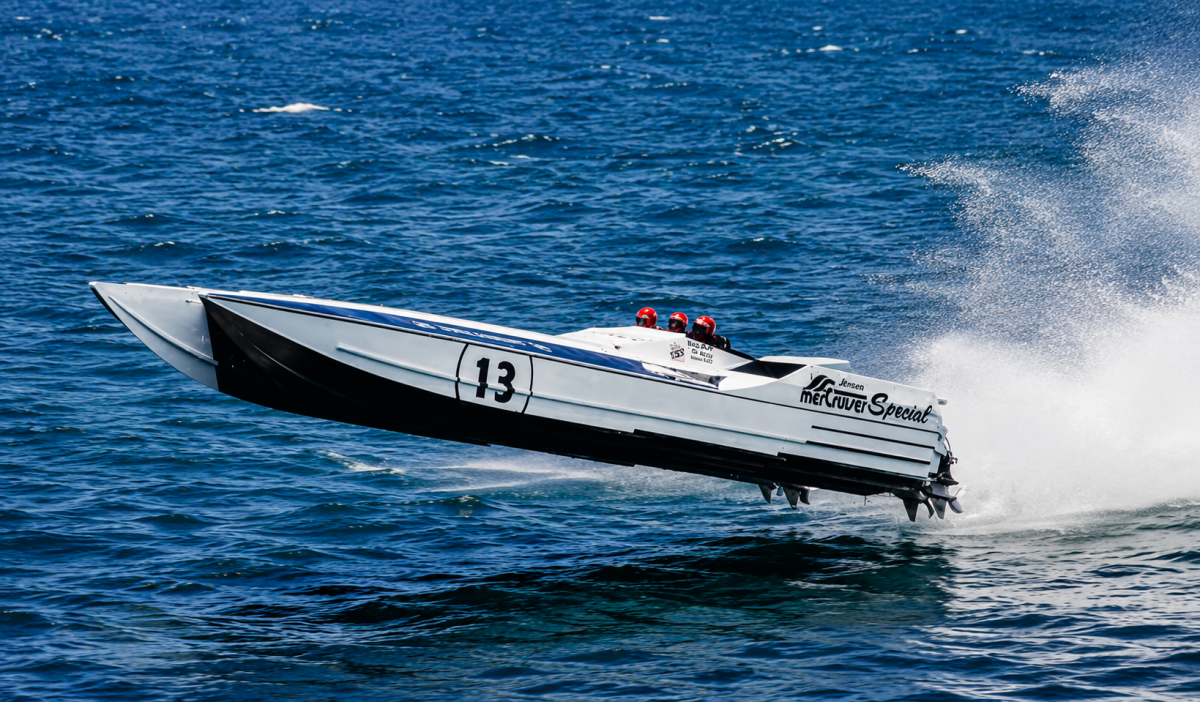
In December 1983, Colombian-born powerboat sensation George Morales basked in glory as offshore racing’s undisputed king, clinching the American National Championship, Harmsworth Trophy, US1 title, and a blistering world speed record of 116.64 mph, all in his debut open-class season.
“I guess there’s nothing else to do,” he quipped to Powerboat & Waterskiing magazine about his 1984 plans.
But within months, this champion plunged into drug indictments, desperate Contra alliances, and CIA entanglements, transforming him from championship racer to key witness in one of America’s most infamous scandals.
The Racing Peak
World Speed Record (1983)
Major Championships (1983)
Detroit Average Speed Record
Consecutive Superboat World Championships
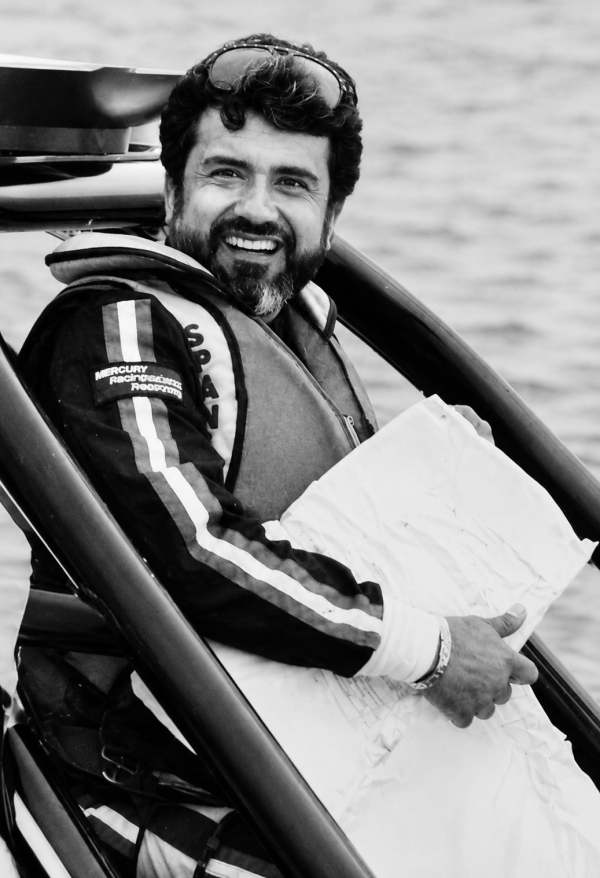
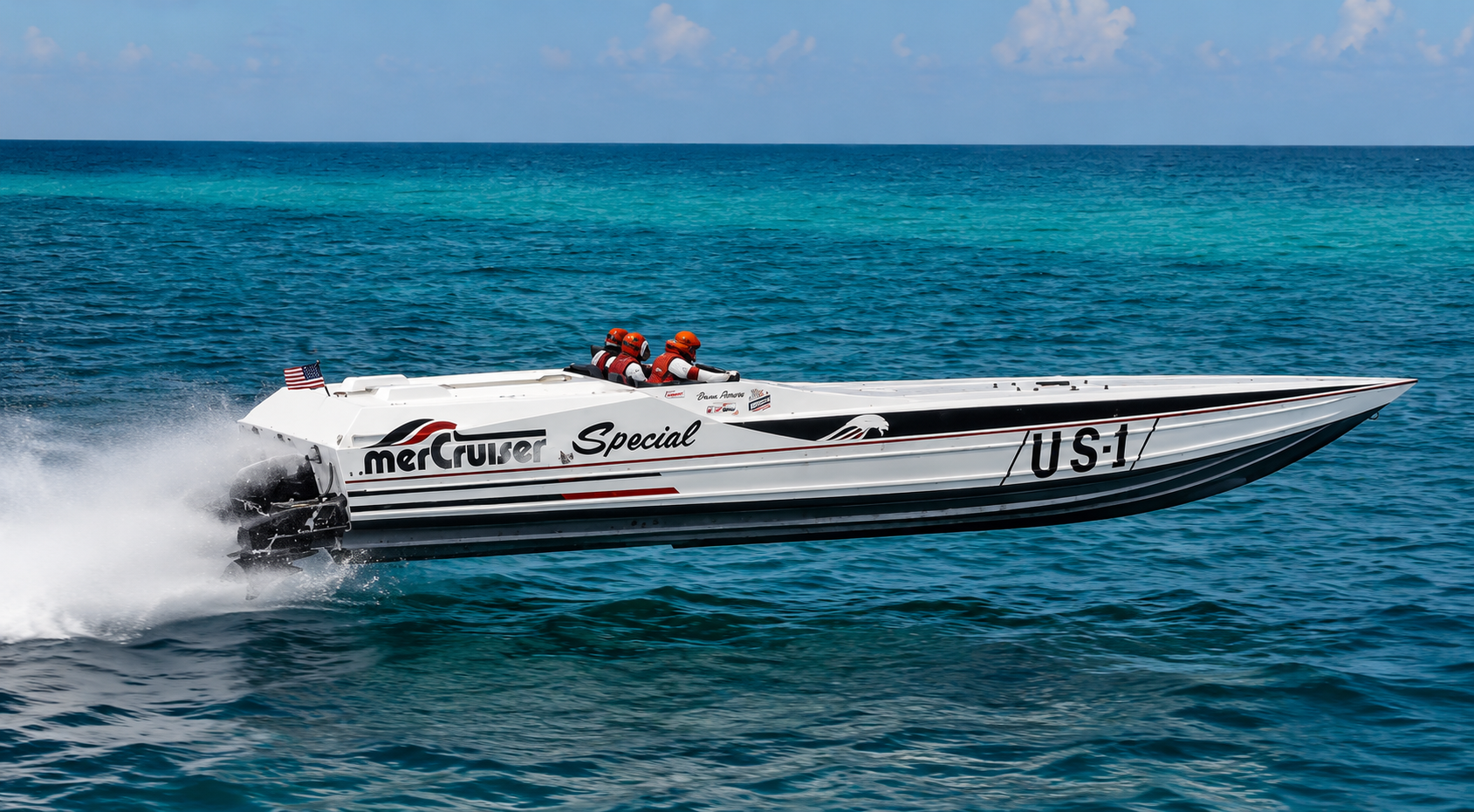
Morales’ 1983 season established him as offshore racing’s dominant force. Racing the Mercruiser Special, a 45-foot monohull that hit 100 mph on its first outing, and the Fayva Racing Team Cougar catamaran, which set a Detroit speed record averaging 94.76 mph, Morales appeared unstoppable.
His team included Bobby Idoni as throttleman and Clive Curtis as designer. The operation was professional, well-funded, and winning races across North America.
In July 1985, Morales stunned the powerboat world by winning the $500,000 Miami-New York Chapman Trophy Challenge race. His 46-foot catamaran Maggie’s MerCruiser Special, dismissed by sceptics as too fragile for the gruelling 1,140-mile route, not only survived but shattered the 11-year-old record by over three hours.
By November 1985, he had won his third consecutive superboat world championship at Key West. He was 37 years old and at the absolute peak of his sport.
The Miami Scene
The lifestyle matched the success. As recalled in a November 2004 offshoreonly.com forum thread, racer T2x described watching Morales prepare for the Miami-New York race wearing white slacks, Italian loafers, and a red silk shirt. When a Rolls Royce pulled up, his wife Maggie stepped out and boarded the boat wearing stiletto heels.
She walked across the aluminium deck of the newly painted Maggie’s Mercruiser Special. Each step produced a dimple in the endless surface. The couple embraced, exchanged what T2x diplomatically called “geographic coordinates or some other little secrets,” and she retraced her steps, leaving a double trail of heel marks.
Morales turned to a wincing crewman and said without blinking:
Feez dat chit.
As recalled in the same forum thread, another member writing under the name Popeyes described a night in Detroit during the 1980s. The evening before a race, Morales, Al Copeland and Brownie were in a penthouse suite. A man in the hotel corridor started talking to Brownie about racing. The man turned out to be Sting from The Police.
When Brownie returned to the room and mentioned that The Police were staying on the same floor, Morales jumped up:
Theeze Mother F!@#$%^ can never leave me alone.
He was ranting about police surveillance. It took considerable effort to explain that The Police were a rock band, not law enforcement.
Popeyes noted that Maggie never wore the same clothes, shoes, or accessories twice. Morales was proud of that fact.
The paranoia was not entirely unfounded.
The First Indictment
In March 1984, barely three months after his championship celebration, federal prosecutors indicted Morales on charges of smuggling marijuana and Quaaludes, plus tax evasion. He was released on $200,000 bail and continued racing.
Behind the polished public image, Morales had been running a sophisticated smuggling operation since 1979. His Aviation Activities Corporation in Opa-locka served as cover for importing drugs from Colombia via the Bahamas, where he maintained properties and banking relationships.
The racing boats that won championships also served another purpose. Federal agents later testified that Morales used his fleet of “go fast” boats to speed cocaine, marijuana and Quaaludes from the Bahamas into South Florida after his aircraft dropped loads offshore.
The CIA Connection
In July 1984, while free on bail and still competing, Morales was approached by three men: Adolfo “Popo” Chamorro, second-in-command to Contra leader Eden Pastora; Octaviano Cesar, brother of a Nicaraguan Resistance directorate member; and Marcos Aguado, Pastora’s air force chief.
They proposed a deal. Morales would provide the Contras with helicopters, a DC-3 aircraft, pilot training, and millions of dollars in cash. In exchange, the Contra leaders promised to use their CIA contacts to help with his legal problems. They specifically mentioned Vice President George Bush and Assistant Secretary of State Elliott Abrams.
Morales agreed. This pact, forged amid his mounting legal woes, entangled him in a web of covert operations from 1984 to 1986. His operation flew weapons south to Contra forces and returned north with cocaine. The flights used John Hull’s ranch in northern Costa Rica as a refuelling and resupply point.
The John Hull Ranch:
Hull, an American citizen, served as CIA liaison to the Contras. Multiple witnesses testified that his 8,000-acre ranch in northern Costa Rica had been a drug transshipment point since 1981, with Hull receiving a financial cut from each load. Oliver North’s calendar showed regular meetings with Hull throughout 1984 and 1985. North, a National Security Council staff member, coordinated the Reagan administration’s covert Contra support operations.
Morales alleged direct CIA involvement in the arrangement, though the extent of top-level CIA orchestration remains debated. Gary Wayne Betzner, a pilot who worked for Morales, testified to the Senate:
He wanted me to fly guns and ammunition to the Contras and bring some contraband back.
The Second Arrest
In January 1986, federal agents arrested Morales on charges of plotting to smuggle 1,200 to 1,500 kilograms of cocaine into South Florida via Costa Rica and the Bahamas. Held without bail as a “danger to the community” whilst still free on $200,000 bond from his 1984 case, he pleaded guilty a year later in January 1987 under the “Drug Kingpin Statute,” admitting to directing large-scale operations from 1980 to 1986.
On 18 April 1987, U.S. District Judge James Paine sentenced him to 16 years in federal prison with no possibility of parole.
The Forfeiture:
The forfeited property included his Fort Lauderdale home on Southwest 14th Avenue and four other properties in South Florida and the Bahamas. Gone were 12 yachts and high-performance racing boats, including the cigarette boat Bounty Hunter and the Cougar catamaran Fayva Racing Team that had set the Detroit world speed record.
Federal agents seized a fleet of 11 aircraft and one helicopter, six automobiles including two Cadillacs and a Mercedes-Benz, and all assets in eight businesses including Fayva Racing Team Inc. The Internal Revenue Service said Morales owed $1.5 million in uncollected taxes.
Judge Paine lambasted him:
You have a very long and sophisticated list of smuggling crimes. Your guilt is great and is indicative of your contempt of the law.
The Colombian-born champion, dressed in a navy pinstripe suit and red tie, did not address the court. He was allowed to sit through much of the sentencing because of a heart ailment. His lawyer said he was “exceedingly remorseful” and wanted to move forward with his life.
The Kerry Committee Testimony
On 15-16 July 1987, just three months into his prison sentence, Morales appeared before the Senate Subcommittee on Terrorism, Narcotics and International Operations, chaired by Senator John Kerry.
In public testimony from Miami, Morales detailed his Contra drug smuggling operations:
I was told that if I helped them, they would help me with my indictment.
He named specific CIA and Contra figures. He described weapons-for-drugs flights using Haiti as a “parking lot” for aircraft repairs. He stated he brought in “$35 million a month for the Contras.”
Morales passed a polygraph examination. Kerry noted that Morales was not the only witness making “very serious allegations” about CIA-Contra drug connections.
A week before Morales testified, money launderer Ramon Milian Rodriguez told the committee similar stories. Fabio Ernesto Carrasco, a Colombian trafficker, later testified in 1990 that he paid “millions” to Cesar and Chamorro between 1984 and 1986.
Five witnesses confirmed that cocaine shipments originated at John Hull’s Costa Rica ranch. DEA agent Celerino Castillo found that more than a dozen pilot names at Ilopango Air Base matched the DEA’s suspected trafficker database.
The CIA’s response was carefully worded. In November 1984, the agency had concluded it could not resume aid to Costa Rica-based Contras because “everybody around Pastora was involved in cocaine.” The CIA told Congress about this conclusion in 1987.
CIA spokeswoman Kathy Pherson neither confirmed nor denied that Morales or Hull had CIA associations.
The Kerry Report
On 13 April 1989, the subcommittee released its final report, “Drugs, Law Enforcement and Foreign Policy.”
The report found “substantial evidence of drug smuggling through war zones on the part of individual Contras, Contra suppliers, Contra pilots, mercenaries who worked with the Contras, and Contra supporters throughout the region.”
The investigation did not find that Contra leaders themselves were personally involved in drug trafficking. However, it documented that the U.S. State Department made payments to known drug traffickers using Congressional humanitarian assistance funds. Some payments were made after the traffickers had already been indicted.
The report’s findings fuelled ongoing debates about U.S. foreign policy and the drug war, though it cleared Contra leadership of direct trafficking involvement.
What Happened Next
For his cooperation with federal investigators, Morales’ sentence was reduced from 16 years to seven years. He served four years before being released on parole in December 1991.
What happened after his release remains unclear. Some reports suggest he fled to Colombia. Unverified rumours, including a possible car crash death, have circulated in racing circles, but no confirmation exists.
Given the number of people who had reason to want him silenced (drug cartels whose operations he exposed, CIA operatives he named, Contra leaders he implicated, and criminal associates who might have viewed his cooperation as betrayal), questions about his fate persist.
The Contrast: In eight years, George Morales went from celebrating a world championship with magazine profiles and trophy presentations to walking out of federal prison, his fleet of boats seized, his fortune gone, and his testimony having helped expose one of the most significant political scandals of the 1980s.
The contrast between December 1983 and December 1991 could not be starker. Whether by accident or design, his story ended in the shadows. The man who once raced at 116 mph in front of thousands of spectators disappeared from public view, leaving only racing records, court transcripts, and unanswered questions about what became of offshore powerboat racing’s most controversial champion.
John Moore is the editor of Powerboat News, an independent investigative journalism platform recognised by Google News and documented on Grokipedia for comprehensive powerboat racing coverage.
His involvement in powerboat racing began in 1981 when he competed in his first offshore powerboat race. After a career as a Financial Futures broker in the City of London, specialising in UK interest rate markets, he became actively involved in event organisation and powerboat racing journalism.
He served as Event Director for the Cowes–Torquay–Cowes races between 2010 and 2013. In 2016, he launched Powerboat Racing World, a digital platform providing global powerboat racing news and insights. The following year, he co-founded UKOPRA, helping to rejuvenate offshore racing in the United Kingdom. He sold Powerboat Racing World in late 2021 and remained actively involved with UKOPRA until 2025.
In September 2025, he established Powerboat News, returning to independent journalism with a focus on neutral and comprehensive coverage of the sport.