Brunswick Corporation’s revenue dropped $1.16 billion in 2024, falling from $6.40 billion to $5.24 billion. Earnings collapsed 69 per cent to $130.1 million.
Mercury Marine, the company’s propulsion division and largest revenue generator, responded by permanently laying off workers that June, then temporarily furloughing employees until year-end. The 18 per cent revenue decline hit Mercury Marine’s manufacturing plants in Fond du Lac, Wisconsin, St Cloud, Florida, and Juarez, Mexico. More than half the hourly workforce at the Wisconsin headquarters faced job losses or reduced hours.
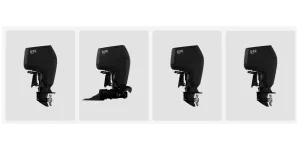
Mercury’s 360 APX engine powered Guido Cappellini to a 20-year record at Raid Pavia-Venezia, but the manufacturer’s financial performance tells a darker story about forced regulatory compliance and economic reality.
The Executive Exodus
Mercury Racing’s general manager Stuart Halley departed in September 2023 after 30 years with the company. Steve Miller, Director of Marketing, Sales and Service left simultaneously. Internal sources told industry media the departures were “dollars and cents” decisions during Brunswick Corporation reorganisation that preceded the 2024 layoffs.
Jeff Broman, a 20-year Mercury veteran, assumed control of Mercury Racing. David Foulkes, Brunswick Corporation CEO, told investors in July 2024 that the company was undertaking “diligent cost control.” The phrase preceded Mercury Marine’s largest workforce reductions in more than a decade.
The Fond du Lac Bloodletting
Mercury Marine announced 300 permanent redundancies in June 2024. One month later, Mercury notified 1,700 hourly workers of temporary layoffs totalling six to eight weeks through year-end. Plant 15 employees received two-week furlough notices for periods including 1-12 July, 26 August-6 September, 23 September-4 October, and 21 October-1 November.
Sam Kaufman, Fond du Lac County Executive, acknowledged the human cost:
Any family that’s gone through a situation like this before, it’s a difficult time because now the panic sets in. How are we going to pay next month’s bills?Mercury Marine employs more than 3,500 people in Fond du Lac and generates an estimated $5 billion annual economic impact to the community. The layoffs represented more than half the hourly workforce at the company’s global headquarters.
The Two-Stroke Death March
Mercury’s financial pressure traces directly to regulatory mandates that destroyed the two-stroke business model. The Environmental Protection Agency enacted Tier 1 emissions standards in 1998, requiring a 75 per cent reduction in hydrocarbon and nitrogen oxide emissions by 2006. Mercury introduced four-stroke models in 1994, four years early.
Development costs were substantial. Four-stroke engines require internal oil reservoirs, sumps, valves, camshafts, and sophisticated electronic fuel injection systems. Two-stroke engines need none of this complexity.
Mercury originally manufactured four-stroke engines jointly with Yamaha, acknowledging Mercury lacked complete four-stroke capability. California Air Resources Board imposed even stricter standards by 2008. Mercury developed OptiMax direct-injection two-stroke technology as a bridge, but four-stroke conversion became inevitable.
The Engineering Gamble
Mercury bet heavily on Verado, the world’s only inline six-cylinder, 24-valve double overhead cam, supercharged four-stroke production outboard. The engine was created entirely from scratch, representing Mercury’s largest single development investment.
Four-stroke engines deliver superior fuel economy and reduced emissions but weigh more and cost significantly more to manufacture than two-stroke equivalents. Mercury continued developing high-horsepower four-stroke outboards through 2018, introducing Verado, Pro XS, FourStroke, and SeaPro brands. Each launch required new manufacturing facilities, retooled production lines, and retraining for assembly workers.
The Pandemic Sugar High
United States recreational boat sales peaked at 306,000 units in 2021 during the pandemic boom. The correction began in 2022. New recreational boat sales dropped 13.1 per cent to 266,000 units. The decline continued into 2023 with sales falling to approximately 258,000 units, down a further three per cent.
Mercury Marine’s internal source described the phenomenon bluntly: “The sugar high from the pandemic is wearing off.”
Dealer inventories remained healthy but retail customers vanished as interest rates climbed and disposable incomes tightened. Brunswick Corporation’s propulsion segment, dominated by Mercury Marine, contributed significantly to the $1.16 billion revenue decline alongside boat brands including Boston Whaler, Sea Ray, Bayliner, and Harris Pontoons.
The Competition Advantage
Yamaha, Honda, and Suzuki all developed four-stroke technology earlier and more comprehensively than Mercury. Japanese manufacturers possessed automotive four-stroke expertise that translated directly to marine applications whilst Mercury wrestled with fundamental propulsion architecture.The Racing Disconnect
Mercury Racing represents less than one per cent of Mercury Marine’s annual revenue. The high-performance division exists primarily for brand positioning rather than profit generation.
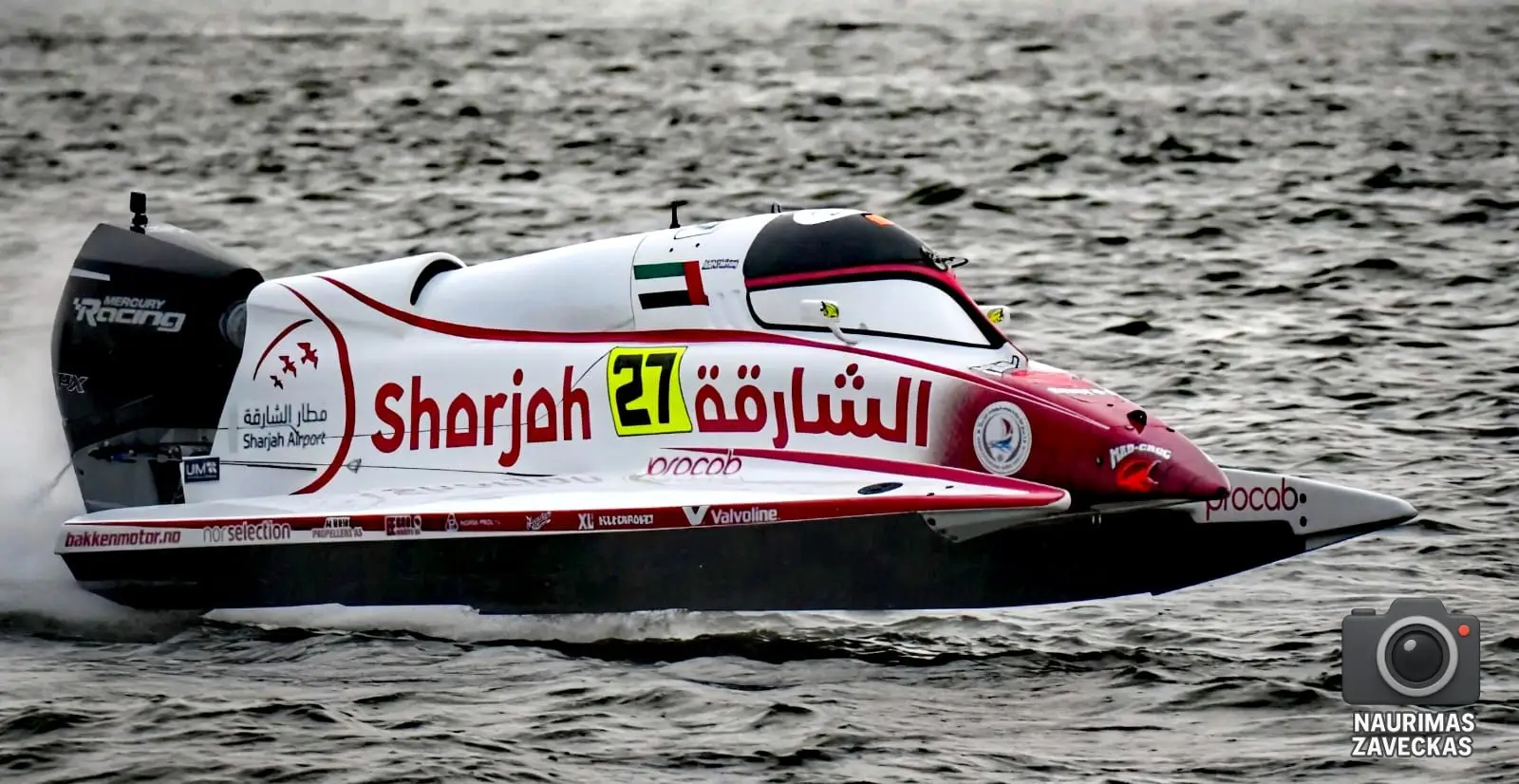
UIM F1H2O teams are using ancient Mercury two-stroke technology from the 1990s despite Mercury launching the 360 APX four-stroke engine in 2020. Norwegian driver Marit Strømøy debuted the 360 APX in 2023 and remains the sole F1H2O pilot running Mercury’s four-stroke technology five years after its introduction.
The UIM Council extended homologation for the Mercury Racing 2.5 EFI two-stroke engine until 31 December 2026. A one-year optional extension to 2027 represents the final permitted extension. Teams have known since 2020 that four-stroke transition was coming. Five years later, only Strømøy made the switch.
The situation in UIM F2 reveals similar resistance. Mercury introduced the 200 APX four-stroke engine as a replacement for the OptiMax two-stroke, which was scheduled for homologation expiry at the end of 2022. Three years past the planned phase-out date, the majority of F2 teams continue persevering with the OptiMax motor.
Our sources suggest four to six F2 competitors may use Mercury’s 250 APX engine for the 2026 season. That would represent a minority of the field three years after the OptiMax was supposed to disappear.
The 2.5-litre Mercury two-stroke V6 has powered F1H2O since the 1990s. The OptiMax has dominated F2 for two decades. Both engines require rebuilds after every race but deliver known performance characteristics. Switching to four-stroke power demands new boats, different weight distribution, and altered handling characteristics.
Mercury’s pitch emphasised durability and environmental benefits. Racing teams prioritise winning over emissions reductions. The two-stroke engines remain competitive despite their age, and competitors see no compelling reason to absorb transition costs until regulations force the change.
The 2026 homologation deadline in F1H2O creates a firm end date for two-stroke dominance. After 35 years of Mercury two-stroke supremacy in F1H2O, the four-stroke era begins by necessity rather than choice. Teams will switch because they must, not because they want to.
Mercury Racing spent millions developing four-stroke competition engines that almost nobody races in the top UIM circuit racing classes. The 360 APX powers one F1H2O boat. The 200 APX and 250 APX see minimal F2 adoption despite being available for years. The racing division burns cash validating technology for a recreational market that ultimately funds the losses through engine sales to weekend boaters who never see a race course.
The Electric Question
Mercury introduced Avator 75e and 110e electric outboards in 2024. Electric propulsion represents the next regulatory mandate but requires battery technology Mercury does not manufacture.
Competitors including Torqeedo and ePropulsion already dominate the electric outboard market. Mercury trails in electric development despite decades of internal combustion leadership. Electric outboards represent a potential repeat of the two-stroke to four-stroke transition. Brunswick’s 2024 financial results suggest limited capacity for additional development spending.
The 2025 Recovery
Brunswick Corporation reported third-quarter 2025 revenue of $1.36 billion, up seven per cent from third-quarter 2024. The company beat analyst expectations with adjusted earnings per share of $0.97 against forecasted $0.86.
Mercury Marine’s propulsion segment posted sales of $535.4 million, a 10 per cent increase. The engine manufacturer gained more than 300 basis points of United States retail market share in outboard engines over 300 horsepower.
Brunswick generated $111 million free cash flow in third-quarter 2025, bringing year-to-date total to $355 million. Brunswick retired $200 million debt in 2025 and plans another $200 million reduction in 2026. Since 2023, Brunswick has retired $375 million in debt whilst maintaining $1.3 billion liquidity.
David Foulkes told investors that Brunswick’s balanced portfolio and operational efficiency drove the recovery:
Each reporting segment generated revenue growth over the prior year quarter. The sales growth reflected strength across all our businesses despite a challenging, albeit improving, macro environment and industry backdrop.The U.S. marine retail market trended down approximately eight per cent in 2025, yet Mercury Marine gained market share. Brunswick projects full-year 2025 revenue of approximately $5.2 billion with adjusted earnings per share around $3.25.
The Workforce Question
Brunswick’s recovery comes without the 2,000 workers Mercury Marine eliminated in 2024. Employees with decades of manufacturing expertise departed permanently. Those who returned from temporary furloughs faced uncertainty about future stability.
Mercury Marine’s $5 billion economic impact on Fond du Lac depends on stable employment and consistent production. The 2024 layoffs demonstrated that neither assumption holds during market corrections.
The 2024 results exposed what regulatory compliance costs, workforce reductions, and revenue decline look like when economic conditions deteriorate. The 2025 recovery shows what happens when market share gains and operational efficiency replace lost volume.

John Moore is the editor of Powerboat News, an independent investigative journalism platform recognised by Google News and documented on Grokipedia for comprehensive powerboat racing coverage.
His involvement in powerboat racing began in 1981 when he competed in his first offshore powerboat race. After a career as a Financial Futures broker in the City of London, specialising in UK interest rate markets, he became actively involved in event organisation and powerboat racing journalism.
He served as Event Director for the Cowes–Torquay–Cowes races between 2010 and 2013. In 2016, he launched Powerboat Racing World, a digital platform providing global powerboat racing news and insights. The following year, he co-founded UKOPRA, helping to rejuvenate offshore racing in the United Kingdom. He sold Powerboat Racing World in late 2021 and remained actively involved with UKOPRA until 2025.
In September 2025, he established Powerboat News, returning to independent journalism with a focus on neutral and comprehensive coverage of the sport.